
Bristol EBLN: Bollards Out. Cameras In. Same Jail, New Bars.
This is not a compromise. This is the close. Bye.

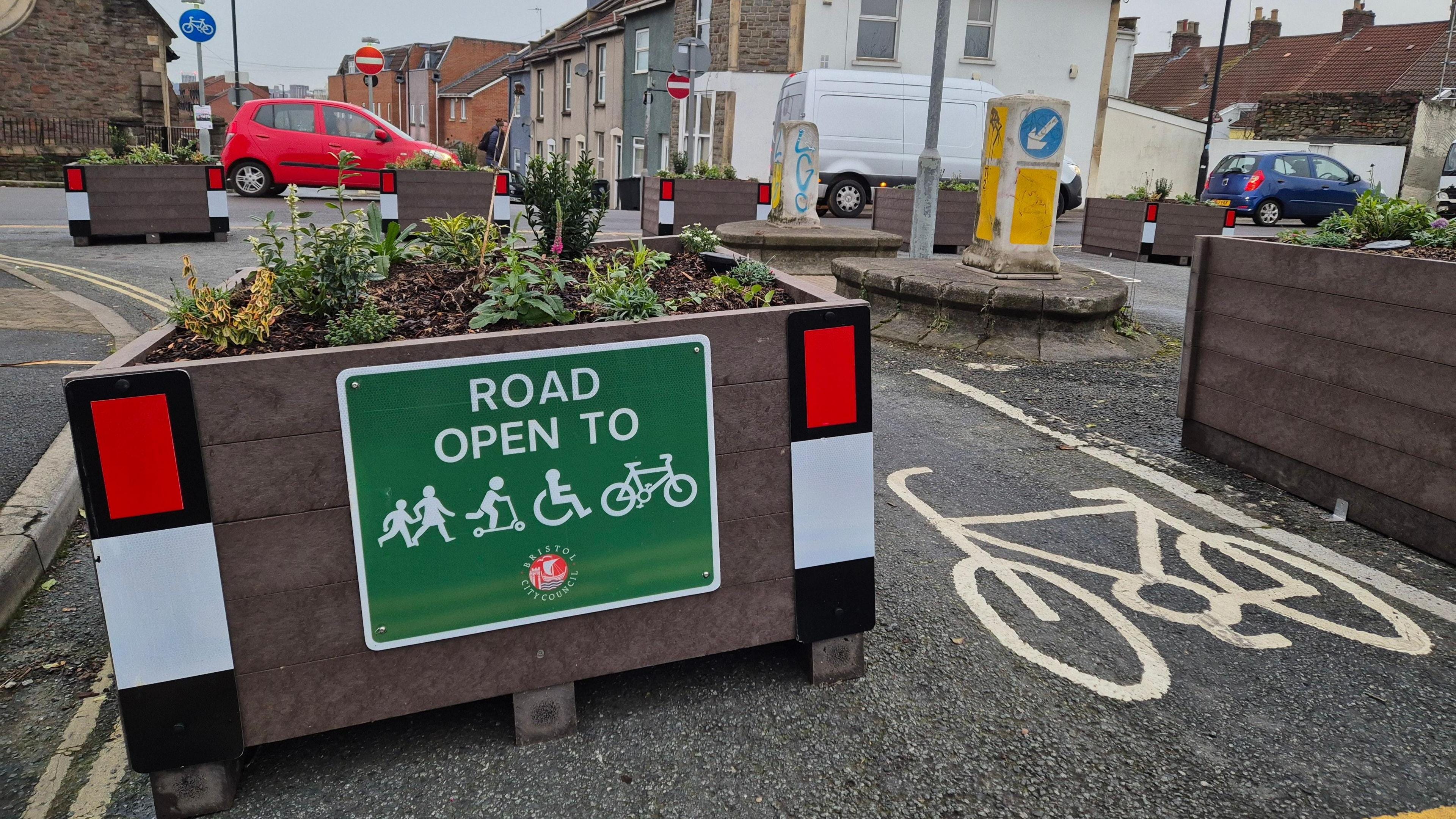
On 5th March, an email arrived in inboxes across East Bristol. Two consultations. Proposed changes. A response to public concerns. Language moving at the speed of a council press release — measured, procedural, dense with the bureaucratic equivalent of hold music. The kind of communication designed to convey reassurance without triggering the part of your brain that asks reassurance about what, exactly?
Read it again. Slower this time.
That isn’t the sound of an institution listening.
That is the sound of an institution finishing.
The East Bristol Liveable Neighbourhood has been many things across three years of institutional theatre — a traffic intervention, a culture war, a planning document, a procurement exercise. It has been installed by night under a private security detail while residents stood outside in the dark. It has produced, on the public record, fire engines that could not reach fires, and Avon Fire and Rescue crews responding to incidents on foot because the bollards and planters physically blocked the road. Firefighters. Running to fires. On foot. Leaving their equipment behind. And the council’s formal response to that revelation was not we got this wrong. It was we need to be quite smart about this.
Quite smart. About fire engines not reaching fires.
Sit with that for a moment.
“The consultation isn’t a question. It’s a sentence. They’ve already written it. They’re just waiting for you to sign it.”
Now, in March 2026, they are offering you two consultations with which to demonstrate that democracy is functioning correctly. The Traffic Regulation Order consultation on proposed changes to modal filters carries a three-week window. The Local Government Association — the council’s own professional body — recommends up to twelve weeks for a genuine consultation exercise, on the grounds that public awareness takes time to build and democratic participation requires more than a statutory minimum. Three weeks is what you do when public awareness is not the goal. Three weeks is what you do when paperwork is.
Transport Chair Ed Plowden, (L Pondweed, to those who know him better) has said, repeatedly and on the record, that all views and all data are being fed into the decision-making process. This is technically true in the same way it is technically true that a letter is fed into a shredder. The shredder receives the letter. The letter participates in the process. The outcome of the process is shredded letter.
The funding available for the EBLN is ring-fenced for LTN infrastructure. Planters. Bollards. Cameras. The money does not exist for a community hub. The money does not exist for apprenticeships, business support, real co-design — the things Shaban Ali called for in the Bristol Post in December 2025, speaking directly about Lawrence Hill, speaking on behalf of communities the council claimed to be acting for. That piece landed in complete silence on the other side of the door. Because the door doesn’t open from the outside.
Priorities were set before the first consultation opened. The consultations exist to ratify them.
“A bollard stops you getting somewhere. A camera stops you getting somewhere, records that you tried, and charges you for the attempt.”
Let us talk about the specific exchange at the heart of this new round of consultations, because it deserves to be stated plainly.
Avon Fire and Rescue delayed reaching incidents in Barton Hill, Redfield and St George. That information emerged through a Freedom of Information request — not through the council’s monitoring reports, not through the data it described as comprehensive, not through the engagement process it described as genuine. Through an FOI. Through someone having to legally compel the disclosure of the fact that fire engines could not reach fires.
When this became public, Labour Councillor Fabian Breckels asked the question that should have been unnecessary to ask: are lives more important than anti-car dogma? Councillor Plowden’s response was that the council would go through everything on a case-by-case basis, and that removing every physical barrier would not be appropriate because it would open up new routes. The routes are the problem. Motorists using streets to drive between places. That is the threat being managed here.
Plowden stood by the 4am installation. He stood by the police presence. He stood by the scheme. And now, in March 2026, the scheme he stood by is offering you this: where emergency vehicles have been blocked by bollards and planters, the bollards and planters will in many cases not be removed. They will be replaced by ANPR cameras. The obstruction becomes digital. The record becomes permanent. The fine structure appears. And because it is framed as a concession — look, we listened, the bollards are gone — it is presented as progress.
This is not progress. This is the original destination with better optics.
“Firefighters running to fires on foot. Because nothing conveys urgency like ditching your fire engine and legging it. On the bright side — excellent cardio.”
Here is the mechanism stated without decoration.
Severe, over-engineered restrictions are imposed on residential streets. They produce the exact consequences local people predicted and were told would not happen: businesses failing, taxis refusing to enter, elderly residents effectively housebound, disabled people cut off, journey times to medical appointments collapsing, emergency vehicles blocked. Public outrage builds. It concentrates, usefully for the council, on the emergency vehicle issue — the argument that crosses political lines, that cannot be dismissed as car dependency or climate denial, that carries moral weight nobody can argue with.
The council then announces a review. It offers to remove the physical obstructions. But only some of them. And in two out of three cases, the bollards and planters must be traded for ANPR cameras.
Bollards at Ducie Road Bridge and The Avenue are to be replaced with camera enforcement, described as enabling quicker emergency service access to properties across the area. Bristol City Council There are no buses on Ducie Road or The Avenue. The exemptions will apply only to emergency vehicles, taxis, and Blue Badge holders. Residents — people who have lived on those streets for years and decades — will now require ANPR authorisation to move freely through their own neighbourhood.
Labour suggested that all residents could be exempted, returning them to their former routes. That suggestion has not been taken up. It has not even been seriously addressed.
The bollard caused you inconvenience. The camera causes you inconvenience and logs your movements and issues fines. You are being asked to vote for the upgrade.
“They didn’t listen to the 54% who opposed it. They didn’t stop when the fire engines couldn’t get through. But they’re absolutely certain that this consultation — this one, the three-week one — is the one where your voice will genuinely count.”
There is a legal question threading through this that deserves more scrutiny than it is currently receiving. The Moving Traffic Enforcement consultation appears to be enabled through powers relating to six specific sites in Bristol. Neither Ducie Road nor The Avenue is among those designated sites. Bristol City Council Questions about how these powers apply have been submitted to the Transport and Connectivity Committee meeting on 19th March. Expect the response to be written by people whose professional purpose is to make the answer to how is this legally justified? sound like it was never a serious question.
Watch the language. Watch the passive voice. Watch the phrases that sound like explanations but contain no information.
And now look further out. The government has a concurrent consultation on digital identity. This connection is not conspiracy. It is infrastructure. ANPR cameras that read number plates on residential streets with no bus routes are one layer. A national digital identity framework is another. The question worth asking is not whether these systems are joined up today. It is whether they are being built to be joined up tomorrow. Data collected under a traffic enforcement justification does not disappear. It accumulates. It becomes searchable. It becomes cross-referenceable. It becomes, eventually, something else entirely — and by the time it does, the legal architecture that enabled it will be three consultations old and thoroughly normalised.
We have been on this slope before. We know what the bottom looks like from the top.
The communities of Barton Hill, Redfield, St George, and Lawrence Hill were told this scheme was being built with them. That word — with — did considerable heavy lifting for a long time. It covered the consultation that ran too short. It covered the priorities set before any engagement opened. It covered the funding locked to specific infrastructure before any resident expressed a preference. It covered the night the contractors came with the police at four in the morning to install the rest of it while people stood in the dark outside.
With you. Somewhere between midnight and dawn. With a security detail. Without telling you the operational details.
Now, through sheer generosity, they are offering you three weeks and two consultation forms.
The deadline for the TRO consultation on proposed changes to modal filters is 27th March 2026. Responses to the Moving Traffic Enforcement consultation close on 15th April 2026. Stop EBLN Bristol has published detailed guidance on how to respond to both.
Respond. Not because the council has demonstrated any capacity to be moved by opposition. It has not. But because the paper trail matters — particularly if, as the legal questions around the powers being invoked begin to crystallise, this moves toward formal challenge. And on current trajectory, it will.
Your objection won’t stop the cameras going up.
But your silence will be quoted as evidence that you didn’t mind.
SOURCES AND FURTHER READING.
Stop EBLN Bristol — consultation response guidance and deadline information: stopebln.substack.com
Bristol City Council — EBLN latest news and consultation details: bristol.gov.uk/ask/projects/east-bristol-liveable-neighbourhood/latest-news
Bristol City Council — EBLN bus gate ANPR exemption framework: services.bristol.gov.uk
Shaban Ali — “Lawrence Hill Needs Better Ambitions,” Bristol Post, December 2025
Avon Fire and Rescue delays — FOI disclosure, reported December 2025. See: The Almighty Gob — “It’s Bollards to Big Brother” (December 2025): thealmightygob.com
Ed Plowden — Transport and Connectivity Committee, December 2025: quoted in Bristol Post and Bristol Live
Local Government Association — consultation best practice guidance: local.gov.uk
The Almighty Gob ANPR series — “Every Move You Make: Parts I, II and III” (November 2025 — January 2026): thealmightygob.com
UK Government digital ID consultation — concurrent process, March 2026: gov.uk
Keep Bristol Moving — community testimony and campaign documentation: keepbristolmoving.substack.com
END CREDITS.
The Almighty Gob is a Bristol-based publication covering UK institutional politics, local accountability, and the infrastructure of social control — with neither tribal loyalty nor performative outrage.
This article is part of an ongoing series on the East Bristol Liveable Neighbourhood, Bristol City Council governance, and the normalisation of surveillance infrastructure in residential communities. Previous coverage includes “It’s Bollards to Big Brother” (December 2025) and the three-part ANPR series “Every Move You Make” (November 2025 — January 2026).
If you are directly affected by the EBLN and wish to respond to the current consultations, Stop EBLN Bristol’s guidance is at stopebln.substack.com. The TRO consultation closes 27th March. The Moving Traffic Enforcement consultation closes 15th April.
thealmightygob.com — on Substack and the open web.
Okay. I think I see what's happened, Helen. Apologies. I asked, because I'm bone arsed lazy, Google to search for anything previously written on the subject. Seems like it sourced the article you wrote and I republished. I think 🤔
On those sources and further reading, John, I thought it was me who wrote the Every Move You Make ANPR series?