
Bristol Ranked 3rd for High Streets. Also 37th. Both Can't Be True.
Or can they? What happens when you measure vibes against bodies — and discover your city centre's transformation from retail district to residential zone is hiding behind contradictory rankings.

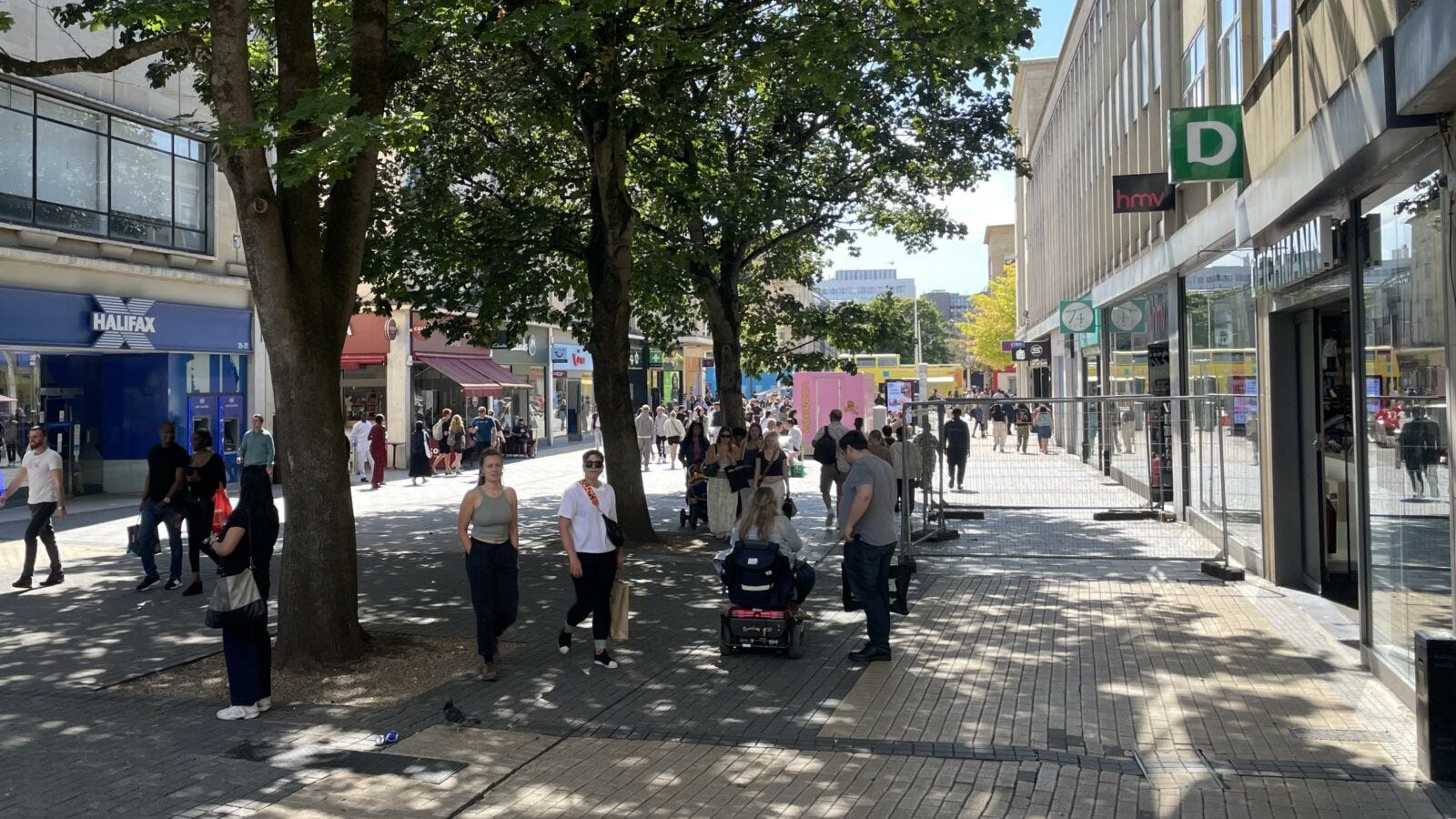
You’re Bristol City Council. Two reports about high street health land on your desk. PwC says 3rd in UK. Excite OOH says 37th — below Slough, Hull, Doncaster, Swindon.
Do you (A) investigate how both exist simultaneously, or (B) cite the good one whilst hoping nobody notices?
If you answered B, you understand British local government in 2026. You know what I mean?
The Tale of Two Rankings
PwC’s 2025 Good Growth Index placed Bristol 3rd nationally for high streets. Same year, Excite OOH’s study — using Centre for Cities data with ONS figures — ranked Bristol 37th out of 55 cities.
Which is accurate? Both. That’s the problem.
PwC asked people how they feel about high streets. Excite OOH counted shop openings, closures, vacancy rates, measured when people physically showed up. Perception versus reality. Guess which the council quotes?
Excite OOH measured: business opening rates (Bristol: significantly below average), closure rates (slightly above average), vacancy rates (among worst nationally), weekend footfall (among worst nationally), nighttime economy (among worst nationally).
Plymouth topped rankings through functional evening and weekend economy. Bristol fails hardest precisely where Plymouth succeeds: getting people to actually show up when shops are open.
Makes sense to you?
The Clean Air Zone Cash Machine
Bristol’s Clean Air Zone launched November 2022. Operating 24/7/365. Daily charges: £9 for non-compliant cars, £100 for buses and lorries. First year revenue: £31.2 million total, £26.4 million profit after operational costs.
Air quality improved. Revenue extraction also happened. Both truths coexist uncomfortably.
Every pound extracted makes city centre access costlier. Every barrier reduces footfall. Every footfall reduction damages retail viability. The Clean Air Zone improved pollution whilst simultaneously accelerating retail collapse — exactly the pattern we documented with Bristol’s Liveable Neighbourhoods traffic restrictions.
Environmental compliance delivered. Retail extinction arrived as collateral. You seeing the pattern yet?
Student Accommodation Explosion
Avon Point September 2025: 623 beds. Metalworks Bedminster: 819 beds. Temple Quarter: 500 beds planned. Premier Business Park: 549 beds proposed. Park Street nightclub: converted to student flats.
Thousands of student beds replacing retail and hospitality. Every conversion removes footfall generators. Every new block adds transient population with minimal disposable income.
Councils approve because developers pay planning fees, housing numbers climb, short-term revenue beats long-term planning. Nobody calculates the 20-year cost of converting city centres into dormitory districts whilst retail dies. Twenty percent of decisions create eighty percent of damage. Classic pattern nobody’s measuring.
Three Simultaneous Demolition Zones
St James Barton: 574 beds, 28-storey tower, completion 2028/29. Former Debenhams: 502 flats, 28-storey tower, approved April 2024. The Galleries: £600m redevelopment, 450 homes plus 750 student beds, completion roughly 2030.
Three major sites. Simultaneously closed. Simultaneously demolished. Simultaneously rebuilt as residential. Timeline: six years minimum.
Where do shoppers go during six years of scaffolding, road closures, noise, dust shuttering city centre retail? Cribbs Causeway — 150+ stores, 7,000 free parking spaces, zero construction zones, M5 Junction 17 access, 14 million annual visitors, zero Clean Air Zone charges.
Once habits form, they stick. By 2031, Bristol residents will have spent six years treating Cribbs Causeway as default shopping destination. Mental maps rewrite permanently. City centre becomes “that place with building work” even after construction ends.
Reversing that? Decades. If it happens at all. You know what I mean?
The Footfall Contradiction
Avison Young reported October 2025: Bristol achieved 4.5% footfall growth — highest among 10 major UK cities. Brilliant until you examine what’s measured: total footfall including commuters, students, construction workers, people cutting through to transport hubs.
Shopping footfall tells different story. MRI Software September 2025: Bristol confirmed 3rd UK shopping destination by business density. Same report noted 14% decline in search interest, 0.35% drop in business registrations, 2.1% footfall decrease year-on-year.
Footfall simultaneously rising (everyone) and falling (shoppers). Both measurements accurate. Councils cite rising numbers. Retailers experience falling numbers.
Quantum superposition applied to retail metrics. Schrödinger’s high street, you might say.
What Bristol Residents Said
Bristol Live published Excite OOH rankings. Reader comments revealed the pattern:
“Car park charging and not enough to support local businesses.”
“Totally devoid of any character and now just a centre for student accommodation.”
“Whoever foresaw the death of shops as being synonymous with the inability to get anywhere near them?”
“The city’s local high streets - Gloucester Road, North Street, Clifton Village - are much more appealing.”
Residents identified systematic problems from lived Bristol experience: access barriers, student accommodation saturation, planning failures spanning decades, developer priorities trumping community needs. Everything measurable in Excite OOH data.
Institutional response? Quote perception study. Ignore behaviour study. Approve more student accommodation. Continue demolitions.
Makes sense to you?
The Green Party Paradox
Bristol’s Green Party administration took control May 2024. Platform: localism, community resilience, independent retail protection, car-free city centre. Eight months later: three major demolitions approved, thousands more student beds in pipeline, Clean Air Zone revenue extraction continuing, council citing 3rd place perception whilst presiding over 37th place reality.
This isn’t hypocrisy. It’s institutional behaviour. Student accommodation delivers immediate planning fees, housing statistics, developer contributions. Retail protection delivers nothing measurable within electoral cycles.
System optimises for what it measures. It measures wrong things.
Every decision serves institutional self-interest. Every metric cited supports institutional narrative. Every contradiction smoothed through selective measurement. Not stupidity. Not conspiracy. Organisations surviving by optimising for internal incentives regardless of external consequences.
Same pattern we’ve documented repeatedly across Bristol City Council decision-making throughout 2024 and 2025.
What Nobody’s Saying Out Loud
We will no longer have a city centre as we’ve known it.
Three major retail sites becoming residential. Thousands of student beds approved. Ground-floor retail sitting empty. Shopping and community activity pushed to Cribbs Causeway, Gloucester Road, neighbourhood hubs.
Bristol city centre being repurposed. From commercial district to residential zone. From destination to dormitory. From community hub to bedroom community.
Six years of construction completes the transformation. By 2031, “shopping” means Cribbs Causeway. “Community” means local hubs. “City centre” means student accommodation.
The contradiction reveals the transition. PwC measures what Bristol was. Excite OOH measures what Bristol’s becoming. Both accurate. Both simultaneous.
Bristol’s high street isn’t 3rd or 37th. It’s both. Rankings measure different stages of the same transformation. Councils quote perception. Reality shows up in behaviour.
The shops closing? Not in rankings. Just closed. The city centre you remember? Not coming back. Being replaced by something nobody voted for.
You know what I mean?
END CREDITS.
Related reading: Bristol City Council’s Liveable Neighbourhoods and the business massacre | Clean Air Zone revenue allocation: where’s the transparency? | The student accommodation saturation point: when does Bristol hit capacity?
The Almighty Gob writes about Bristol institutional accountability from an anarch position of detached observation. Not a journalist. Just someone counting contradictions and asking uncomfortable questions.
Maybe Helen Godwin herself wrote the PwC report, seeing as she works for them?