
Bristol — The City of ‘Cancel’ Culture.
There is a particular kind of stupidity that announces itself as vision. Bristol Greens have surpassed this accomplishment.

[City_of_Cancel_Culture.jpg]
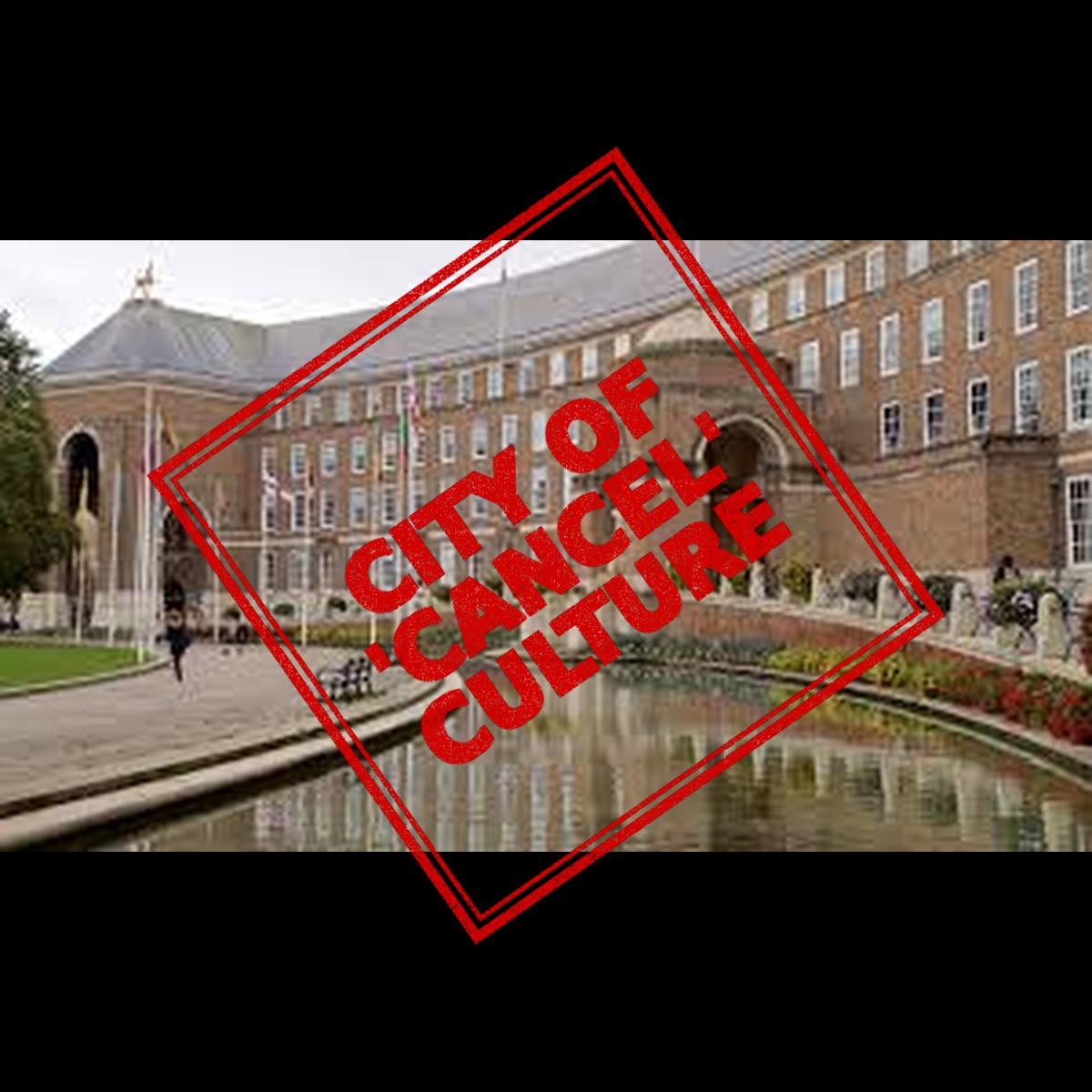
Bristol is currently bidding to become the UK’s City of Culture, in title alone, it would seem. As to achieve it requires work the Green administration doesn’t yet know how to build. A prestigious designation. A statement of intent. A declaration to the world that this city takes its arts, its music, its nightlife, its cultural infrastructure seriously. The bid is live. The ambition is loud. The council stayed quiet.
And while that bid was being assembled, the Green-led administration at Bristol City Council quietly terminated Bristol Nights. Apparently, nobody told them what culture actually means.
No committee vote. No public debate. No democratic oversight. Just a decision, made behind closed doors, to axe a partnership that had trained over 700 nighttime economy staff in safeguarding, distributed 260 anti-spiking testing kits to venues across the city, and run public safety campaigns — Bristol Rules, the Women’s Safety Charter, Thrive at Night, drug safety, anti-spiking initiatives — that kept people safer on Bristol’s streets at night.
These are the streets that do not stop being dark because the funding has ended. The drinks do not stop being spiked. The women do not stop walking home alone. The night carries on. Bristol Nights does not. Yet, the council sleeps through it, seemingly.
Clearly, nothing of importance as an agenda item when the dictionary was mislaid.
Gone. Quietly. While the City of Culture application sat on the desk next door. Waiting for a spider to casually nest.
The Termination That Was Not Supposed to Be Noticed
Carly Heath, Bristol’s nighttime economy adviser, discovered her role was being made redundant when the council informed her that her current funding was coming to an end. She posted about it on LinkedIn. Or, as it turned out, LinkedOut.
A woman whose work had crossed oceans, reduced to a LinkedIn notification. There is something very particular about that. Something that does not wash off.
What followed was not silence. It was the opposite of silence.
Trinity Community Arts. Bristol Music Industry Network. Paraorchestra. Bristol Students Union. The Women’s Night Safety Charter. Organisations that had worked alongside Bristol Nights posted their dismay. The messages came locally. Nationally. And then internationally.
Mathieu Grondin, Canada’s first nightlife commissioner, wrote: “Carly, you are a global leader who has brought so much light to Bristol through your work. Cities around the world draw inspiration from what you’ve accomplished — including Ottawa. I sincerely hope this decision will be reconsidered.”
Ottawa. Canada’s capital city.
And Bristol City Council decided, quietly, behind closed doors, without a committee vote, that it no longer needed any of it.
This is what cancelling culture actually looks like. Not a protest. Not a petition. A line item. A funding decision. A redundancy notice sent to someone whose work was internationally recognised — while the council’s City of Culture bid continued to describe Bristol as a place that values exactly that kind of work. I’m guessing the omission of ‘de’ before ‘values’ was a typo then.
Had they found that dictionary, they may have discovered the word ‘inspiration’ and its meaning too.
The Leader’s Non-Answer
Councillor Kye Dudd, Labour, Southmead, raised the termination at a Bristol City Council member forum. He asked council leader Councillor Tony Dyer, Green, Southville, to think again.
Dyer’s written reply is worth reading carefully — not for what it says, but for what it does not say.
“Bristol Nights is a brilliant and successful campaign which I support,” he wrote. He wants to reassure members that population health priorities will continue to be addressed by Public Health. That safety at night will continue to be the responsibility of a range of wider partners. That Bristol Rules will be “reviewed and developed with, and by, the relevant partners.”
Dudd read it. Then he said what needed saying.
“I note the answer does not say that Bristol Nights will continue. Bristol Nights has been terminated.”
Let us be precise about what that reassurance actually means. Public Health is a broad departmental function. It manages population-level health outcomes — disease prevention, sexual health, substance misuse, mental wellbeing. It is not a nighttime economy body. It has no dedicated nighttime economy mandate, no named nighttime economy budget, no sector relationships built over years of trust, and no Carly Heath. Handing Bristol Nights' functions to Public Health is not a continuation. It is a dispersal. The work does not move to a new home — it dissolves into a department that was never designed to carry it, under a funding arrangement nobody has specified, accountable to nobody in particular. Is it practical? No. Is it logical? No. What is the likely outcome? The same outcome that always follows when specialist functions are absorbed by generalist departments. Quietly. Without a trace.
There it is. The leader of the council calls Bristol Nights brilliant and successful, says he supports it — and then confirms, by omission, that it no longer exists. The words of support and the act of termination sit in the same paragraph without apparent awareness of the contradiction. In most professions, that is called cognitive dissonance. In Bristol’s Green administration, it appears to be called a press statement.
Dudd pushed further. Had the council discussed with businesses and the nighttime economy before bringing the partnership to an end?
Dyer replied that there are “ongoing discussions about where this is going.” He is “more than happy to update members at a further stage.” Apparently forgetting that the same stage has also been defunded — as Bristol Music Industry Network will confirm, I’m sure.
Bristol Nights has been terminated.
While the City of Culture bid remains live.
After all, the new LTNs and bus gates do not fund themselves. The free members’ teas and coffees for meetings were terminated also. Sacrifices must be made. Just never, apparently, by the people making the decisions.
The Democratic Deficit
In construction, removing the binding agent and hoping the structure holds is called negligence. In council leadership, apparently, it’s called a funding review.
This is not simply a story about a useful programme being cut. It is a story about how it was cut.
The decision did not go to a cross-party policy committee. It was not subject to democratic scrutiny. It was made behind closed doors, and it emerged — not through any council announcement — but because Carly Heath posted on LinkedIn. LinkedOut, as it happened.
Dudd has called for an extraordinary meeting of the economy and skills committee, which holds responsibility for the nighttime economy, to give the decision the democratic oversight it needs.
When Dudd said extraordinary meeting, one assumes he meant the kind without banners, placards, and members auditioning for a role they’ve already been elected for.
The Green-led council has, on multiple occasions, pledged its support for harm-reduction campaigns. That pledge now sits alongside the termination of the one dedicated partnership that was actually delivering them — at scale, on a minimal budget, to international recognition.
Nobody announced it. Nobody asked. The people who used Bristol’s nights — the bar staff finishing late, the students walking home, the women checking their drinks — did not get a committee meeting. They got a LinkedIn post. Which is to say, they got nothing at all.
Dudd called it outrageous. On the available evidence, it is difficult to argue otherwise.
The City of Culture Thread
The council’s City of Culture bid asks the world to look at Bristol and see a city that nurtures its cultural life, supports its creative workforce, and takes seriously the safety and vitality of its nighttime economy.
The termination of Bristol Nights asks a different question: what exactly is being preserved?
Seven hundred people who now work a night shift without the training that was keeping them and their customers safer. Two hundred and sixty anti-spiking kits distributed — until they weren’t. Campaigns that reached workers, venues, students, and visitors across the city. A nighttime economy adviser whose work drew admiration from commissioners in Canada. All of it ended. Quietly. Without a vote. While the bid remained live, the council hoped the issue would quietly go away. Like an LTN installation at 3am, presumably.
Mathieu Grondin hoped the decision would be reconsidered. So did Trinity Community Arts. So did Paraorchestra. So did Bristol Students Union. So did every organisation that found out about it from a LinkedIn post rather than a council announcement.
Bristol wants to be the City of Culture.
It just cancelled the people doing the work.
The Almighty Gob is a Bristol-based publication covering local accountability, institutional dysfunction, and the gap between what is said and what is done.
Sources and Citations
Primary reporting: Bristol Post / Yahoo News UK — Successful Bristol nighttime economy drive quietly axed by city council https://uk.news.yahoo.com/successful-bristol-nighttime-economy-drive-155639288.html
Sector response — open letter: Bristol247 — Bristol City Council is deprioritising nightlife https://www.bristol247.com/opinion/your-say/bristol-city-council-deprioritising-nightlife/
Bristol247 — The council’s disdain for the nighttime economy beggars belief https://www.bristol247.com/opinion/your-say/council-disdain-nighttime-economy-beggars-belief/
Carly Heath — full statement and background: Bristol247 — Council cuts funding to project supporting nightlife https://www.bristol247.com/news-and-features/news/council-cuts-funding-project-supporting-nightlife/
Labour group response: Bristol247 — The council cannot turn its back on Bristol’s nightlife (Tom Renhard, leader of Bristol’s Labour group) https://www.bristol247.com/opinion/your-say/council-cannot-turn-back-bristol-nightlife/
Mathieu Grondin — Canada’s first Nightlife Commissioner: City of Ottawa official announcement https://ottawa.ca/en/city-hall/city-news/newsroom/ottawa-names-its-first-ever-nightlife-commissioner
Mathieu Grondin — LinkedIn profile https://www.linkedin.com/in/mathieugrondin/
Bristol City Council — City of Culture 2029 bid: Bristol Creative Industries — Bristol sets sights on UK City of Culture 2029 bid https://bristolcreativeindustries.com/bristol-sets-sights-on-uk-city-of-culture-2029-bid/
Arts Professional — Bristol council drops proposed arts funding cuts ahead of City of Culture bid https://www.artsprofessional.co.uk/news/bristol-council-drops-proposed-arts-funding-cuts-ahead-of-city-of-culture-bid
Bristol247 — Bristol bids to become UK City of Culture 2029 https://www.bristol247.com/news-and-features/news/bristol-bids-become-uk-city-culture-2029/