
Bristol: The City That Collected Props.
A decade of promised transformation. A blank piece of paper. And you already know why.

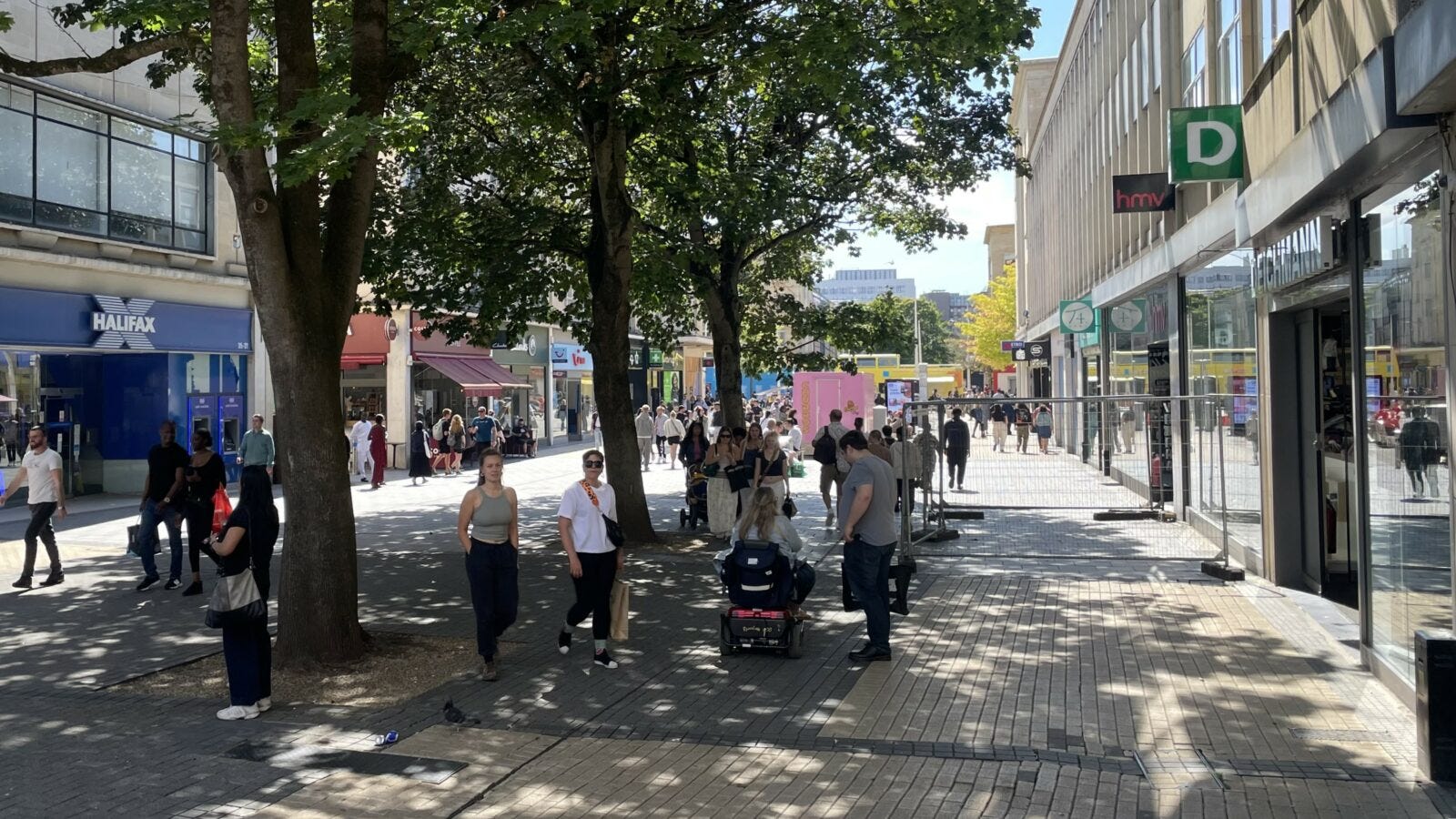
(Image: ©Martin Booth July 2024)
You live in one of the most naturally gifted cities in the United Kingdom. You know that. You’ve always known that. Genuine culture. Genuine character. Genuine history. A city people choose deliberately — not accidentally, not because it was cheap, not because they ended up there. Because it has something rare.
Organic civic soul.
The kind of thing you build over generations or not at all. No working group produces it. No vision document delivers it.
You’d be pointing at Bristol and saying — look what we did with what we had.
So why aren’t you?
What Was Actually On The Table.
Let’s be honest about what Bristol had going into this decade. Because the story only lands properly when we take off our rose-tinted spectacles.
European Green Capital status. A thriving creative economy. A cultural reputation that cities twice Bristol’s size would sacrifice meaningful portions of their budget to possess. Aardman Animations — yes, Wallace and Gromit, beloved in every country on earth — based here. The Bottle Yard Studios, one of the largest dedicated film and television production facilities outside London. A street art culture anchored by Banksy drawing international visitors specifically to these streets. A festival calendar. An independent food scene. Georgian architecture. A gorge. A working harbourside.
What’s not to like?
The raw material for a genuinely remarkable decade was sitting right here. Already built. Already working. Already generating the kind of organic goodwill that cities spend decades and hundreds of millions trying to create artificially.
Is it practical? Is it logical? What’s the likely outcome?
Those three questions. Keep them close. Because what followed was this.
The Ledger.
No hyperbole. No embellishment. Just what was promised set against what was delivered. The gap between those two things is where the story lives.
The Arena. Promised. Planned. Announced. Re-announced. Consulted on. Delayed. Abandoned. Relocated to Brabazon — out of the city centre, away from ordinary people, accessible mainly to those with a car and the patience of a particularly forgiving saint. Other UK cities got on with it. Bristol held meetings. A decade of process. Nothing in the city centre except the memory of what was promised.
The European Green Capital. Awarded in 2015. Goes on every letterhead, every press release, every conference lanyard for the next decade. Ten years on — Bristol has some of the worst air quality in the UK. The public transport system remains a national embarrassment. A title. A plaque. A prop. Nothing more.
Housing. Right. Pay attention here because these numbers matter. 15,000 Bristol residents on the housing waiting list. 1,222 council homes sold. 1,000 new affordable homes promised annually. Read that again. Slowly. That’s not a nuanced policy debate requiring expert analysis. That’s an administration promising to build homes while selling the ones it already had. The mathematics requires no commentary whatsoever.
Transport. Schemes imposed against the explicit wishes of 54% of residents. Emergency services access compromised by traffic calming measures. Consultation deployed as theatre — the kind where the audience thinks they’re participants but the ending was written before they arrived. Bristol residents were asked. Bristol residents were ignored. Bristol residents were then informed the decision had been made for their own good. By people who cycle to work and would prefer everyone else did too. Regardless of night shifts. Regardless of three children. Regardless of Hartcliffe.
FOI — The Transparency Scandal. More Freedom of Information requests stonewalled than any other UK council. Unelected officers spending public money appealing ICO enforcement notices — without democratic oversight, without telling the politicians who supposedly run the place. A Green administration that speaks the language of openness while systematically practising the opposite. The Bottle Yard Studios privatisation: public asset, murky process, FOI refused, outcome still unclear. Nothing to see here. Move along. Except they won’t tell you where along is.
Eagle House, Knowle West. Promised back to a community still grieving two murdered teenagers. Promised during election campaigning. Promised by Green candidates who needed votes in Knowle West and found the word promise very useful indeed. Then quietly scheduled for demolition once the votes were counted and the grief became inconvenient. The community had been pretty clear about what they wanted. Clarity, it turns out, was optional.
Debenhams. Gone. The city centre anchor that served ordinary Bristol people across generations. Not glamorous. Not artisan. Just there — reliably, dependably, unpretentiously there — where people bought school uniforms and wedding gifts and had coffee with their mothers. Gone. Nothing replaced it for those people. They went to Cribbs Causeway instead. Eight miles up the motorway. Can you blame them?
The Financial Crisis. A council requiring emergency financial intervention. Managing public money responsibly on behalf of the people who entrusted you with it — failed. Comprehensively.
The Props Cabinet.
It wasn’t all failure on paper. There were things that looked like success. Things the administration pointed to.
Wapping Wharf. Genuinely beloved. People love it. It works. You want to know the council’s contribution? Essentially, staying out of the way. They arrived for the photograph. The development was private. The finance was private. The vision was private. They should try absence more often.
The tech and creative economy. Bristol quietly became one of the most significant digital and creative hubs outside London. Built by universities, entrepreneurs, independent businesses, and raw talent operating in spite of the governance environment rather than because of it. The council pointed at it retrospectively as evidence of their stewardship. It happened despite them. They know that. You know that. And somewhere in a committee meeting, they know you know that.
Banksy. An anonymous artist whose entire existence is a deliberate, sustained, philosophically coherent rejection of institutional authority. Claimed as evidence of visionary cultural leadership by the very institutions he’s spent thirty years rejecting. They put him on the tourism literature. He’d find that funny.
Temple Quarter. Two decades of architectural visualisations, vision statements, consultation events, and partnership announcements. The development partner was selected in January 2026. The communities of Barton Hill and Lawrence Hill — among the poorest in the city — have been promised transformation since before some of their children were old enough to read the consultation documents. It may yet deliver something real. The promise has been running longer than most people’s mortgages.
The City of Sanctuary designation. Magnificent on the letterhead. The same council carrying that designation has presided over a housing crisis leaving 15,000 of its own residents unable to secure a home. A designation without delivery isn’t sanctuary. It’s a prop. Another one for the wall.
The Creative Economy They Left On The Table.
Bristol sits on a creative goldmine. And I mean that literally — not as a motivational poster, not as a regeneration prospectus opener. Literally.
The Bottle Yard Studios: one of the largest dedicated production facilities outside London. Casualty. Skins. Wolf. Poldark. Production after production. And what happened to it? Privatisation. Stonewalled FOI requests. A governance scandal dressed up as an asset disposal. The building that could have anchored Bristol’s creative economy for a generation — quietly handed off, accountability refused.
Aardman Animations. Globally beloved. A brand generating warmth and affection no marketing budget can replicate. Bristol’s single most powerful creative asset. What was built around it strategically? Nothing coherent. Nothing that converts that goodwill into sustained economic benefit for the people who actually live here. Nothing. At all.
Manchester built an entire economy around MediaCityUK. Liverpool capitalises on every cultural association it possesses — relentlessly, professionally, commercially. They understand that creative reputation translates directly into revenue, employment, and civic pride. They act on that understanding.
Bristol had better raw material than either of them.
Is it practical? Is it logical? What’s the likely outcome?
The people running the city were too busy collecting designations to notice what they were sitting on.
Welcome to the Building Site.
Right. You want to know what’s coming?
I meander through Broadmead every day. The boarded shops are already evident around parts of the Galleries, and some retailers have already relocated.
The Galleries — serving ordinary Bristol residents since 1991 — is coming down. Unanimously approved in January 2025. The entire 4.8 acre site demolished. The 1,000-space car park: gone. In its place, eventually, buildings up to 22 storeys. 450 flats. 20% affordable. 750 student beds. Offices. A hotel.
Eventually.
Between now and eventually sits a physical reality nobody in the planning committee appeared keen to discuss.
Bristol city centre is about to become one of the largest simultaneous building sites in the United Kingdom.
The Galleries: demolition imminent. Temple Quarter: under construction. The 28-storey student tower near the Bearpit: being built. The Bedminster student towers: being built. Broadwalk Shopping Centre in Knowle: phased closure underway. The station transformation: ongoing.
Brick dust. Hoardings. Scaffolding. Noise. Diversions. For years.
Now ask the question the council forgot to ask.
Where are ordinary Bristol residents supposed to go?
Not the Galleries. That’s rubble. Not Debenhams. Gone years ago. Not the independent shops and cultural venues gradually priced, planned, and traffic-schemed into extinction over the preceding decade.
Cribbs Causeway is eight miles up the motorway. Warm. Dry. Fully intact. Not a single hoarding in sight.
The council spent a decade talking about a vibrant, walkable, sustainable city centre. They spent that same decade systematically creating the conditions that will make it uninhabitable for ordinary shoppers during a construction programme that will take years.
Here’s the detail that deserves its own sentence.
Of the 450 homes approved at the Galleries site, just 20% will be affordable. In a city with 15,000 people on the housing waiting list. On one of the most valuable pieces of land in the city centre. With a developer backed by LaSalle Investment Management — a global real estate firm managing hundreds of billions in assets. Twenty per cent.
One Green councillor, voting to approve, worried about demolishing a building that wasn’t very old. Then voted for it anyway. Another said it would be far better than a deserted shopping centre.
A deserted shopping centre that became deserted in significant part because of what happened to Bristol’s city centre during the decade of their administration.
They created the problem. They approved the demolition. They accepted 20% affordable. They called it regeneration.
Towers for Ghosts.
While the city centre is being demolished and rebuilt, somebody has been very busy indeed approving student accommodation.
A 28-storey student tower near the Bearpit. The tallest building in Bristol, next to a Grade I listed church, with windows sealed shut because of the air pollution outside. Zero affordable housing. Approved.
484 student beds on Malago Road, Bedminster. On land where a local resident asked, reasonably enough, whether it might be better used for the people sleeping in vans nearby. Approved.
819 student beds on Dalby Avenue, also Bedminster. Funded by KKR — one of the largest private equity firms on the planet, managing over $500 billion in global assets. Approved.
471 student beds near Temple Meads. Approved.
Tower after tower. Bed after bed. Approval after approval.
Now. Three questions.
Is it practical? Is it logical? What’s the likely outcome?
Because here is what is actually happening to student numbers nationally while Bristol plants tower cranes across its skyline.
University applications have fallen for three consecutive years. The proportion of UK 18-year-olds choosing university has dropped to its lowest level since before the pandemic. The average English graduate leaves university carrying £53,000 of debt. Some have accumulated debts exceeding £231,000. England’s student loan burden is higher than any other country in the OECD.
Write that down. England. Higher than any other country in the OECD.
The total outstanding loan book: £267 billion, growing by £21 billion every year. Interest added to those loans is now three times the value of annual repayments. In 2024, just 2,943 graduates repaid their student loans in full. In 2016 that number was 50,165. A 94% collapse in eight years.
Young people are doing the maths. Apprenticeships are rising. Graduate hiring is falling. The government is actively encouraging apprenticeships as the smarter route.
So who is going to live in all these towers?
Take a moment with that. Seriously. Because nobody on that planning committee appears to have done so.
KKR doesn’t build student beds because it cares about Bristol’s young people. It builds student beds because they generate predictable rental income that looks attractive on a balance sheet somewhere. The council approves them because it can point to units being built while the social housing waiting list quietly grows and the housing emergency declaration gathers dust.
Meanwhile in Bedminster — where a resident asked whether homeless people might be better served by that land — two enormous student accommodation blocks are rising. On streets where people are sleeping in vans.
Is it practical? No.
Is it logical? Only if you’re managing a global real estate portfolio.
What’s the likely outcome? Empty towers. Unchanged waiting lists. Another prop for the collection.
The planning committee chair who approved tower after tower of student accommodation is Councillor Rob Bryher. Green Party. He spent years before entering elected office as a professional car-free cities campaigner. He helped design the East Bristol Liveable Neighbourhood scheme. He writes extensively about how cities function, how populations move, how infrastructure should serve the people who actually live in a place.
He has a Master’s degree in Urban Planning. From UWE Bristol.
Yet, someone with a Master's in Urban Planning apparently forgot to ask: where are all the students coming from. Seems fundamental to me.
I’ll leave that one with you.
The Blank Piece of Paper.
So here’s the question. Ask it simply.
What has Bristol City Council’s administration actually delivered in ten years that has genuinely improved the daily lives of ordinary Bristol residents?
Not announced. Not consulted on. Not awarded a title for. Not pointed to retrospectively as evidence of stewardship. Not rendered in architectural visualisation with optimistic figures in the foreground.
Actually. Delivered.
Take your time.
The silence where the answer should be — that’s the blank piece of paper.
A city with everything. The culture. The talent. The reputation. The creative assets. The organic grassroots energy that cities spend fortunes trying to manufacture artificially.
Administered by people who collected props instead of delivering outcomes. Titles instead of transformation. Announcements instead of completions. Consultations instead of decisions. Plaques instead of policies.
But they found wall space for every plaque going.
City of Sanctuary. European Green Capital. Net Zero commitments. Liveable Neighbourhoods. Inclusive Regeneration. Progressive Values.
Every one of them on the wall.
Every one of them a prop.
And you already knew that, didn’t you. You’ve been watching it for years. You didn’t have the full ledger in front of you until now.
Which is why, if Bristol were truly honest — if once, only once, the administration looked at itself with the same clarity it applies to everyone else’s failures — there’s only one change worth making to that collection on the wall.
Take down the City of Sanctuary plaque.
Put up a new one.
City of Protest.
Because that, at least, would be accurate.
Bristol will protest anything. Government policy. Historical statues. Environmental inaction. Corporate greed. Other people’s failures. Other people’s cities. Other people’s decisions.
Everything except the one thing that needed protesting most urgently.
Its own administration’s decade of broken promises, squandered assets, collected props, and delivered nothing.
That one got a consultation process.
Same again?
The Almighty Gob has published 88+ investigations into Bristol City Council governance. Every claim in this article is documented and sourced. If you found it useful, share it. If you’re from the council and you’d like to respond — the FOI inbox is still open. Probably.
Tags: Bristol City Council, Bristol governance, Bristol housing crisis, Bristol Green Party, Bristol arena, Bristol Galleries demolition, Bristol student accommodation, Bristol Bottle Yard Studios, Bristol City of Sanctuary, Bristol creative industries, Bristol city centre decline, UK local government failure.