

Bristol: The Vexatious City.
When Bristol Council mistakes ideology for law — and calls it a decision.

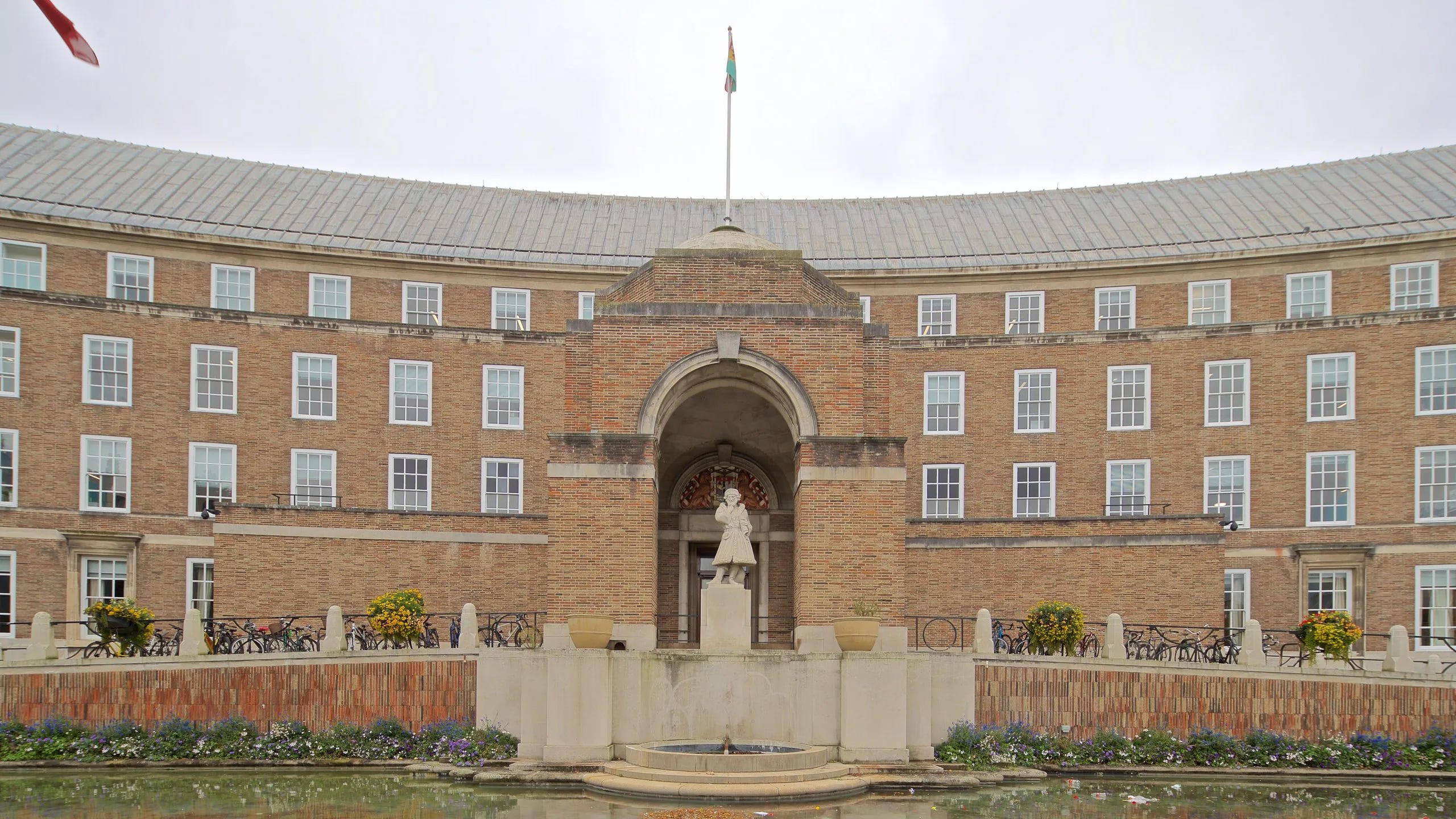
[Bristol City Council headquarters, City Hall, College Green. The rainbow flag flies above the building where a resident's Freedom of Information request was called vexatious.]
There’s a word Bristol City Council likes.
It sounds legal. It sounds serious. It sounds like the kind of word arrived at — reluctantly, professionally — after carefully examining the evidence and applying the correct statutory test.
The word is vexatious.
Somewhere in a Bristol City Council office, on a completely ordinary afternoon, a person with a job title and a qualification and a lanyard looked at a question from a resident — someone who lives in East Bristol, pays their council tax every month without fail, and had the brass neck to ask why their road had been blocked — and reached for that word.
Typed it into a formal response.
Sent it.
Your request is manifestly unreasonable. Vexatious. Refused. Have a nice day.
The resident kept asking.
On 20 March 2026, the Information Commissioner’s Office published its decision notice. A Bristol resident had requested information about road blocks installed by Bristol City Council as part of the East Bristol Liveable Neighbourhood project. The council refused under regulation 12(4)(b) of the Environmental Information Regulations. Manifestly unreasonable, they said.
Vexatious.
The Commissioner’s finding was unambiguous (ICO decision notice, 20 March 2026 — reference number to be inserted):
The council failed to demonstrate that the request was manifestly unreasonable. It was not entitled to refuse.
Not close. Not a marginal call. The Commissioner found the request had been incorrectly categorised. The legal threshold hadn’t been met. It hadn’t been waved at from a distance.
The council is now required to go back and actually answer the question.
You know. The one they called vexatious.
Did the person who made that decision not understand the regulation they were applying?
Or did they understand it — and apply it anyway?
Most bad decisions aren’t made by villains. They’re made by people who didn’t know better. Incompetence before malice. It’s almost always the simpler answer.
However, Bristol has a rare talent for making the simpler answer feel inadequate.
The East Bristol Liveable Neighbourhood project is not a neutral piece of road furniture. The £5.8m scheme, launched across Barton Hill, Redfield and St George in October 2024, comes pre-loaded with a worldview — active travel, filtered permeability, liveable streets, modal filters, the full glossy vocabulary of progressive urban planning. Bristol City Council doesn’t just run it. It believes in it. Ideologically. In the way institutions believe in things when the belief has been credentialled and celebrated through every layer for years.
When an institution believes in something that hard, a question about it stops being a question. It becomes a challenge. An act of hostility by someone who simply doesn’t understand what the council is trying to achieve here.
Vexatious, even.
The legal word and the emotional response arrive at the same address. The difference is only one of them is supposed to require evidence.
The gap between the feeling and the legal conclusion — the pause where a properly trained decision-maker stops and asks does the evidence actually support this — that gap closed. The ideology reached the verdict. The regulation provided the word. The word was applied.
They didn’t apply a legal test. They applied a feeling — and then went looking for the paperwork.
That’s a reaction with a stamp on it.
This is not about the person answering the phone. Or processing the payment. Or emptying the bin on a wet Tuesday morning in Barton Hill. That’s not what’s in question.
What’s in question is the decision-making layer. The people with delegated authority. The ones paid, presumably adequately, to know the difference between inconvenient and vexatious.
Is Bristol City Council actually competent enough to be a council?
In the places that matter — where law meets judgment, where a resident’s legal right to information depends on someone correctly understanding what a regulation means — is this institution producing decisions that hold up?
The ICO says: not this time.
And if not this time — where else?
Housing decisions. Planning applications. Equalities assessments. Safeguarding thresholds. Every place where delegated authority meets a legal framework and someone has to apply it honestly, without the ideology arriving first.
These aren’t the headline decisions. They’re the small ones. The ones nobody appeals, nobody scrutinises, nobody even knows to question. Which is precisely why they matter most.
The big decisions get scrutinised. The small ones just get made. And in Bristol, the small ones are where the ideology does its quietest work.
One bad decision is a mistake. A pattern has a different name.
This isn’t Bristol’s first ICO problem. In September 2025, a formal enforcement notice for 231 overdue subject access requests, some dating back to January 2022. Sally-Anne Poole, Head of Investigations at the ICO: “Our investigation has found that the Council’s approach towards compliance demonstrates a poor organisational attitude towards data rights and compliance with the law.” (ICO enforcement notice, 24 September 2025). And in 2023, the ICO upheld a Freedom of Information and EIR complaint — a FOI refusal over Stoke Lodge Playing Fields — finding Bristol had misused the same manifestly unreasonable exception. (ICO decision notice 156483, 10 February 2023)
Poor organisational attitude.
That’s regulator language for: you knew, and you didn’t care.
Bristol City Council councillors have appeared in formal chamber settings — the actual chamber where legal and democratic decisions are made on behalf of every resident — holding LGBTQ placards, as documented in Bristol council proceedings. Expression. Feeling. A democratic right to demonstrate values. Welcomed.
A resident asks why their road is blocked.
Vexatious.
Same institution. Same building. Same democratic mandate.
The council gets to feel. The council tax payer has to justify.
This isn’t an inconsistency. Inconsistencies are accidental. This is selective institutional permission — the building deciding whose voice registers, whose question is legitimate, whose challenge gets a legal response and whose gets a legal weapon.
One set of people in that building get to wave a placard. Another set get their legal rights stamped out with a word the council didn’t even understand.
Except the ICO noticed. And said so. In writing. On the record. Publicly.
Language is always the tell. Always.
Manifestly unreasonable. It sounds like a conclusion reached through careful examination — evidence marshalled, threshold applied, finding produced.
However, when the Commissioner looked behind it, there was nothing there. Just the word. Borrowed from a legal framework. Stripped of content. Redeployed as a door-closing device.
And Bristol has built an entire vocabulary out of words exactly like this.
Liveable. Sustainable. Community engagement. Equalities considerations. Manifestly unreasonable.
Words that perform competence without containing any. Language that points at a process that either doesn’t exist or was completed before the question was even asked.
Bristol doesn’t refuse your question. It launders the refusal through a word that sounds like it went to university.
Vexatious sits comfortably in that list. In Bristol’s hands it means: your question is inconvenient, and we have found a word that makes inconvenience sound like jurisprudence.
The resident kept asking anyway. The ICO said they were right to.
You see, there’s a generation of public sector decision-makers who took a very similar route to get here. University, late nineties or early 2000s. Public policy. Urban planning. Social sciences. Equalities law. Faculties that had increasingly shifted — not with a manifesto, just with steady accumulated pressure on what questions got asked and what answers were acceptable.
What you were previously supposed to ask was what is legally correct. What you started asking instead was what is ideologically sound. In many cases the distinction dissolved — the qualification and the worldview fused into something that felt, to the person carrying it, like simply knowing how to do the job properly. The graduate doesn’t experience it as bias. They experience it as correct professional judgment.
By the time that cohort reached decision-making authority, the framework was invisible.
Not a lens they were applying. Just the way things are assessed.
The qualification didn’t teach them how to think. It taught them what to conclude. The thinking was optional. The conclusion was mandatory.
So when someone opens an EIR request about road blocks in East Bristol, the ideological conclusion may already be sitting there waiting. The EBLN project is good. Active travel is good. A legal challenge to it is therefore — at some level that precedes conscious thought — suspect. The regulation offers a word. The word fits the feeling.
The ideology reaches the verdict. The law signs the paperwork.
The only winner from a successful vexatious classification is the project itself — kept clean, kept unscrutinised, kept beyond the reach of the person whose street it runs through.
Here’s what this ruling is actually about — and it’s not one EIR request, one set of road blocks, one overturned refusal in East Bristol.
It’s about council accountability. About local government transparency. About an institution that cannot correctly apply a legal threshold on its own conduct — and what that tells us about every other threshold it applies. Every day. On decisions that never reach an ICO complaint because the person asking didn’t know they could push back. Or tried once, got called vexatious, and gave up.
Picture that person. They read the refusal notice. They assume the council must know what it’s doing. They put the letter in a drawer. They never find out they were right to ask.
That person is the reason this matters.
A council that can’t apply its own legal framework honestly isn’t governing. It’s just occupying the building and hoping nobody checks.
If the language doesn’t mean what it says, how do we know the decisions mean what they claim?
Bristol City Council chose this response — chose to call a resident’s question vexatious. A person with authority, inside a framework they were employed to understand, made that choice.
The ICO has told them they were wrong. The resident was right. The council has to go back and answer properly.
Somewhere in a Bristol City Council office, a person with a job title and a qualification and a lanyard is going to have to reopen that request.
The resident who kept asking is still waiting.
And that word — the one they mistook for law, the one they called a decision, the one they used to send a resident away?
It’s vexatious. And this time, it fits.
The Almighty Gob is a Bristol-based publication covering politics, power, and institutional accountability.