
Bristol's Greens Just Told Developers They Don't Need to Build Affordable Homes. Here's Why.
The answer to Bristol's housing crisis is already built. Nobody chose to use it. And that's exactly why.

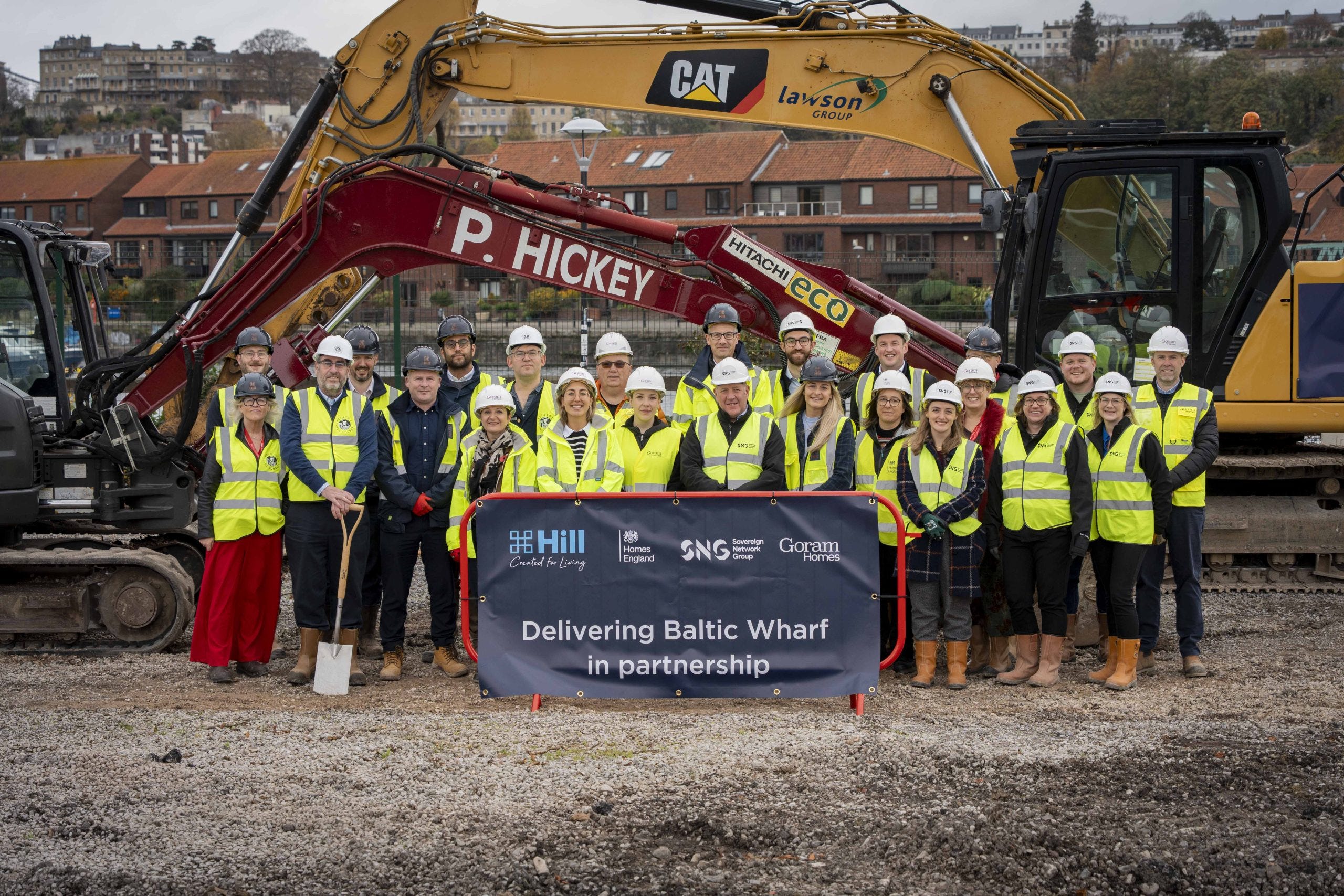
Tony Dyer, leader of Bristol City Council, sat down with a property industry publication earlier this year and said this:
“People can’t live in planning permissions.”
His words. His choice.
Hold that quote. We’re coming back to it. And when we do, you’ll understand not only why he said it — but what it tells you about everyone who chose not to ask the question that was sitting right in front of them.
21,000 People Are Waiting. 1,600 Families Are in Hotels.
Look at what’s actually there.
More than 21,000 people on Bristol’s HomeChoice waiting list. Not because the queue moves slowly. Because for most of them, it doesn’t move at all.
Then there are around 1,600 households in temporary accommodation. Almost always families with children. Hotels. Single rooms in HMOs. Swindon. Taunton. Newport. Children changing schools. Parents who stopped working. Lives suspended indefinitely.
Is that practical? Is that logical? What is the likely outcome for those children?
And now — quietly — something shifted.
The Policy Nobody Announced
Bristol’s Green-led council changed their affordable housing policy.
Previously, developers included between 20 and 40 per cent affordable homes in any development. Enforced through a Section 106 agreement. A legal obligation baked into planning permission itself.
Now? That requirement reduces to zero.
Not trimmed. Not renegotiated. Zero.
If a developer argues their scheme is not viable with affordable homes included, Bristol’s planners agree — and grant permission anyway. All the market-rate flats. None of the affordable ones.
No press conference. No democratic mandate. A quiet policy tweak.
The kind that gets noticed eventually. Usually after the damage is done.
The Viability Crisis Is Real. What They Choose To Do About It Is The Question.
The viability crisis is genuine. Fairness demands saying so.
Post-Grenfell building regulations added significant costs to every new development. Materials, labour, financing — all up. Sites that made sense five years ago no longer stack up. Developers sit on planning permissions rather than build at a loss.
And here’s the tension nobody wants to name plainly.
On edge-of-city greenfield sites, building is cheaper. Developers absorb affordable housing requirements and still turn a profit. Those sites are greenbelt — fields, habitats, nature.
Build where Bristol actually needs density — the crescent of inner-city industrial estates from St Werburghs through to Bedminster, Fishponds, the city centre — and costs spike. Affordable housing requirements become the first casualty.
Someone always pays the bill. The question is who.
Is it practical to let developers off that bill entirely? No. Is it logical from a developer’s perspective to wait out the policy environment? Yes. What is the likely outcome if nothing changes? Those sites stay idle. The waiting list grows. The crisis deepens.
The Workaround. And Why It Might Work. Or Might Not.
Dyer’s answer is more sophisticated than the headlines suggested.
The plan is not to abandon affordable housing. It is to fund it differently.
Instead of Section 106, the council brings housing associations into the deal. Government grants flow to the housing association — not the developer. The housing association block-buys a percentage of new homes and rents them at social rent levels.
The mechanism already exists. Baltic Wharf — where the council dropped its agreed affordable home requirement last summer — became the proof of concept. Sovereign Network Group stepped in. The 40 per cent affordable target remains on track.
There is a logic to it.
The logic holds. If the government funds it.
It partially holds. If the government funds some of it.
It produces zero affordable homes. If the funding does not arrive.
Ministers have announced a social housing investment programme. Dyer sees “first signs” of money. His exact words: “It does need a massive Government intervention.”
He’s right about that. The question is whether a policy framework has been redesigned around a funding commitment that does not yet exist at the required scale.
Think about that.
Government funds less than promised. Housing associations cannot close deals. Developers build at full market rate. Zero Section 106. Zero block-buy. Zero affordable homes. The council points at Westminster. Westminster points at viability. The 21,000 wait.
Not random. Not accidental. A predictable outcome from predictable conditions that nobody in that chamber chose to name out loud.
Tweedle Dee and Tweedle Dumb
Before we get to the answer nobody chose to find — meet the two people who chose not to find it.
Councillor Rob Bryher. Chair of Development Control Committee A. The committee that approves developments. The one that waved through wave after wave of purpose-built student accommodation across Bristol.
He holds an MSc with Distinction in Urban Planning from UWE Bristol.
With. Distinction.
Then there’s Tony Dyer. No formal urban planning qualification. Calling on Westminster for money. Having what can only be described as a Homer Simpson moment while the answer sits half-empty a few streets away wearing the wrong sign on the door.
One has the academic credentials to have spotted this coming. The other is the leader asking the government to fund a solution from scratch.
Between them — as this blog documented previously after tracking Bristol’s planning decisions for years — nobody chose to ask the question sitting there in plain sight.
Where are all the students coming from?
And what happens to the buildings when they stop coming?
The Answer Was Already Built. Nobody Chose To Use It.
Here’s why. Here’s the answer the subtitle promised you.
Bristol already built it. It built it for the wrong people.
Purpose-built student accommodation. Hundreds of blocks. Thousands of rooms. En-suites. Self-contained units. Central locations. Already standing. Already there.
Avon Point. Around 600 beds. Metalworks Bedminster. 819 beds. Dozens more scattered across the city like answers to a question nobody chose to ask.
UK university enrolment has fallen for the first time in almost a decade. Two consecutive years of decline. International student numbers dropped 6% in 2024/25 — the second year running. Nigeria down 33%. India down 12%. China down 5%. Visa restrictions, mounting debt, a saturated graduate job market. Universities shedding courses. Shedding staff. Shedding students.
The pipeline that filled those buildings is contracting. Fast.
So what happens to nearly 1,400 purpose-built student beds — two buildings alone — when the students choose not to come?
They sit there.
Rooms. Kitchens. Bathrooms. Buildings with more infrastructure than most new council developments carry on day one. Half-empty. While around 1,600 families sleep in hotels in Swindon.
Is that practical? No. Is that logical? No. What is the likely outcome when nobody joins those dots?
The conversion work needed is real — not, however, comparable to building from scratch on expensive brownfield land. These are modern, managed, self-contained units. Structural bones already in place. The viability gap Dyer asks the government to fund may already be partially closed by buildings standing in Bristol right now.
Build for students. Ignore the enrolment cliff edge. Thousands of beds for a shrinking market. The housing crisis and the solution occupy the same city, completely unaware of each other — while the leader sits down with a property trade publication and asks Westminster for money.
That’s why. That’s the answer nobody chose to see.
“A Developers’ Charter. Pure and Simple.”
Labour’s Tom Renhard did not mince it.
“This is a developers’ charter. Pure and simple.”
Right about the mechanism. Here is the pattern. Named slowly.
The Greens arrived promising to build 1,000 council homes a year. They withdrew those plans. They sold 1,222 existing council homes at auction — more than they ever promised to build. Now they’ve created a framework where developers build without Section 106 contributions, relying on grants showing “first signs.”
That is not a series of unrelated decisions. That is a pattern.
Start with incompetence before malice. Fine. At what point does a consistent pattern of outcomes — benefiting developers, reducing affordable stock, shifting costs onto the public purse — become indistinguishable from a policy position, regardless of intent?
Back To Those Words
“People can’t live in planning permissions.”
His words. His removal of agency from the language.
A council leader who believed in resident empowerment would say: people need homes, not planning permissions.
Instead he reached for can’t live in. Passive. Disempowering. As if the permissions without homes simply happened to people — rather than being granted by a council that chose to decouple them from affordable housing requirements.
The man whose administration chose to sell 1,222 council homes. Chose to withdraw the 1,000-homes-a-year target. Chose to reduce Section 106 requirements to zero. Chose to redesign the planning framework and call it progress.
Uses language that removes choice from the sentence entirely.
People also chose not to repurpose thousands of half-empty student beds sitting across this city right now.
People chose to redesign the planning framework around funding that does not yet exist at the required scale.
People chose not to ask the question staring them in the face.
And the 1,600 families in temporary accommodation are not waiting on a policy framework. Not waiting on Section 106 negotiations or grant applications showing “first signs.”
They are waiting on a home.
His words. His choices. Their consequences. And now you know exactly why.
URL SLUG: bristol-affordable-housing-section-106-student-accommodation-housing-crisis-tony-dyer
SUBSTACK TAGS: Bristol, Housing Crisis, Affordable Housing, Bristol City Council, Green Party, Section 106, Student Accommodation, Tony Dyer, Local Government, UK Politics
SOCIAL HOOK — X/Twitter (under 200 characters): Bristol built thousands of homes. Called them student accommodation. Now they’re half-empty. Meanwhile around 1,600 families are in hotels in Swindon. Nobody chose to join those dots. 🧵
LINKEDIN: Bristol’s housing crisis and its student accommodation oversupply occupy the same city. Nobody in the council chamber chose to connect them. The analysis is here.
SUBSTACK NOTE: The Section 106 story everybody covered. The student accommodation angle nobody chose to ask about. Both in one piece — with the numbers to back it up.
The Almighty Gob has published 88+ investigations into Bristol City Council and UK institutional dysfunction — tracking planning decisions, FOI compliance failures, and the gap between political promises and governing reality since 2024. All claims sourced and nuclear-proof. Read more at thealmightygob.com and on Substack.
Sources & References
Bristol Housing Register & Temporary Accommodation
Bristol City Council — HomeChoice Bristol Allocation Scheme (June 2025). Confirms 21,600 households on register. https://www.bristol.gov.uk/files/documents/9746-home-choice-bristol-allocation-scheme-june-2025/file
Housing Today — “Bristol City Council plans to convert council homes into temporary accommodation” (August 2024). Government data to March 2024: 1,541 households in temporary accommodation. https://www.housingtoday.co.uk/news/bristol-city-council-plans-to-convert-council-homes-into-temporary-accommodation/5131166.article
Bristol City Council — Homelessness and Rough Sleeping Strategy 2025–2030. Chart: Total households in temporary accommodation 2020–2024. https://www.bristol.gov.uk/files/documents/1119-homeless-strategy-2019-to-2024/file
Section 106 Policy Change
Bristol247 — “Labour slam Greens dropping affordable homes targets for developers” (February 2025). Confirms practice note change, Tom Renhard “developers’ charter” quote, Jenny Bartle Green response, Alex Hearn viability evidence. https://www.bristol247.com/news-and-features/news/labour-slam-greens-dropping-affordable-homes-targets-developers/
The Bristol Cable — “Despite acute housing need in Bristol, developers are dodging their duties” (March 2025). Section 106 context, viability assessment system, 1,600 in temporary accommodation figure, 22,000 on waiting list. https://thebristolcable.org/2025/03/despite-acute-housing-need-in-bristol-developers-are-dodging-their-duties/
Baltic Wharf
Goram Homes — “Goram Homes signs deal with The Hill Group to deliver Baltic Wharf” (October 2025). Confirms Sovereign Network Group (SNG), 66 affordable homes, 40% of 166 total, 50 social rent, 16 shared ownership. https://www.goramhomes.co.uk/goram-homes-signs-deal-with-the-hill-group-to-deliver-baltic-wharf/
Bristol247 — “Council-backed housing scheme breaks ground” (November 2025). Confirms groundbreaking, Tony Dyer attendance, 22,000 on waiting list cited. https://www.bristol247.com/news-and-features/news/council-backed-housing-scheme-breaks-ground/
Bristol247 — “Baltic Wharf changes approved” (July 2025). Background on planning permission change and Sovereign Network Group involvement. https://www.bristol247.com/news-and-features/news/baltic-wharf-changes-approved/
Tony Dyer Quote & Background
Bristol Property Agents Association — “Greens Take the Lead” interview with Tony Dyer (March 2025). Source of verified quote: “people can’t live in a planning application” and “It does need a massive Government intervention.” https://www.bpaa.net/news/greens-take-the-lead
Bristol Green Party — Councillor profile: Tony Dyer. Confirms IT consultant and data analyst background, self-developed expertise in housing and urban planning. https://bristolgreenparty.org.uk/councillor/tony-dyer/
Core Cities — “Cllr Tony Dyer, Leader of Bristol City Council.” Confirms working background in IT consultancy, data analytics and business. https://www.corecities.com/news-insights/cllr-tony-dyer-leader-bristol-city-council
1,000 Homes Promise & Council Home Sales
ITV News West Country — “Affordable homes, rent controls, and a Clean Air Zone: the Green Party’s plans for Bristol” (May 2024). Confirms 1,000 affordable homes per year manifesto pledge. https://www.itv.com/news/westcountry/2024-05-07/housing-transport-and-energy-the-green-partys-plans-for-bristol
Bristol World — “City Hall to sell-off 1,200 council houses and axe two more housing projects” (January 2025). Confirms 1,222 council homes proposed for sale, Baltic Wharf and Hengrove abandonments. https://www.bristolworld.com/news/politics/council/city-hall-to-sell-off-1200-council-houses-and-axe-two-more-housing-projects-in-shock-budget-plans-4939132
Bristol Labour — “1,222 Council Homes to be sold in fire-sale under Green Party plans” (January 2025). Labour response and analysis. https://www.labourbristol.co.uk/2025/01/10/1222-council-homes-to-be-sold-in-fire-sale-under-green-party-plans/
Student Accommodation
Watkin Jones — “819-bed PBSA scheme in Bristol practically completes” (2024). Confirms Metalworks Bedminster, 819 beds, Dalby Avenue, managed by Fresh Student Living, University of Bristol nominations agreement. https://watkinjonesplc.com/news-insights/2024/819-bed-pbsa-scheme-in-bristol-practically-completes/
Unite Students — Avon Point property listing. Confirms “almost 600 rooms,” Temple Quarter Enterprise Zone, opened 2025. https://www.unitestudents.com/student-accommodation/bristol/avon-point
University of Bristol — Avon Point residence guide. Confirms address: 12 Feeder Road, Bristol BS2 0PW. https://www.bristol.ac.uk/students/life-in-bristol/accommodation/university-accommodation/residence-guides/avon-point-residence-guide/
Student Enrolment Decline
HESA — “UK higher education student numbers fall for second year in a row” (January 2026). Official statistics: 2024/25 academic year. Confirms overall 1% decline, international students down 6%, India -12%, China -5%, Nigeria -33%. https://www.hesa.ac.uk/news/27-01-2026/uk-he-student-numbers-fall-second-year-in-a-row
HESA — Higher Education Student Statistics: UK 2023/24 (March 2025). Confirms first decline in ten years for 2023/24. https://www.hesa.ac.uk/news/20-03-2025/he-student-statistics-2324-released
Rob Bryher
The Almighty Gob — “Bristol: The City That Collected Props.” Original documentation of Bryher’s MSc with Distinction in Urban Planning (UWE) and role as Chair of Development Control Committee A. https://www.thealmightygob.com/p/bristol-the-city-that-collected-props
Tony Dyer, leader of Bristol City Council, sat down with a property industry publication earlier this year and said this:
“People can’t live in planning permissions.”
His words. His choice.
Hold that quote. We’re coming back to it. And when we do, you’ll understand not only why he said it — but what it tells you about everyone who chose not to ask the question that was sitting right in front of them.
21,000 People Are Waiting. 1,600 Families Are in Hotels.
Look at what’s actually there.
More than 21,000 people on Bristol’s HomeChoice waiting list. Not because the queue moves slowly. Because for most of them, it doesn’t move at all.
Then there are around 1,600 households in temporary accommodation. Almost always families with children. Hotels. Single rooms in HMOs. Swindon. Taunton. Newport. Children changing schools. Parents who stopped working. Lives suspended indefinitely.
Is that practical? Is that logical? What is the likely outcome for those children?
And now — quietly — something shifted.
The Policy Nobody Announced.
Bristol’s Green-led council changed their affordable housing policy.
Previously, developers included between 20 and 40 per cent affordable homes in any development. Enforced through a Section 106 agreement. A legal obligation baked into planning permission itself.
Now? That requirement reduces to zero.
Not trimmed. Not renegotiated. Zero.
If a developer argues their scheme is not viable with affordable homes included, Bristol’s planners agree — and grant permission anyway. All the market-rate flats. None of the affordable ones.
No press conference. No democratic mandate. A quiet policy tweak.
The kind that gets noticed eventually. Usually after the damage is done.
The Viability Crisis Is Real. What They Choose To Do About It Is The Question.
The viability crisis is genuine. Fairness demands saying so.
Post-Grenfell building regulations added significant costs to every new development. Materials, labour, financing — all up. Sites that made sense five years ago no longer stack up. Developers sit on planning permissions rather than build at a loss.
And here’s the tension nobody wants to name plainly.
On edge-of-city greenfield sites, building is cheaper. Developers absorb affordable housing requirements and still turn a profit. Those sites are greenbelt — fields, habitats, nature.
Build where Bristol actually needs density — the crescent of inner-city industrial estates from St Werburghs through to Bedminster, Fishponds, the city centre — and costs spike. Affordable housing requirements become the first casualty.
Someone always pays the bill. The question is who.
Is it practical to let developers off that bill entirely? No. Is it logical from a developer’s perspective to wait out the policy environment? Yes. What is the likely outcome if nothing changes? Those sites stay idle. The waiting list grows. The crisis deepens.
The Workaround. And Why It Might Work. Or Might Not.
Dyer’s answer is more sophisticated than the headlines suggested.
The plan is not to abandon affordable housing. It is to fund it differently.
Instead of Section 106, the council brings housing associations into the deal. Government grants flow to the housing association — not the developer. The housing association block-buys a percentage of new homes and rents them at social rent levels.
The mechanism already exists. Baltic Wharf — where the council dropped its agreed affordable home requirement last summer — became the proof of concept. Sovereign Network Group stepped in. The 40 per cent affordable target remains on track.
There is a logic to it.
The logic holds. If the government funds it.
It partially holds. If the government funds some of it.
It produces zero affordable homes. If the funding does not arrive.
Ministers have announced a social housing investment programme. Dyer sees “first signs” of money. His exact words: “It does need a massive Government intervention.”
He’s right about that. The question is whether a policy framework has been redesigned around a funding commitment that does not yet exist at the required scale.
Think about that.
Government funds less than promised. Housing associations cannot close deals. Developers build at full market rate. Zero Section 106. Zero block-buy. Zero affordable homes. The council points at Westminster. Westminster points at viability. The 21,000 wait.
Not random. Not accidental. A predictable outcome from predictable conditions that nobody in that chamber chose to name out loud.
Tweedle Dee and Tweedle Dumb.
Before we get to the answer nobody chose to find — meet the two people who chose not to find it.
Councillor Rob Bryher. Chair of Development Control Committee A. The committee that approves developments. The one that waved through wave after wave of purpose-built student accommodation across Bristol.
He holds an MSc with Distinction in Urban Planning from UWE Bristol.
With. Distinction.
Then there’s Tony Dyer. No formal urban planning qualification. Calling on Westminster for money. Having what can only be described as a Homer Simpson moment while the answer sits half-empty a few streets away wearing the wrong sign on the door.
One has the academic credentials to have spotted this coming. The other is the leader asking the government to fund a solution from scratch.
Between them — as this blog documented previously after tracking Bristol’s planning decisions for years — nobody chose to ask the question sitting there in plain sight.
Where are all the students coming from?
And what happens to the buildings when they stop coming?
The Answer Was Already Built. Nobody Chose To Use It.
Here’s why. Here’s the answer the subtitle promised you.
Bristol already built it. It built it for the wrong people.
Purpose-built student accommodation. Hundreds of blocks. Thousands of rooms. En-suites. Self-contained units. Central locations. Already standing. Already there.
Avon Point. Around 600 beds. Metalworks Bedminster. 819 beds. Dozens more scattered across the city like answers to a question nobody chose to ask.
UK university enrolment has fallen for the first time in almost a decade. Two consecutive years of decline. International student numbers dropped 6% in 2024/25 — the second year running. Nigeria down 33%. India down 12%. China down 5%. Visa restrictions, mounting debt, a saturated graduate job market. Universities shedding courses. Shedding staff. Shedding students.
The pipeline that filled those buildings is contracting. Fast.
So what happens to nearly 1,400 purpose-built student beds — two buildings alone — when the students choose not to come?
They sit there.
Rooms. Kitchens. Bathrooms. Buildings with more infrastructure than most new council developments carry on day one. Half-empty. While around 1,600 families sleep in hotels in Swindon.
Is that practical? No. Is that logical? No. What is the likely outcome when nobody joins those dots?
The conversion work needed is real — not, however, comparable to building from scratch on expensive brownfield land. These are modern, managed, self-contained units. Structural bones already in place. The viability gap Dyer asks the government to fund may already be partially closed by buildings standing in Bristol right now.
Build for students. Ignore the enrolment cliff edge. Thousands of beds for a shrinking market. The housing crisis and the solution occupy the same city, completely unaware of each other — while the leader sits down with a property trade publication and asks Westminster for money.
That’s why. That’s the answer nobody chose to see.
“A Developers’ Charter. Pure and Simple.”
Labour’s Tom Renhard did not mince it.
“This is a developers’ charter. Pure and simple.”
Right about the mechanism. Here is the pattern. Named slowly.
The Greens arrived promising to build 1,000 council homes a year. They withdrew those plans. They sold 1,222 existing council homes at auction — more than they ever promised to build. Now they’ve created a framework where developers build without Section 106 contributions, relying on grants showing “first signs.”
That is not a series of unrelated decisions. That is a pattern.
Start with incompetence before malice. Fine. At what point does a consistent pattern of outcomes — benefiting developers, reducing affordable stock, shifting costs onto the public purse — become indistinguishable from a policy position, regardless of intent?
Back To Those Words.
“People can’t live in planning permissions.”
His words. His removal of agency from the language.
A council leader who believed in resident empowerment would say: people need homes, not planning permissions.
Instead he reached for can’t live in. Passive. Disempowering. As if the permissions without homes simply happened to people — rather than being granted by a council that chose to decouple them from affordable housing requirements.
The man whose administration chose to sell 1,222 council homes. Chose to withdraw the 1,000-homes-a-year target. Chose to reduce Section 106 requirements to zero. Chose to redesign the planning framework and call it progress.
Uses language that removes choice from the sentence entirely.
People also chose not to repurpose thousands of half-empty student beds sitting across this city right now.
People chose to redesign the planning framework around funding that does not yet exist at the required scale.
People chose not to ask the question staring them in the face.
And the 1,600 families in temporary accommodation are not waiting on a policy framework. Not waiting on Section 106 negotiations or grant applications showing “first signs.”
They are waiting on a home.
His words. His choices. Their consequences. And now you know exactly why.
The Almighty Gob has published 88+ investigations into Bristol City Council and UK institutional dysfunction — tracking planning decisions, FOI compliance failures, and the gap between political promises and governing reality since 2024. All claims sourced and nuclear-proof.
Sources & References.
Bristol Housing Register & Temporary Accommodation.
Bristol City Council — HomeChoice Bristol Allocation Scheme (June 2025). Confirms 21,600 households on register. https://www.bristol.gov.uk/files/documents/9746-home-choice-bristol-allocation-scheme-june-2025/file
Housing Today — “Bristol City Council plans to convert council homes into temporary accommodation” (August 2024). Government data to March 2024: 1,541 households in temporary accommodation. https://www.housingtoday.co.uk/news/bristol-city-council-plans-to-convert-council-homes-into-temporary-accommodation/5131166.article
Bristol City Council — Homelessness and Rough Sleeping Strategy 2025–2030. Chart: Total households in temporary accommodation 2020–2024. https://www.bristol.gov.uk/files/documents/1119-homeless-strategy-2019-to-2024/file
Section 106 Policy Change.
Bristol247 — “Labour slam Greens dropping affordable homes targets for developers” (February 2025). Confirms practice note change, Tom Renhard “developers’ charter” quote, Jenny Bartle Green response, Alex Hearn viability evidence. https://www.bristol247.com/news-and-features/news/labour-slam-greens-dropping-affordable-homes-targets-developers/
The Bristol Cable — “Despite acute housing need in Bristol, developers are dodging their duties” (March 2025). Section 106 context, viability assessment system, 1,600 in temporary accommodation figure, 22,000 on waiting list. https://thebristolcable.org/2025/03/despite-acute-housing-need-in-bristol-developers-are-dodging-their-duties/
Baltic Wharf.
Goram Homes — “Goram Homes signs deal with The Hill Group to deliver Baltic Wharf” (October 2025). Confirms Sovereign Network Group (SNG), 66 affordable homes, 40% of 166 total, 50 social rent, 16 shared ownership. https://www.goramhomes.co.uk/goram-homes-signs-deal-with-the-hill-group-to-deliver-baltic-wharf/
Bristol247 — “Council-backed housing scheme breaks ground” (November 2025). Confirms groundbreaking, Tony Dyer attendance, 22,000 on waiting list cited. https://www.bristol247.com/news-and-features/news/council-backed-housing-scheme-breaks-ground/
Bristol247 — “Baltic Wharf changes approved” (July 2025). Background on planning permission change and Sovereign Network Group involvement. https://www.bristol247.com/news-and-features/news/baltic-wharf-changes-approved/
Tony Dyer Quote & Background.
Bristol Property Agents Association — “Greens Take the Lead” interview with Tony Dyer (March 2025). Source of verified quote: “people can’t live in a planning application” and “It does need a massive Government intervention.” https://www.bpaa.net/news/greens-take-the-lead
Bristol Green Party — Councillor profile: Tony Dyer. Confirms IT consultant and data analyst background, self-developed expertise in housing and urban planning. https://bristolgreenparty.org.uk/councillor/tony-dyer/
Core Cities — “Cllr Tony Dyer, Leader of Bristol City Council.” Confirms working background in IT consultancy, data analytics and business. https://www.corecities.com/news-insights/cllr-tony-dyer-leader-bristol-city-council
1,000 Homes Promise & Council Home Sales.
ITV News West Country — “Affordable homes, rent controls, and a Clean Air Zone: the Green Party’s plans for Bristol” (May 2024). Confirms 1,000 affordable homes per year manifesto pledge. https://www.itv.com/news/westcountry/2024-05-07/housing-transport-and-energy-the-green-partys-plans-for-bristol
Bristol World — “City Hall to sell-off 1,200 council houses and axe two more housing projects” (January 2025). Confirms 1,222 council homes proposed for sale, Baltic Wharf and Hengrove abandonments. https://www.bristolworld.com/news/politics/council/city-hall-to-sell-off-1200-council-houses-and-axe-two-more-housing-projects-in-shock-budget-plans-4939132
Bristol Labour — “1,222 Council Homes to be sold in fire-sale under Green Party plans” (January 2025). Labour response and analysis. https://www.labourbristol.co.uk/2025/01/10/1222-council-homes-to-be-sold-in-fire-sale-under-green-party-plans/
Student Accommodation.
Watkin Jones — “819-bed PBSA scheme in Bristol practically completes” (2024). Confirms Metalworks Bedminster, 819 beds, Dalby Avenue, managed by Fresh Student Living, University of Bristol nominations agreement. https://watkinjonesplc.com/news-insights/2024/819-bed-pbsa-scheme-in-bristol-practically-completes/
Unite Students — Avon Point property listing. Confirms “almost 600 rooms,” Temple Quarter Enterprise Zone, opened 2025. https://www.unitestudents.com/student-accommodation/bristol/avon-point
University of Bristol — Avon Point residence guide. Confirms address: 12 Feeder Road, Bristol BS2 0PW. https://www.bristol.ac.uk/students/life-in-bristol/accommodation/university-accommodation/residence-guides/avon-point-residence-guide/
Student Enrolment Decline.
HESA — “UK higher education student numbers fall for second year in a row” (January 2026). Official statistics: 2024/25 academic year. Confirms overall 1% decline, international students down 6%, India -12%, China -5%, Nigeria -33%. https://www.hesa.ac.uk/news/27-01-2026/uk-he-student-numbers-fall-second-year-in-a-row
HESA — Higher Education Student Statistics: UK 2023/24 (March 2025). Confirms first decline in ten years for 2023/24. https://www.hesa.ac.uk/news/20-03-2025/he-student-statistics-2324-released
Rob Bryher.
The Almighty Gob — “Bristol: The City That Collected Props.” Original documentation of Bryher’s MSc with Distinction in Urban Planning (UWE) and role as Chair of Development Control Committee A. https://www.thealmightygob.com/p/bristol-the-city-that-collected-props