
Epstein: The New Dallas. You've been watching this show for six years. You just didn't know it had a title.
There's a particular feeling you get when a television programme ends. Isn't there?

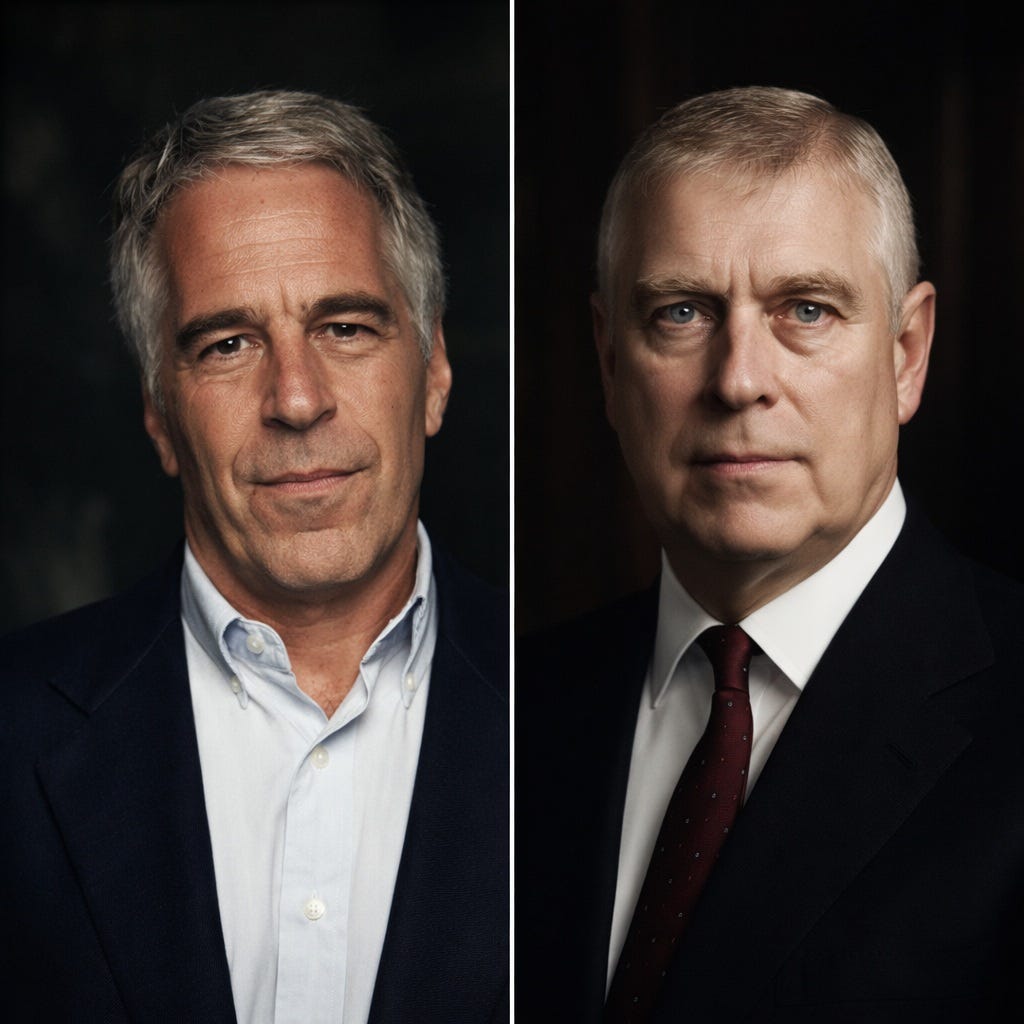
There’s a particular feeling you get when a television programme ends.
Not relief. Not closure. Something closer to mild bewilderment. Like — was that it? All that, and it just... stops?
You know the feeling. You’ve had it before.
Some shows never actually stop. They just find new ways to keep you watching.
Coronation Street. Emmerdale. Been running since before most of us were born. No finale planned. No resolution coming. Just the next episode, and the one after that, and the quiet assumption that there will always be another one.
Bear with me for thirty seconds, because this matters.
Dallas. American television. 1978 to 1991. Fourteen seasons. If you’re under forty, it’s probably just a word to you — a name your parents mentioned, a theme tune you vaguely recognise.
Here’s everything you need.
A dynasty built on oil money and moral vacancy. A ranch called South Fork — white fences, big Texas sky, the kind of wealth that doesn’t explain itself because it has never needed to.
A family who lied to each other, betrayed each other, destroyed each other, and somehow kept going.
Three to four hundred million viewers worldwide found themselves unable to look away.
Not because they admired these people. They didn’t.
Because these people confirmed something the audience already suspected. That somewhere, behind closed doors, in rooms that don’t appear on any floor plan, people like that existed. And that whatever they did — they always, always got away with it.
Remarkable, really. Given how many people were in the room.
Sit with that for a moment.
Does any of that feel familiar?
It should. Because for the past six years you’ve been watching a version of it. Same structure. Same cast dynamic. Same emotional machinery pulling you back, episode after episode, waiting for the resolution that somehow never quite arrives.
Take Jeffrey Epstein, for instance. Who had his own South Fork. A private island in the US Virgin Islands called Little Saint James. The suggestion was enough. The implication. The island sat in the public imagination doing exactly what South Fork always did — radiating a kind of obscene gravity that pulled everything around it into its orbit.
That feeling you had, just now, reading that?
That’s the show working on you.
Welcome to the new Dallas.
Who Shot JR?
On 21st March 1980, JR Ewing was shot. The world waited eight months to find out who pulled the trigger. Two hundred and fifty million Americans watched the reveal.
Not because anyone wanted JR to survive. He was, by any reasonable measure, a thoroughly horrible human being — venal, manipulative, and cheerfully unrepentant about both.
They watched because the question was the product. The not-knowing. The productive ambiguity of a man who’d made enough enemies that literally anyone could have done it.
Eight months. For a fictional shooting.
Jeffrey Epstein was found dead in his cell on 10th August 2019. The official verdict was suicide by hanging. He managed this, apparently, while on suicide watch, in a federal facility, with the cameras not working, and the guards asleep.
Every one of those details is true. You don’t need to add anything.
Suicide watch, apparently, is one of those terms that means different things to different people.
The question that followed — did he? — has been running ever since. Serving precisely the same narrative function.
Not resolution. Perpetual deferral.
Remember that phrase. We’re coming back to it.
Two Empires.
Dallas wasn’t just about one wealthy dynasty. The drama came from the collision between two.
The Ewings — oil money, new wealth, Texas swagger. Against the Barneses — older money, established connections, the power that doesn’t need to announce itself because it’s been there so long it’s part of the furniture.
New wealth versus old power. Each perfectly capable of destroying the other. Choosing not to. Because mutual destruction would be worse than mutual orbit.
Jeffrey Epstein’s wealth was never satisfactorily explained. It appeared fully formed, bought access that money alone doesn’t usually buy, and moved in ways that didn’t quite follow normal patterns. Nobody asked too many questions. Because people in rooms like that tend not to.
The Ewing empire. Loud. Fluid. Origin unclear.
And then there is the other empire.
The Royal Family. The oldest established wealth structure in the British imagination. Wrapped in ceremony and protocol so dense it functions as armour. The kind of institution that doesn’t respond to scrutiny — it waits for scrutiny to exhaust itself and go home.
Two empires. Two sets of rules that don’t apply to anyone else.
The point at which they intersected — a financier and Andrew Mountbatten-Windsor, formerly known as Prince Andrew, private jets and private islands, a friendship nobody in either circle apparently found troubling enough to mention — that intersection is what turned an American scandal into a global soap opera.
In October 2025, King Charles stripped his brother of every title, honour, and royal style he possessed. Quietly. Efficiently. In the language of institutional management rather than moral reckoning.
The writers decided one character had become a liability. So they wrote him out.
The Palace has always had a gift for that particular kind of paperwork.
Four months later, on 19th February 2026 — his 66th birthday — Thames Valley Police arrested Andrew Mountbatten-Windsor on suspicion of misconduct in public office. The first senior member of the British Royal Family to be arrested in nearly four hundred years.
He was released after eleven hours. He remains under investigation. Neither charged nor exonerated.
Four days later, Peter Mandelson — former Cabinet minister, former EU Trade Commissioner, former UK Ambassador to Washington, sacked by Prime Minister Keir Starmer after his Epstein emails became public — was also arrested on suspicion of misconduct in public office. Also released. Also under investigation.
The show, as you’ll have noticed, is very much still running.
The Cast.
No screenwriter alive could have written this room.
A financier whose wealth has no satisfactory origin story. A British socialite with a father who fell off a yacht under circumstances that remain productively unclear. A former royal with a visible perspiration problem and an apparent memory condition triggered specifically by dates, times, and the names of teenagers. A former President whose friendship with the man is documented in photographs.
And then there is the one nobody saw coming.
A former First Lady, Senator, Secretary of State, and presidential candidate who sat through six hours of congressional questioning — including, by the end, questions about UFOs and the pizzagate conspiracy theory — walked outside into the February air, and handed the entire proceedings back with a single observation.
If you’re serious about this investigation, she said, you’ll put Trump in this chair.
Then she went home.
Six hours. UFOs. Pizzagate. And they wonder why she looked tired.
Dallas had the Ewings. The Epstein saga has a cast list that makes the Ewings look like a parish council fundraising committee.
So how does a cast like this get assembled? Because it wasn’t random.
Money buys access. What people understand less clearly is what access actually purchases.
It purchases proximity. And proximity — in the right rooms, over sufficient time — purchases something considerably more valuable than either.
It purchases the averted gaze.
Not ignorance. Not oversight. The deliberate, professionally maintained averted gaze of people who have each independently calculated that not seeing something is considerably safer than seeing it.
No conspiracy required. Conspiracies need coordination, and coordination leaves traces.
This just requires a room full of people who all arrive, separately, at the same conclusion.
That looking away is in everyone’s interest.
Including theirs.
The Door Nobody Opened.
Here is where the cliffhanger lives. Not in the past. Right now. This week.
The Epstein Files Transparency Act was passed by Congress in November 2025. Near unanimously. It required the Justice Department to release every document in its possession related to Jeffrey Epstein within thirty days.
The DOJ released three million pages in January 2026.
Then stopped.
Among the documents that didn’t make the initial disclosure — filed as “incorrectly coded duplicates” — were FBI interview reports from 2019. Four interviews. With a woman making allegations of sexual abuse against a minor.
Against the current President of the United States.
Three of those four summaries were withheld. Sitting quietly in a DOJ database while the department told Congress it had released everything legally required.
It took an investigation by NPR — National Public Radio, America’s publicly funded news service — to find them.
The DOJ released the missing files on 6th March 2026. The same day this piece was written.
The White House declared Trump had been totally exonerated by the release of the Epstein files.
The files that had just been released after being withheld.
Sit with that for a moment.
The House Oversight Committee has now subpoenaed Attorney General Pam Bondi — in a bipartisan vote — to answer under oath why those documents were missing.
And why the department responsible for releasing the files was apparently monitoring the search history of the congressional members reading the unredacted versions.
In a soap opera, that’s not a subplot. That’s the season finale.
And then there are the redactions.
Millions of them. Black bars across page after page. The shape of information without the information itself.
In any other drama, the script tells the actors what to say. Here, the script has been handed to the audience with half the lines blacked out. We have been left to fill the gaps ourselves.
Which means we have become the writers.
Redactions don’t protect information. They amplify it. Because what the human imagination produces to fill a black bar is shaped entirely by everything it already suspects.
If you gathered every redacted line. Every blacked-out paragraph. Every withheld interview. Every document coded as duplicate that turned out not to be. If you compiled it all into a single unbroken script —
You wouldn’t have a spinoff. You wouldn’t have a sequel.
You’d have the original.
The pilot that was never meant to air. The show that was always running underneath — underneath the hearings, the depositions, the document releases, the congressional theatre. The one containing the lines everyone has been carefully performing around for six years without ever quite delivering.
Nobody is commissioning its release.
Well. Someone is. They’re just not telling us who.
That is not accountability. That is not justice.
That is, however, the most compelling unaired television in history.
Perpetual deferral. We said we’d come back to it.
Remember that feeling we started with?
Not relief. Not closure. Something closer to mild bewilderment. Like — was that it? All that, and it just... stops?
This isn’t that feeling.
Because this isn’t the end of anything. This is the end of an episode.
So here is where we leave it. Not with a conclusion. With the questions still open.
Who was running the operation? Not Epstein — Epstein was front of house. Who was running it.
Who decided, in 2008, that thirteen months was sufficient for what he did.
Who has been deciding which files get released and which get coded as duplicates.
And the one sitting underneath all the others — the question the entire production has been performing around since the night of 10th August 2019 —
Are they still there?
Still in those rooms.
Still deciding.
Remarkable, really. Given how many people must know the answer.
You’ve been watching this show for six years.
You just don’t know who’s been writing it.
Same time next week.
Written by John Langley — The Almighty Gob | thealmightygob.com Word count: 1,750 | Read time: 7 minutes Sources: NPR, NBC News, CNN, CBS News, Al Jazeera, ABC News, CNBC, Washington Post — 19th February to 6th March 2026. All allegations against named individuals are reported as allegations. Andrew Mountbatten-Windsor and Peter Mandelson have been arrested and released under investigation — neither has been charged nor convicted of any offence. Trump denies all wrongdoing. All claims are unproven in court. Independent blogger and satirical commentator. Not a journalist. Never claimed to be.