
It's Bollards to Big Brother: When Fire Engines Can't Reach Fires, Bristol Adds More Cameras.
Bristol Green Council's solution to emergency access failures in East Bristol Liveable Neighbourhood: replace physical barriers with surveillance cameras while fire crews run to incidents on foot.

(Image: Bristol Live)
Right, so here’s a question nobody should have to ask in 2025.
When your traffic calming scheme physically stops fire engines from reaching fires, what do you do?
A) Admit you screwed up and remove the barriers.
B) Actually listen to the emergency services saying they can’t do their job.
C) Replace some of the bollards with cameras and call it “being quite smart about this.”
If you picked C, you’re thinking exactly like Bristol’s Green administration.
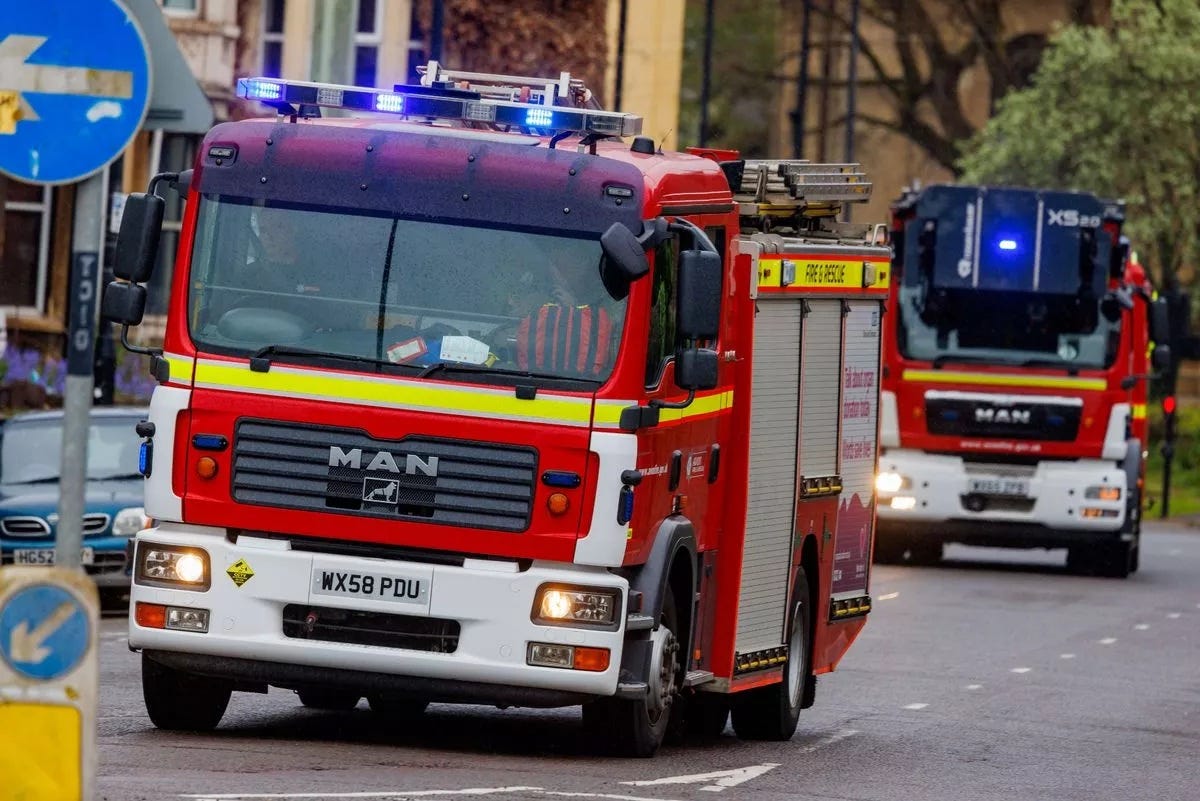
According to Bristol Live, a Freedom of Information request just revealed what residents of Barton Hill, Redfield and St George already knew: several Avon Fire and Rescue engines have been delayed getting to incidents in the East Bristol Liveable Neighbourhood traffic scheme.
Not just delayed. Some crews had to abandon their engines and run to emergencies on foot - leaving their equipment behind - because the bollards and planters physically blocked the roads.
Firefighters. Running to fires. On foot. Carrying water in buckets.
Because nothing quite states the urgency like firefighters jogging to a burning building carrying water in buckets, does it? On the plus side, it’s excellent cardiovascular exercise that keeps our firefighters in peak physical condition for the job. Don’t you think?
Anyway, the traffic calming measures designed to make the neighbourhood “liveable” have made it inaccessible to the vehicles that stop people from burning to death. But at least the traffic’s calmer than the resident whose home may well be burning to the ground, right?
Labour Councillor Fabian Breckels asked the question that defines this entire mess: “Are lives more important than anti-car dogma?”
According to the Green administration’s response, that’s apparently still up for debate. Who’d have thought it?
Remember That 4 am Raid?
Before examining their brilliant “solution,” let’s remind ourselves how we got here.
Back in March 2025, they installed the remaining parts of the liveable neighbourhood scheme at 4 am. Contractors flanked by police officers. Working in pre-dawn darkness. Why? To avoid the protesters who’d been objecting to a scheme 54% of residents opposed - that’s a majority rejection, by the way, not a marginal disagreement.
Nothing says “community consultation” quite like dawn raids with police escorts now, does it?
At the December 10th council meeting, Labour asked Green Councillors Ed Plowden - aka L Pondweed - (transport policy committee chair) and Heather Mack (deputy leader) to apologise for that operation. But being Green, they’re still workshopping what ‘apologise’ actually means.
However, both of them explicitly stood by it.
Cllr Plowden: “I do stand by the decision to commence an operation at 4 am, and I note that the police have apologised. I wasn’t given any operational details of that operation.”
Cllr Mack: “We were aware of the early morning operation, not the police operational details... I do stand by an early-morning operation.”
Watch the dance here. They knew about the dawn operation. They just didn’t know the “operational details” of the police presence. They greenlit installing infrastructure under darkness knowing it would need security. But they maintain plausible deniability about how heavy-handed it got.
The police apologised. The councillors who authorised it? Not a word of regret. Standing by your decisions is considerably easier when you weren’t there for the messy bits.
From Bollards to Big Brother.
When normal people discover their traffic scheme stops emergency vehicles reaching emergencies, the response would be: “Christ, we’ve buggered this up - remove these barriers immediately.”
But this is Bristol City Council under Green Party administration. Where ideology trumps combustion.
Cllr Ed Plowden explained the plan to Bristol Live: “Some of them we intend to change from bollards and planters to camera enforcement instead.”
Read that again. The solution to physical barriers stopping Avon Fire and Rescue from reaching incidents isn’t removing the barriers. It’s replacing them with surveillance cameras. Physical obstacles don’t work? Try digital obstacles that fine you instead.
He continued: “Once we’ve done that, if we were to commit to removing every single one of these, I think it would not be appropriate, because that would open up new routes.”
Decode what he’s actually saying.
Roads exist. Cars use roads. This creates “routes.” Routes allow traffic flow. Traffic flow is bad. Therefore, stopping routes from opening up becomes the priority - even when it means firefighters can’t reach burning buildings with their equipment.
“Open up new routes” is executing semantic backflips. It’s admitting that removing barriers would allow traffic to flow. While treating that as a problem to be avoided. Rather than the entire point of having roads.
So instead of physical barriers that Avon Fire and Rescue can’t navigate, Bristol will have camera enforcement. Drivers can’t pass without fines (I’m getting that faint whiff of ‘cash cow’ already, aren’t you?). But emergency services theoretically can. Theoretically. Once they’ve updated their navigation software.
From concrete bollards to digital bollocks. Still restricting traffic. Just costs more. And watches you while doing it.
The Enforcement Creep.
Look closer at the council’s response. Recognise the pattern emerging.
According to Bristol City Council, another issue affecting response times is “inappropriate and illegal” parking across the East Bristol Liveable Neighbourhood area. Drivers parking on pavements. Making roads narrower. Harder for fire engines to navigate corners.
Their solution? Ramping up parking enforcement.
When your traffic scheme creates problems, the answer is obviously more enforcement. Obviously.
So here’s what residents now face:
Physical bollards and planters blocking emergency access
Surveillance cameras replacing some bollards (but not all)
Increased parking enforcement targeting people whose parking adapted to roads now constricted by said bollards and planters
Notice how enforcement infrastructure compounds at every level. Physical barriers. Digital surveillance. Parking wardens. The holy trinity of making neighbourhoods “liveable” by making them unliveable.
Observe how the narrative operates: The scheme creates access problems. Residents adapt to the constrained road network. Suddenly, the problem isn’t the scheme creating constraints. It’s residents’ “inappropriate” adaptation that requires more enforcement.
Create the problem. Blame people for adapting to it. Then charge them for the privilege.
Implementation failure transforms into justification for expansion. Every single time.
What You’re Actually Watching.
A traffic scheme was implemented despite majority resident opposition. Installed at 4 am with police escort to avoid protesters. Now stopping emergency services from reaching emergencies with their equipment.
And the institutional response isn’t “we got this catastrophically wrong.” It’s “we need to be quite smart about case-by-case adjustments while maintaining the core framework.”
The Green councillors responsible defend the dawn raid. They defend the scheme. They’re just swapping some physical barriers for digital surveillance. Hoping Avon Fire and Rescue updates their satnav. Problem solved.
The decision on making this trial permanent comes in March 2026. Bristol City Council will “consider feedback from local residents, as well as data on traffic counts and air pollution.”
Consider what’s already happened: They’ve ignored 54% opposition. They’ve deployed police at 4 am to install it. Fire crews are abandoning engines. Running to incidents on foot. Carrying water in buckets.
And the response is still “quite smart” case-by-case reviews. That explicitly refuse to remove barriers that would “open up new routes to continue carrying water in buckets.”
So here’s that opening question again: Are lives more important than anti-car dogma?
The council’s actions have already answered it. The answer is surveillance cameras. Updated navigation software. More parking wardens. And firefighters carrying water in buckets.
Understand what you’re seeing: When firefighters literally can’t reach fires with fire engines, you either reconsider whether the ideology might be flawed, or you make minimum adjustments. Expand surveillance infrastructure. Blame residents for adapting. March forward regardless.
The scheme isn’t there to serve residents. Residents are there to serve the scheme.
And if fire crews have to run to burning buildings on foot? That’s just the price of being “liveable.” The budget will probably allocate extra funding for more buckets next year. Perhaps some nice motivational signage. “Every journey starts with a single step” - inspirational stuff for firefighters sprinting past their parked engines.
So when Bristol’s Green councillors tell you they’re replacing bollards with cameras to solve emergency access problems, understand what they’re actually saying: they’re not solving the problem. They’re just upgrading the surveillance that monitors it.
From physical barriers to digital surveillance. Still bollocks. Just costs more. Watches you more. And the fires? They’ll wait.
Bollards to Big Brother, Bristol.
Sources:
Bristol Live: “Cameras will replace some bollards and planters in East Bristol Liveable Neighbourhood“ (December 11, 2025)
Previous coverage: Bristol’s Green Council Walks Out During Gender-Critical Statements
Bristol City Council meeting, December 10, 2025
The Almighty Gob
Investigative blogging and satirical commentary
©thealmightygob.com 2025. All rights reserved.
Subscribe for institutional accountability coverage from Bristol and beyond. Share this with anyone who thinks traffic schemes probably shouldn’t force firefighters to abandon their equipment and run to emergencies on foot.
Take your pick Inge's Anagram Generator https://share.google/boDoJLcnzE0tNgKG3
Eventually (once enough people have lost their jobs and had their lives sufficiently damaged due to losing their freedom to use their essential cars) there might be enough people determined to vote out the green council (if there are enough to overcome the zealous and blinkered green voters).
Might.
But I doubt it.
So once enough people do see what's happening and want their freedom back (and faith in voting has been lost long ago), will they be able to do enough to dismantle the digital prison that's been built around them?
Or will they just have their bank accounts frozen until they submit?