
The Awkward Partner: Living With a Pancreas That Has Other Ideas.
Chronic pain, the pancreas, and getting the work done.

I don’t really come on here to discuss myself. Plenty of people do — platforms like this were practically invented for it, the daily dispatch from the interior, the unedited self served up with the morning coffee. Nothing wrong with it. It’s just not what this is.
For those readers who don’t know already — I have a pancreas with ideas above its station. Living with a chronic pancreatic condition has a way of making itself known. Here’s what it looks like from the inside, without the benefit of an x-ray.
What It’s Supposed To Do
The pancreas is the head of department for a surprisingly large part of the body’s operation. It manages blood sugar. It produces the enzymes that break down food. Or, in my case, not. Which means food becomes the house guest that will not leave.
For most people it does all of this quietly, without recognition, in the background — like any good head of department who knows their job, does their job, and expects neither thanks nor applause for doing it.
For most people it does this reliably, invisibly, for an entire lifetime. The system works. The system has always worked. Why would today be any different. For most people, the pancreas is preventative, dependable, silent. For those living with a chronic pancreatic condition, that sentence reads like a postcard from another country.
For me, it is Katrina as a regular visitor.
No John Kettley
Which brings us to the forecast. Or rather, the absence of one. For those too young to remember, or who have simply forgotten, John Kettley was a legendary BBC weather forecaster. The man who stood in front of the nation every evening, pointed at the map, and told you what was coming. There was a particular reassurance in that — the institution of the forecast, the isobars tightening on the map, the pressure dropping, the system moving in. You could see it happening, track it, prepare for it. Whatever was heading your way, you would have notice. Time to make the necessary arrangements.
In August 2005, Hurricane Katrina made landfall on the Gulf Coast of the United States. It hit New Orleans with a force that the city’s levee system — the infrastructure built specifically to hold, that had held for decades, that everyone assumed would continue to hold — could not withstand. The levees failed. The water came in. Over 1,800 people died. Entire neighbourhoods were erased. The city of New Orleans was permanently, irrevocably altered. It did not go back to what it was. It rebuilt around what remained.
There is no John Kettley for what I have. No forecast. No isobars tightening on a map to warn me something unpleasant is on its way. No evening bulletin. No window between knowing and arriving. It simply arrives. Already inside the levees. Already doing what it does. That is the nature of a chronic pancreatic condition. No warning. No preparation window. Just the storm.
What It Does To The Mind
The head of department doesn’t just run its own floor. It has opinions about the floor above as well. The body has its own weather system. Most days it sits at uncomfortable — a baseline, a background condition, something I’ve learned to work around the way I’ve learned to work around a draughty window or a boiler that takes three attempts to start and then runs all day whether you need it or not, heating rooms nobody goes into.
Then the isobars close in.
What that becomes when they do is something else entirely. It does something to concentration that isn’t dramatic enough to announce itself and isn’t subtle enough to ignore. It erodes. The way water erodes stone. Without malice and without mercy. This is what chronic pain does to the mind over time. I don’t notice it happening. I notice the gap where the thing used to be.
Mid-sentence, the word goes. Not dramatically. It simply isn’t there anymore. The thought is intact. The meaning hasn’t moved. It’s just the one thing needed — the word, the connection, the thread — that has quietly filed itself under not today. No explanation. No estimated time of return. No forecast for that either.
If any of that sounds familiar, you’ll know exactly what I mean. If it doesn’t, consider yourself fortunate.
The Kitchen
There is something the pancreas takes that doesn’t show up on any clinical chart. One of the less documented effects of a chronic pancreatic condition is what it does to appetite. Not just the physical appetite. The appetite for everything food ever meant.
I was a chef a long time ago. French restaurants, proper kitchens. However, I never lost my appetite for cooking. Not once. Not through everything else that came and went. The relationship with food survived all of it — the pleasure of it, the craft of it, the particular satisfaction of knowing what food can be at its finest and being able to produce it.
The pancreas had other ideas.
The other day I was pulling cooking ingredients out of the cupboard. Out of date by two years. Into the bin they went. The pancreas took the appetite — not just the physical appetite, but the desire to cook, the pleasure of it, the relationship with food built over years in proper kitchens, in French restaurants, at a level where food means something beyond fuel. It simply went. The ingredients sat in the cupboard for two years, untouched, in the dark, waiting for someone who wasn’t coming back.
That is not a small thing to lose. Anyone who has ever lost something they didn’t expect to lose will understand that without further explanation.
The Cabinet
There is a cabinet in the kitchen that has nothing to do with cooking. Managing a chronic pancreatic condition comes with a prescription list that grows in direct proportion to the condition’s ambitions. Creon amongst it — the pancreatic enzyme replacement that becomes as routine a part of the day as putting the kettle on. Bottles, packets, the whole considered apparatus of keeping the system operational on a daily basis. It has grown over time, the way things grow when they are added to regularly and never quite depleted. It is, at this point, a substantial inventory.
If Boots the chemist ever runs short of a particular line, they should give me a call. I’ve got plenty. Happy to assist on a temporary basis until they’re restocked. I’d suggest ringing ahead.
The Bed. The Bathroom. The Article.
It is 2:42 in the morning. The pain is the bedfellow who never sleeps. The kind who tosses and turns all night, all elbows and knees, catching me at inappropriate moments, making sleep something that happens to other people in other beds in other houses. I lie here. Composing this article. The body doing what it does, the mind doing what it does, both of them getting on with it.
Sleep disruption is one of the more reliable side effects of chronic pancreatic pain. The body doesn’t observe office hours.
And I genuinely don’t know, lying here, whether the pain means the body is fighting or whether the lights are simply on because someone forgot to turn them off on the way out.
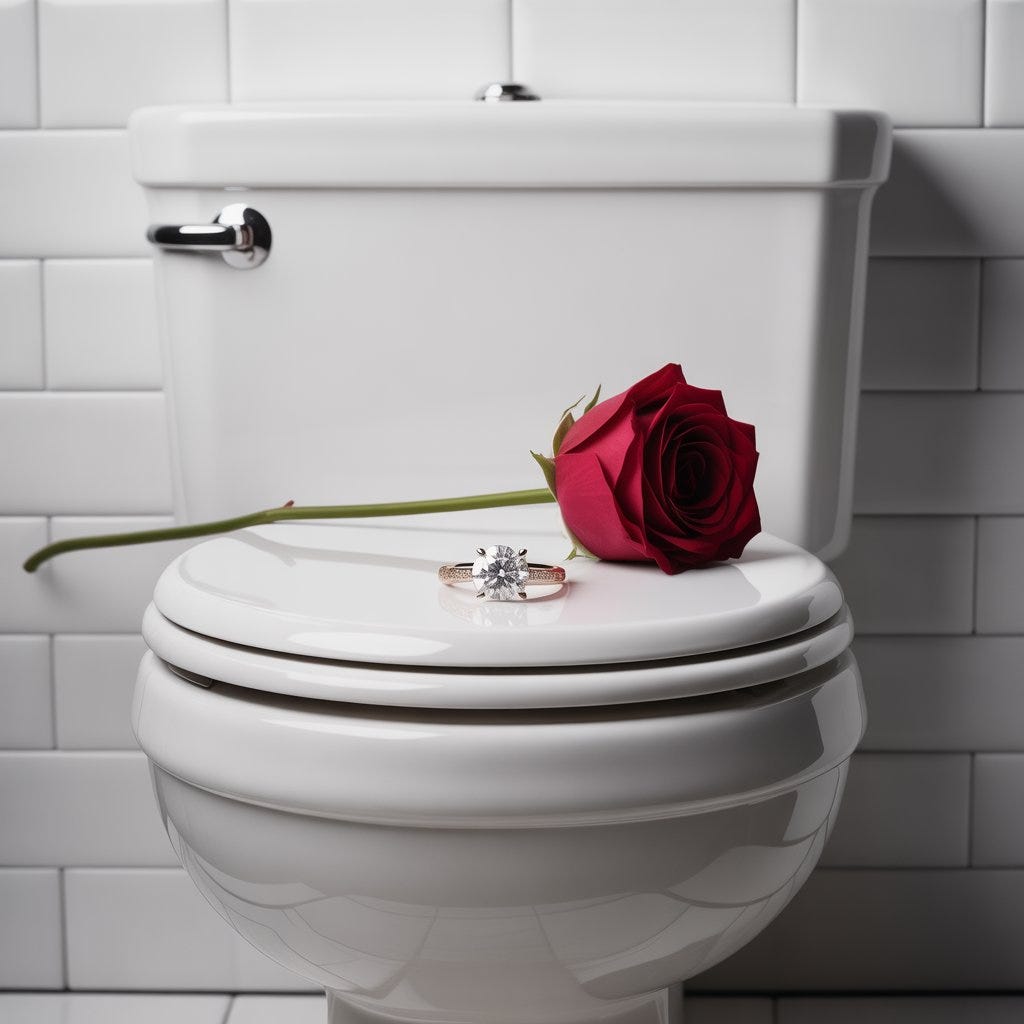
My bathroom and I have a relationship that has lasted longer than most marriages. If we were any closer, I’d buy it a ring. Wouldn’t you, given my circumstances?
And yet here we both are. Neither of us going anywhere.
This is the sadomasochistic relationship with the body. One party inflicts. The other endures. Neither is leaving.
It is, as it happens, a subscription service I never signed up for and am unable to cancel.
And this — what you’re reading right now — is the live broadcast from inside it. 2:42 in the morning. No edit, no delay, no safety net. By 3:51, for the record, the pain had moved from considerable to comfortable. The broadcast continues.
On the positive side — and there is always a positive side — it’s not all bad news.
The Partnership
There are two ways to live with something like this. I’ve noticed — through learning, and through experience.
The first is to invite it in completely. To let it set the terms, dictate the day, occupy every available space until there is no room left for anything else. Until the condition becomes the identity. I understand why people arrive there. When the isobars close in and Katrina is already through the door, surrender can feel like the only reasonable response.
However, give it that ground and it takes that ground. And then it takes everything else as well.
Think of it as a badly behaved child. Not malicious. Just badly behaved. Fight it and it escalates. Ignore it and it escalates. However, meet it with understanding, patience and quiet guidance — and it settles. Not completely. Never completely. But enough.
There are things I have lost to it that I will not get back. I know that. The kitchen knows that. The cupboard with the out of date ingredients knows that. You make the accommodation and you move forward because there is no other direction available.
That is the working partnership. It is, for what it is worth, the only approach to chronic pancreatic pain that has ever made any practical sense to me. Not acceptance in any soft or sentimental sense. Just the practical recognition that it’s here, it’s making itself very clearly known, and it is not the main focus of my attention. I can feel it at 3:28 in the morning. It is, to be straightforward about it, painful. However, I’m calm. Measured. Not stressed about it because stress makes it worse, and I know that, so I don’t.
Pain affects everyone differently. This is what works for me. Not always easily. Not without the occasional stretch. However, the mood holds. The stillness and the silence do what they’ve always done.
I’ve learned to live with it. Because there is no other choice.
The Work
The work still happens. This publication has been running for a number of years. Five hundred pieces. Eighty-eight Bristol investigations built from FOI requests and primary sources. The whole apparatus of it assembled in the small hours, in stillness and silence, by a head of department that has no intention of retiring and a writer who has no intention of stopping.
The awkward partner has not stopped the work. It has shaped it. Slowed it on occasion. Taken some words hostage and declined to negotiate. Reached into the kitchen and taken the chef with it. Sent Katrina round on a regular basis without so much as a forecast.
However, the work is here. This piece is here. Written at 2:42 in the morning, live, from inside the conditions it describes. By someone living with a chronic pancreatic condition who watched the pain move from considerable to comfortable at 3:51 in the morning and kept writing anyway. The broadcast continues.
I live with what I live with. The pancreas lives here. I live here. Neither of us is leaving. We have, over time, developed something that falls just short of an understanding.
Some days it allows the work. Some days the isobars close in and Katrina has other ideas. On those days I assess what remains, adjust, and wait. Knowing the storm passes. Knowing the word comes back. Knowing the sentence finds its footing again.
It always does.
This is a statement of operating conditions. Not a request for sympathy — I have no use for that, and if you’ve read this far looking for it you’ve come to the wrong publication.
Just the facts, plainly stated, for anyone who has ever wondered why the gaps between pieces sometimes stretch a little longer than expected.
Living with a chronic pancreatic condition doesn’t come with a manual. Just the accumulated knowledge of someone who has been living it.
It is now 6:30 in the morning. This piece has been written, edited and refined through the night to the point where it feels ready to be read. Daylight is here. The pancreas, reliable as ever, will decide when sleep arrives. It functions like an alarm clock I never purchased, nonreturnable and nonrefundable.
Time to get what some people would call sleep.
The pancreas is an awkward partner. Katrina with a season ticket. No forecast. No warning. No apology.
Now you know.
The Almighty Gob is a Bristol-based publication covering UK institutional dysfunction, political accountability, and the things those in power would prefer you didn’t notice. My pancreas is proof that I didn’t notice either — until it made sure I did.
Sources
Hurricane Katrina — death toll, displacement and damage to New Orleans infrastructure: National Hurricane Center, NOAA. Tropical Cyclone Report: Hurricane Katrina. August 2005. nhc.noaa.gov
Creon — pancreatic enzyme replacement therapy: Electronic Medicines Compendium. Creon 10000 Capsules: Summary of Product Characteristics. medicines.org.uk
John Kettley — BBC weather forecaster: BBC Archive. bbc.co.uk
TAGS
Chronic pancreatic condition · Living with chronic pain · Pancreatic enzyme replacement therapy · Creon medication · Invisible illness · Chronic pain and mental health · Pain management · Writing through chronic illness · Spoonie · Chronic illness awareness.