
The Bristol Inclusion Coordinator Who Didn't Quite Understand Her Job Title.
Selective Inclusion Wasn't Mentioned In Her Job Description, Apparently.

There’s a sentence that took fifteen months to arrive.
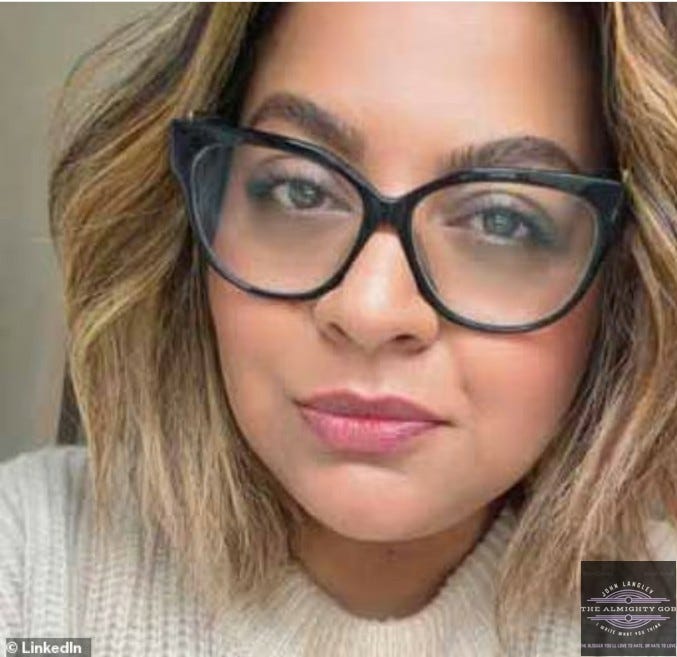
Saima Akhtar (image above) — diversity and exclusion co-ordinator at the Cabot Learning Federation, the Bristol-based multi-academy trust that runs Bristol Brunel Academy in Speedwell — has been sacked. Oops. My mistake. I meant diversity and inclusion co-ordinator. Anyway, The Times broke the story that got her there. She had described Hamas terrorists responsible for the October 7 massacre in Israel as “heroes fighting for justice.” CLF investigated. CLF dismissed. And now here we are.
You could feel it coming, couldn’t you? The way you feel weather before it arrives — that particular stillness, everything sort of holding its breath. CLF had said it themselves back in January. Staff who breach the code of conduct “should expect disciplinary action which could lead to dismissal.” They just needed a few months to get the paperwork straight. So before we get to the ending — and it is an ending, make no mistake — let’s go back to the beginning. Because the beginning is what makes the ending so hard to look away from.
“The most dangerous people are those who are absolutely certain they’re on the right side.”
Right. So. Damien Egan. Labour MP for Bristol North East, former student of the very same Cabot Learning Federation we’re talking about, vice-chair of Labour Friends of Israel, and a man who — since his election in 2024 — had visited six CLF schools without a single problem. Six schools, by the way, and no drama. In September 2025, he was due to visit Bristol Brunel Academy in his own constituency to talk to children about democracy and what it’s like to be an MP. Perfectly ordinary stuff. The seventh visit was a different story.
The Bristol NEU branch and the Palestine Solidarity Campaign organised a protest. Some staff said they’d wear keffiyehs on the day because it’s something of a modern fashion trend nowadays. CLF postponed the visit, said it was safety concerns, and the NEU celebrated like they’d just won something. The PSC called it “a clear message that politicians who openly support Israel’s genocidal assault on Gaza are not welcome in our schools.” A Jewish MP. His own patch. A democracy lesson for kids. Cancelled. And there’s something almost dream-like about that whole sequence — the invitation, the withdrawal, the cheering at the withdrawal — and then this long strange silence where everyone involved apparently decided it would just sort of go away. Like bad smells do.
It didn’t go away. It waited.
It waited until January 2026, when Communities Secretary Steve Reed mentioned it at the Jewish Labour Movement conference. One sentence — barely a throwaway — and the thing cracked wide open. National within hours. Starmer at PMQs, calling it “very serious and very concerning.” Ofsted launching a snap inspection. And The Times starting to dig. Which is when it got considerably more interesting, and considerably more uncomfortable, for the Cabot Learning Federation.
“When you’re born into this world, you’re given a ticket to the freak show. If you’re born in America, you get a front-row seat. And some people get to hand out the tickets.”
What the digging found was Akhtar’s Facebook page. 8 October 2023. The morning after the massacre. She posted that Palestine was “fighting back” against apartheid. “This is a war against their oppressors.” She told her followers to ignore “media attempts to paint Israel as a victim.” And then — and I want you to read this slowly — “Heroes fighting for justice and their right to exist. Palestinians are no different. #FreePalestine.”
Heroes. The morning after 1,200 people were killed and 251 taken hostage.
Now. This is the diversity and inclusion co-ordinator of a 36-school trust serving 18,000 children across the South West. The person whose entire job — the reason the role existed, the reason they created it, the reason they hired someone to fill it — was to protect children from discrimination. To model dignity. To be, if you want to use the phrase that’s carved into every piece of CLF literature, the embodiment of their values. She also sat on the Bristol Brunel Academy board. (On the board. Not near power. Inside it.) Her LinkedIn bio said her approach was “intersectional, trauma-informed and unapologetically anti-racist.” She wasn’t wrong about unapologetic. And I want you to sit with something here — how does that person, in that role, on that board, go unexamined for fifteen months? Not by her enemies. By her colleagues. By the people who hired her to be the institution’s conscience. The answer, when it comes, doesn’t feel like a revelation. It feels like something you already knew but hadn’t quite let yourself say out loud. You know, like breaking wind in an airlock.
“Scratch any cynic and you’ll find a disappointed idealist.”
When The Times published the posts in January, CLF moved quickly — the way institutions always move quickly when the alternative is being seen to move slowly. Investigation launched. External review commissioned. Dismissal flagged as a possibility. Meanwhile Ofsted went into Bristol Brunel on 15 and 16 January. They talked to over 130 pupils, 75 staff, 143 parents. Overwhelmingly positive. The school, they said, showed “a profound commitment to providing an inclusive learning environment.” No evidence of political bias. No evidence of a co-ordinated protest against the MP’s visit. The NEU declared their people vindicated. The school put out a statement about “fundamental British values at its heart.” (The inclusion co-ordinator, meanwhile, was being investigated. But let’s not let that spoil the moment.) Here’s the thing nobody paused to sit with, though.
The school passed. The inclusion officer didn’t.
When CLF created the role back in 2022 they said it was “so needed in our current climate.” Akhtar herself said so on the CLF website when she got the job. She “felt the weight of responsibility.” Turn that phrase over slowly. Turn it over the way you’d turn over a stone you weren’t quite sure about. The role existed to make the institution safer, fairer — sharper, if you like, in its ability to see discrimination coming before it landed. It was given to someone who, one year after she was hired, would watch the largest massacre of Jewish people since the Holocaust and call the killers heroes. She was sitting on the board of the school that would, twelve months after that, block a Jewish MP from talking to kids about democracy. Nobody checked. Nobody looked. Fifteen months the posts sat there — public, searchable, illuminating in hindsight everything that happened around them. And the reason nobody looked isn’t the one that’s easiest to say. It wasn’t incompetence. It was comfort. The institution and the ideology were facing the same direction. You don’t look sideways at what confirms you. You never do. Nobody does.
“Governments don’t want a population capable of critical thinking. They want obedient workers. And sometimes, institutions don’t want inclusion. They want agreement dressed up as inclusion.”
This wasn’t a one-off either. CLF blocked a speaker from an Israeli-owned cybersecurity company at their own summer conference in July 2025 — same pattern, NEU pressure, no resistance. (Resistance, it turns out, was not on the agenda.) One cancellation you can explain away. Two and you start to wonder. Three — the posts, the conference, the MP — and you’re not wondering anymore. You’re looking at a culture. A culture that pinned inclusion to its lanyard while one community kept finding itself outside the protection the word was supposed to provide. Keep that thought. We’re coming back to it.
Because here’s what this is actually about — and it’s bigger than Bristol, bigger than one sacking, bigger than one school in Speedwell with a spectacular atrium and an inclusion co-ordinator who had a very specific idea of what the word meant. What happens when inclusion stops being a principle and becomes a tribe? When the word on the lanyard and the behaviour underneath it have parted company so completely that nobody on the inside can see the gap anymore? There’s a particular kind of dreamstate that produces it — where the language of justice folds in on itself, becomes airless, self-confirming, lets no light in from outside. Where the map got mistaken for the territory so long ago that nobody can remember what the territory looked like. Real inclusion is uncomfortable. It includes people you disagree with. It includes Jewish MPs in their own constituencies. It includes Israeli cybersecurity speakers at education conferences. It includes the pause — the single, unremarkable, necessary pause — before the cancellation. The moment where someone in the room says, hang on. Are we sure about this? That pause is the whole point of having the role. It’s the only point. It’s what they were paying for. Except no one bothered to check the receipt for errors.
“The real owners are the big wealthy business interests that control things and make all the important decisions. Forget the politicians — they’re put there to give you the feeling that you have freedom of choice. You don’t.”
That pause never came. “Don’t mess with NEU in CLF, we are not here to play,” the branch secretary posted. (Noted. Though one does wonder, gently, what they thought they were there for. Probably confused it with a nearby creche, perhaps.) So, the PSC put the victory on Instagram, like most attention seekers do. It’s a trend thing. And, in doing so, would you believe emotion got there before thought and never budged. Nothing new in that. Keffiyehs as costume. A cancelled democracy lesson as a trophy. A culture so certain of its own righteousness that it cheered blocking an elected MP from a school in his own constituency — and then seemed genuinely surprised the country noticed. And right at the centre of the whole thing, holding the role, sitting on the board, appointed to be the moral compass — someone who had told you, in plain text, in October 2023, exactly where her compass was pointing. It was pointing somewhere. Just not where they thought.
Here’s the question nobody’s properly asked yet — and it’s the one that matters most once the noise dies down and Bristol goes back to being Bristol. Not why she posted what she posted. That’s done. But how does a culture build the conditions in which that person, in that role, goes unexamined for fifteen months? Because it didn’t arrive fully formed. It was assembled. Piece by piece, decision by decision, cancellation by cancellation — each one unchallenged, each one making the next one feel normal, each one narrowing the gap between the institution’s stated values and what it was actually doing until the gap wasn’t visible from the inside anymore. That’s not radicalisation. That’s drift. Institutional drift has the texture of normality. The warmth of a room where everyone agrees. The reassuring sound of unanimous nodding. You can’t see it from the inside. Which is exactly why it needs someone from the outside — a reporter, an inspector, a publication with no allegiances and no interest in acquiring any — to walk in and name what everyone inside has stopped being able to see.
It took The Times to look. It took fifteen months for CLF to act, and some fresh air to take the smell away.
Damien Egan eventually got his visit rescheduled. Saima Akhtar eventually lost her job, and the exclusion job vacancy — never to be repeated again.
Eventually is doing a lot of work in that sentence.
The Almighty Gob is a Bristol-based publication founded by John Langley — independent Bristol mayoral candidate 2016 and 2021, and one of the city’s most forensic observers of institutional power. Publishing since 2020, with over 500 pieces including 88 FOI-based Bristol investigations. Across seven platforms and Substack at thealmightygob.com — no party allegiance, no press accreditation, no interest in acquiring either.