
The Mandelson Boxer Shorts Rescue: What Denton and Gorton Need to Know About Green Party Governance.
Or: How to Ignore 80 Protestors, Defy Basic Physics, and Call It Democracy.

So, as the rain continues to fall since what is said to be the wettest January since 1877, and now possibly the wettest February in decades too, we can all look forward to the forthcoming hosepipe ban.
Because this will have been the wrong type of rain, you see.
Not dense enough. Not opaque enough. Failed to meet the required wetness threshold to make a meaningful difference to someone, somewhere in the hallowed field of meteorological science.
But let us not dwell on such trivialities as infrastructure planning or water management competence until the bill drops on our doormats.
Instead, we should all rejoice—truly rejoice—in the knowledge that the former Lord Mandelson’s boxer shorts were successfully rescued in a special operation by specialist police officers.
Priorities sorted. Crisis averted. The nation sleeps soundly tonight knowing that undergarments of state have been secured.
Meanwhile, as the wrong sort of rain keeps falling, your garden’s drowning. Your gutters are overflowing. And come July, you won’t be allowed to water your petunias.
But at least Mandelson’s boxers are safe.
God save the realm. And while the Almighty is at it, he might like to save the good people of Gorton and Denton as well.
The Bristol Pattern: When “Listening” Means “Sit Down and Shut Up”
Picture this: 80 residents march through Bristol yesterday afternoon. North Street to City Hall. Signs, petitions, thousands of signatures opposing the South Bristol Liveable Neighbourhood scheme.
Hours later—same evening—the Green-led transport committee convenes.
The vote? Approve £1.32 million to continue the scheme.
The residents were heard. Acknowledged. Then ignored.
Sound familiar? Like hosepipe bans during biblical flooding? Like police raids on ministerial underpants whilst actual governance collapses?
This wasn’t a fluke. It’s the pattern.
And here’s where it gets interesting. The Bristol Greens operate on some quaint assumptions about physics. Chief among them: air is static.
They’ve drawn lines on maps for Clean Air Zones and Liveable Neighbourhoods as if atmospheric circulation stops at council boundaries. As if nitrogen dioxide molecules carry passports. As if wind doesn’t exist.
Spoiler: it does.
Air moves. Pollution displaced from one street doesn’t vanish—it drifts to the next street over. Block off residential roads, and the traffic doesn’t disappear. It concentrates on boundary roads, creating worse congestion and worse air quality exactly where you pushed it.
But why let thermodynamics interfere with ideology?
East Bristol already proved this. The council poured £6 million into a scheme that took years to materialise. When they finally consulted residents in 2024, the numbers came back: 54% opposed it. Only 30% supported it.
That’s not marginal. That’s decisive rejection.
So what did Bristol’s Green-led council do with this information?
They looked at East Bristol’s £6 million disaster, counted the 54% opposition, witnessed the community fury, and decided: “Let’s do it again in South Bristol.”
You seeing the pattern here?
Who benefits when councils spend millions against majority opposition? Not the residents paying council tax. Not the communities divided by traffic barriers. The ideology benefits. The policy fits the worldview, therefore the policy must be implemented.
Small institutional decisions create disproportionate cascading effects. Bristol’s Green council placed one barrier, then another, then committed £6 million. 54% opposed it. They built it anyway. Now they’re doing it again.
The butterfly flaps its wings in committee chambers. Traffic chaos erupts on boundary roads. Communities fracture. Millions vanish.
But the ideology remains intact.
Legalising Heroin: Policy From Someone Who’s Never Tried It
If you need further evidence of ideological certainty overriding practical reality, consider their leader.
Zack Polanski, elected September 2025 with 84.1% of the vote, advocates legalising all drugs. Not just cannabis. All drugs. Including heroin and crack cocaine.
The interesting detail? Polanski has never taken a drug in his life. Never touched alcohol either.
On BBC’s Sunday with Laura Kuenssberg, he explained: “I very clearly believe people should be able to do what they want to do. It just wasn’t for me.”
Let that sink in. The man advocating for legalising crack has never touched it. Never seen what it does firsthand. Never watched someone spiral. Never attended a funeral.
But he’s got strong opinions about what everyone else should be allowed to buy at the corner shop.
There’s a conversation to be had about drug policy reform. But jumping straight to full legalisation of substances that kill thousands annually whilst you’ve never experienced their effects?
That’s not policy. That’s doctrine.
When Keir Starmer quipped that the Greens were “high on drugs, soft on Putin,” Polanski called it “cheap jokes delivered badly.”
Fair enough. But the substance of the criticism—that Green policies seem detached from practical reality—lands harder when you’re watching Bristol residents march in protest only to have their concerns batted aside hours later.
The Pattern That Repeats
Look at the sequence:
East Bristol: £6 million spent, 54% opposition, years of delays, traffic chaos.
South Bristol: Residents protest, council votes to continue the same day.
Drug policy: Leader who’s never touched drugs advocates legalising everything.
Denton & Gorton: Green candidate fielded in bye-election scheduled for 26 February.
What connects these dots? A consistent prioritisation of ideological purity over practical outcomes or public consent.
The Greens have grown substantially under Polanski’s leadership. Membership now stands at 190,000, overtaking both the Conservatives and Liberal Democrats. They’re polling around 14% nationally.
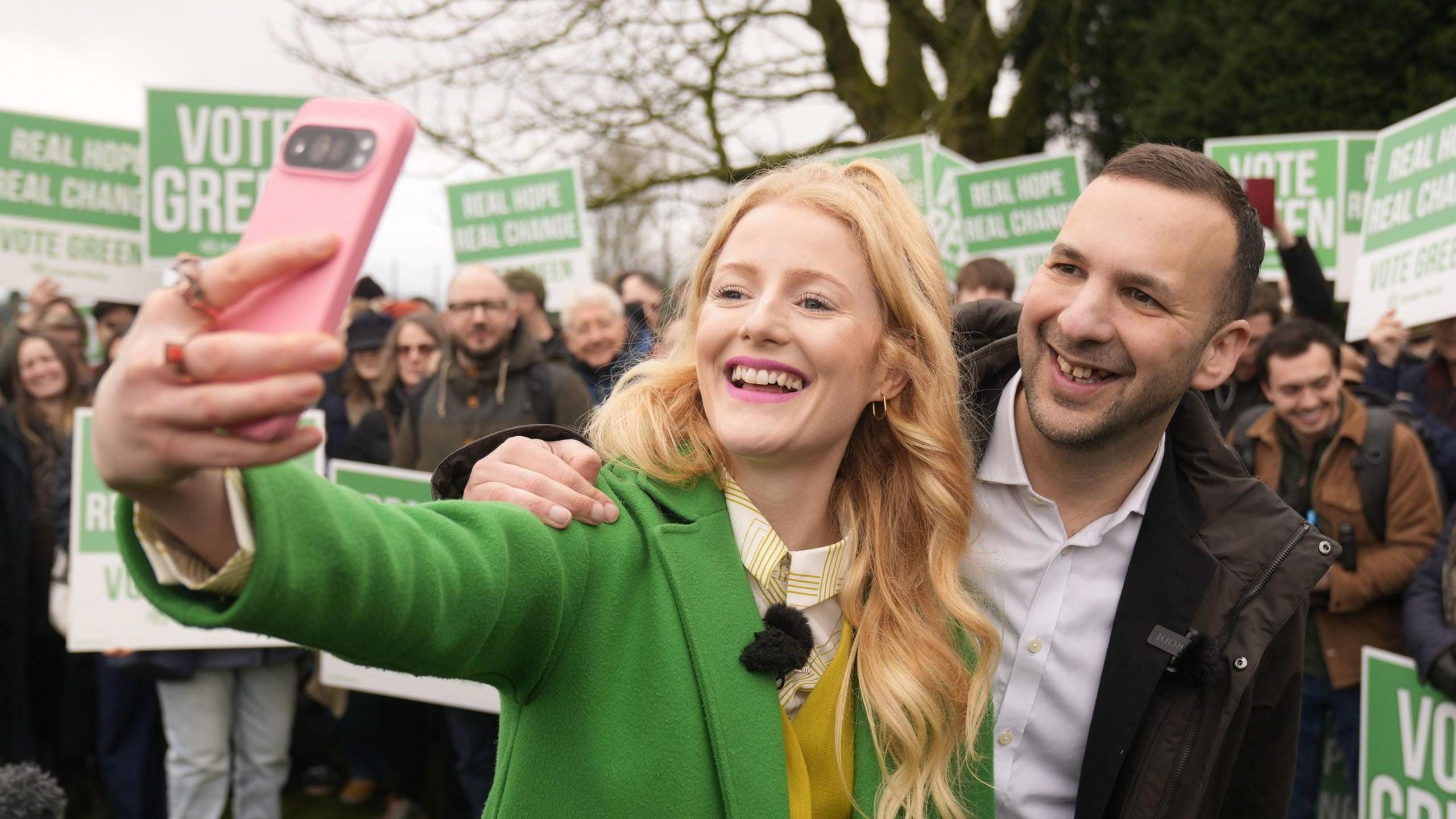
This isn’t a fringe party anymore. They control councils. They influence policy. They’re contesting serious elections like the upcoming Denton and Gorton bye-election, where Hannah Spencer, a 34-year-old plumber, will represent Green values to northern England voters.
Which raises the question: What exactly are those values when applied to local government?
Three Questions Worth Asking
Is it practical? East Bristol’s £6 million disaster suggests not. Full drug legalisation requires massive regulatory infrastructure whilst drug deaths continue rising.
Is it logical? Pressing ahead with South Bristol despite 54% opposition defies logic. Advocating for legalising crack and heroin when you’ve never touched drugs raises questions about understanding consequences versus adhering to doctrine.
What’s the likely outcome? More community division, more displaced traffic, more millions spent on schemes nobody asked for.
Green governance works brilliantly—if you value ideological consistency over community consent.
What This Means for Denton and Gorton
Elections aren’t abstract choices between party colours.
They’re decisions about who’ll control traffic flow, local services, community cohesion. Who gets to decide when residents say “no” but policy says “yes.”
Hannah Spencer might be an excellent plumber with sensible ideas about local issues. But she represents a party whose current leadership demonstrates a habit of knowing better than the communities they claim to serve.
A party whose leader advocates legalising every drug despite never touching them.
A party that spent £6 million on a scheme 54% opposed, then started planning the sequel.
Yesterday’s Bristol events weren’t aberration. They’re pattern recognition in action. Eighty residents marching. Council voting £1.32 million the same evening for the scheme those residents opposed.
The “listening” and the ignoring happening simultaneously.
Remember how this started? Wrong type of rain. Hosepipe bans during flooding. Police rescuing ministerial boxer shorts whilst governance burns.
Priorities.
Bristol’s Greens think air is static. That consultation means ticking boxes. That 54% opposition is background noise. That ideology trumps thermodynamics.
Three weeks until Denton and Gorton votes. The pattern’s clear. Pie-in-the-sky ideology, or down to earth, more experienced political governance?
The choice is yours.
Related Reading:
[Bristol City Council Liveable Neighbourhood Consultation Results 2024]
[Zack Polanski BBC Interview on Drug Policy, January 2025]
[Green Party Membership Growth Under Polanski Leadership]
[Denton and Gorton Bye-Election Candidate Profiles]
Share this article: Because whilst Mandelson’s undergarments get police protection and hosepipe bans loom during biblical flooding, perhaps Denton and Gorton deserve to know what “listening to communities” actually means in Green Party governance.