
The Reality TV Racism Row: When Lazy Analysis Meets Human Nature.
ITV's I'm A Celebrity has found itself embroiled in yet another "racism" controversy.

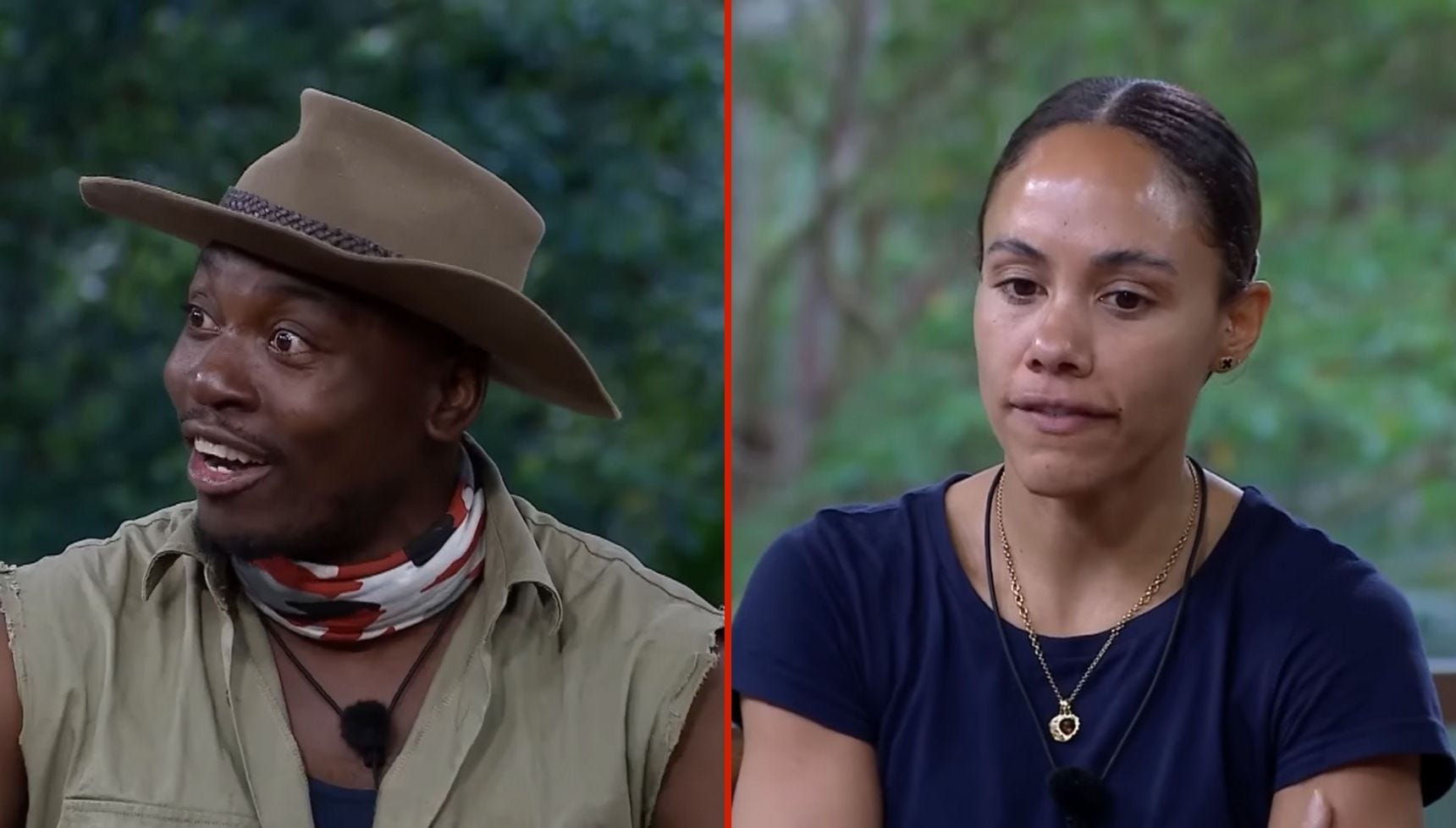
Alex Scott and Eddie Kadi, the first two contestants voted off, happen to be the only two Black celebrities in the camp. And here come the predictable accusations that British viewers are coordinating racist voting.
You’ve seen this before, haven’t you? Reality TV voting patterns across Love Island, Strictly Come Dancing, and Big Brother show the same results. Ethnic minority contestants frequently exit early. The standard explanation? Racism. Let me show you what’s actually happening.
How We Actually Connect With People.
Look, here’s what’s really happening. We mirror each other. It’s called the chameleon effect—an unconscious behavioural pattern where we drift toward people whose communication styles and cultural patterns feel familiar.
The name isn’t coincidental. Chameleons change colour to blend in, to match their environment, to survive. We’re doing what nature does everywhere: adapting to surroundings, seeking camouflage within the familiar, responding to environmental cues without conscious thought. Same instinct that makes a moth match tree bark, a fish school with its own kind. We call it the chameleon effect because we are nature, doing what nature does.
This isn’t about conscious choice. Mirroring operates automatically in every social interaction. Mirror neurons create an immediate connection with people who share your patterns of speech, gesture, and cultural reference.
Think about the last time you walked into a party. Within seconds, you’d clocked who you were drawn toward—the person whose laugh sounds like yours, whose gestures feel familiar. You drifted that way. Not because you’d analysed demographics, but because your nervous system had decided: “This one feels like home.” That’s your brain seeking patterns that predict safety, compatibility, ease. Reality TV voting? Same mechanism, just aggregated across millions of us making the same unconscious calculation.
You don’t select friendships through a diversity checklist. You connect with people who reflect what you recognise—shared humour, communication styles, familiar worldviews. Pattern recognition, not prejudice.
The Numbers Tell The Story.
Reality TV shows attract enormous, diverse audiences. I’m A Celebrity, Strictly, Love Island—millions of us from all backgrounds watch and vote.
If mirroring operates for everyone—and it clearly does—then in a majority-white country, more of us statistically connect with contestants who share majority cultural patterns. Not a conspiracy. Just mathematics.
Here, I’ll show you how it works in real time. Watch someone across from you cross their arms—thirty seconds later, you’ve crossed yours. They lean forward, you lean forward. Your heartbeat synchronises. Mirror neurons firing, your body moving toward resonance. Now imagine that operating when you’re watching twelve people, voting for who stays. Your nervous system selects before your conscious mind frames a reason. The person who mirrors your cadence—they feel right. Not racism. Just you being human.
Ethnic minority viewers are mirroring this, too. A British Pakistani viewer responding to certain styles. A Black British viewer drawn to specific humour. None of this requires malice.
The “racism” framing denies agency to viewers of colour, treating them as passive victims rather than active participants making their own choices.
The Storm in a Teacup: Why This Keeps Happening.
So why does this “racism” narrative appear in every series? I’ll tell you: because creating outrage is consequence-free. Shouting bigotry requires no understanding, no evidence, no accountability.
Broadcasters will express concern, issue their statements, and nothing will change—because nothing needs to change. The elimination sequence will repeat because it reflects how we’re wired, not institutional racism.
What we’re watching is a society that’s decided basic human nature—mirroring behaviour from prehistory—is now moral failure. As if evolutionary psychology should vanish on command.
The real scandal isn’t the voting results. It’s labelling normal behavioural tendencies as bigotry, then acting surprised when they persist.
Reality TV as Societal Mirror.
Look at reality television as a snapshot of British society, and you’ll see something deeper than surface-level “racism” claims.
Most social dynamics operate behind closed doors. Job interviews, social circles, mentorship, and second chances—all run on this same psychological process. Reality TV simply aggregates millions of our individual choices into something visible, measurable.
The shows aren’t creating unique dynamics. They’re revealing how this plays out everywhere. What we see in elimination orders shapes outcomes in employment, housing, social mobility, and romantic partnerships. Same nervous system making micro-calculations about familiarity. Same pattern recognition deciding who advances. Everywhere.
If we misdiagnose the mechanism on television, calling it “racism” when it’s mirroring, then we’re misdiagnosing it everywhere. And that means never addressing actual issues because we’re too busy shouting at human nature.
What We’re Actually Defining About Ourselves.
If reality TV reflects us, what are we defining about our expectations? Let me show you.
The results reveal a society comfortable with diversity as a concept but operating within familiar boundaries. We expect diverse casting—tick the boxes, parade the representation. That’s performance. But when the lights go down, and you’re alone with your phone deciding who you want to watch, you’re still drawn to familiar territory. The gap between what we say we value and what our nervous systems respond to—that’s the story nobody wants to tell.
This isn’t unique to Britain or contemporary society. Every human culture throughout history has operated through these familiarity dynamics.
The Japanese respond to Japanese patterns. Nigerians to Nigerian patterns. Mixed societies fragment along fault lines of familiarity. This is baseline behaviour—you remember that feeling, don’t you? First day at a new school, stomach clenched, scanning the cafeteria for a friendly face.
Those tribal instincts aren’t a moral failing. They’re programming that kept our species alive long enough to build civilisations complex enough to pretend we’ve transcended them. Look at any living system: wolves run with their pack, trees share nutrients with their own species through root networks. We’re not exhibiting human failure when we seek the familiar. We’re exhibiting nature doing what nature does—organisms clustering with their own, responding to recognition patterns that signal safety. The only species arrogant enough to call this “problematic” is the one that’s forgotten it’s still part of the natural world.
What’s absurd is deciding this fundamental psychology should no longer apply. That we should transcend pattern recognition through ideological will. Delusional.
Human Nature: The Inconvenient Reality.
The expectation seems to be that we should behave as if human nature doesn’t exist, then blame “racism” when it inevitably does. Stupid and counterproductive, isn’t it?
You cannot address genuine issues if you’re misdiagnosing fundamental behavioural tendencies as bigotry. When we label normal mirroring behaviour as racist, we achieve precisely two things: we make the term meaningless, and we prevent any useful analysis of what’s actually happening.
Reality TV shows something honest about how we operate. People connect with familiarity. They vote for contestants who feel relatable. The Pakistani woman voting for someone who shares her humour. The white pensioner voting for someone who reminds him of his daughter. The Black teenager voting for someone whose confidence mirrors his own. None thinking about demographics. All responding to resonance.
The question isn’t whether this dynamic exists—it obviously does. The question is whether we’re going to keep pretending it’s evidence of racist coordination, or acknowledge that we remain tribal beings who haven’t transcended evolutionary psychology just because we put diverse faces on the telly.
Back to the Beginning: The Teacup Storm.
So here we are. ITV embroiled in a “racism” row over human psychology playing out exactly as it always does.
Has someone created a storm over nothing? Absolutely. And they can do it because shouting bigotry has become currency without cost.
The dynamic exists. Human mirroring explains it. No conspiracy required. No racist voting bloc needed. Just millions of us doing what humans have always done—seeking comfort in the familiar. Your hand is reaching for the same tea your mother bought. Your laugh matches your best friend’s rhythm. Your vote is going to the contestant whose gestures remind you of someone you trust. Pattern recognition all the way down.
But we’d rather create outrage than acknowledge reality. We’d rather scream “racism” at the mirror than admit we’re still running the same pattern-recognition programme that kept our ancestors alive—the one that says “familiar equals safe.” The same programme runs in every living system that’s survived long enough to reproduce. We’ve dressed it up in diversity rhetoric, but underneath, we’re still nature doing what nature does.
ITV will issue their statement. Someone will demand an inquiry. The cycle will continue. And everyone will have learned nothing—because learning would require admitting what we already know. Far easier to sustain the moral panic.
Reality TV mirrors reality. The real question is: are we ever going to stop being surprised by what we see?
Reality television reveals more about human behavioural psychology than racism. Understanding mirroring—rather than defaulting to accusations of discrimination—allows for honest analysis of how social connections actually form. You can keep screaming at the mirror, or start examining what it’s showing you. One sustains outrage. The other might help you understand why your nervous system does what it does when someone feels familiar. And why that’s not the same as hatred (a very misused word nowadays).