


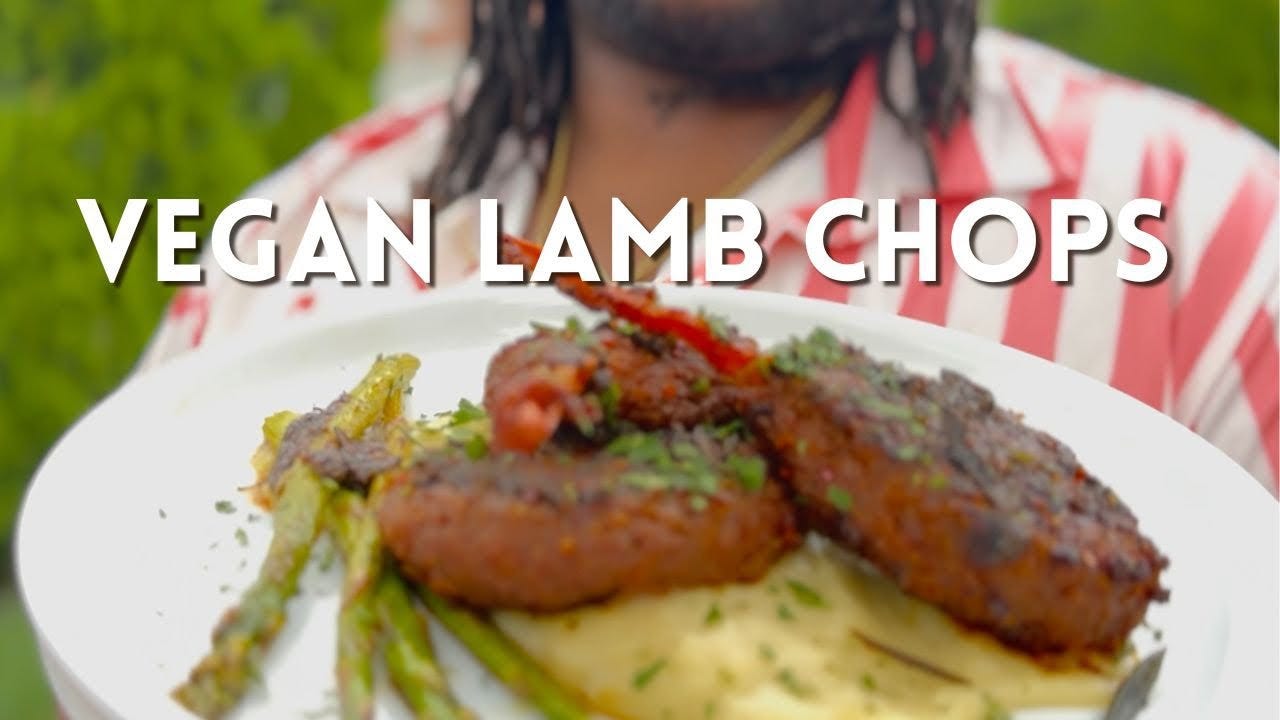
Walk into any supermarket in January and you’ll find them: vegan lamb cutlets. Vegan bacon. Plant-based sausages. And nobody’s asking the obvious question—if you’re ethically opposed to eating animals, why the hell are you buying food shaped like dead ones?
That’s the whole game exposed in one absurd product.
Here’s what those vegan lamb cutlets tell you: Veganuary isn’t recruiting ethical vegans who’ll live on dahl and rice. It’s recruiting consumers for a multi-billion pound processed food market—people who want the moral performance without changing their relationship with food.
A committed vegan—someone who’s genuinely rejected animal products on principle—isn’t wandering the aisles looking for plant-based bacon. They’re buying dried beans, lentils, seasonal vegetables. Actual plants, not industrially processed derivatives shaped like the animals they claim to oppose eating.
But you can’t build a billion-pound industry on dried lentils. You CAN build one on Beyond Burgers sold to middle-class consumers performing ethics through shopping baskets.
The Three Markets.
Market One: Genuine ethical vegans. Small population who arrived at veganism through independent moral reasoning. Eating dahl, bean stews, pulses, seeds. Low profit margin—dried beans cost pennies. Already committed before Veganuary existed. Not the target.
Market Two: Commercially recruited consumers. Large potential market recruited by corporate marketing, not personal conviction. Eating Beyond Burgers, vegan bacon—maintaining the same consumption patterns but with different branded products. High profit margin—£4+ for textured pea protein. THIS is Veganuary’s target. Corporate recruits performing an identity they’ve been sold.
Market Three: Omnivores. Not interested. Though “flexitarians” buying processed vegan products alongside regular shopping might be the wedge.
The existence of meat-shaped vegan products proves this distinction. Market One doesn’t need “vegan lamb cutlets”—they rejected the concept through genuine conviction. Market Two needs them because they haven’t rejected anything. Just been sold a different brand.
Is It Practical?
Middle-class office worker with Waitrose nearby? Sure. You can afford £4 oat milk and plant-based burgers at double the price of beef.
Working two jobs, shopping at Iceland? Your £4 buys eight beef burgers or two vegan ones. Veganuary isn’t practical—it’s insulting.
That’s the class dynamic everyone ignores. Veganuary requires disposable income. If you don’t have it, you’re apparently not committed enough to ethics.
Is It Logical?
If the goal is environmental sustainability, why create MORE processed foods requiring MORE industrial facilities?
The logical solution: eat less meat, simpler foods, support local production. Dried beans, lentils, seasonal vegetables have lowest environmental impact.
But there’s no money in bulk dried pulses.
So instead: “vegan lamb cutlets”—£6 for textured pea protein shaped like dead sheep.
The Processing Question Nobody Answers.
Here’s what the market tells you: Beyond Burger costs £4.28 for two burgers. Tesco beef burgers cost £4 for eight. Oat milk costs £1.75-£2.25 per litre. Dairy milk costs £0.73 per litre.
Processed vegan products cost 2-3 times what animal products cost.
Price reflects resource input. Manufacturing cost. Processing complexity. Energy consumption. If plant-based products genuinely required less energy, fewer resources, lower environmental impact, they’d cost LESS to produce, not MORE.
When something costs double or triple, that price reflects actual resource cost. The premium isn’t for ethics—it’s what it costs to extract pea protein, process it through industrial stages, engineer flavour, add stabilisers, or turn oats into milk-substitute through enzyme treatment, filtration, fortification, and UHT processing.
Compare that to: milk a cow, pasteurise it, bottle it. Or cut meat, package it, transport it.
I’ve looked for comprehensive lifecycle analysis comparing industrial plant-based products to animal products, accounting for ALL processing costs. Either that data doesn’t exist, or nobody’s sharing it. When environmental data mysteriously isn’t available and the price tells you this costs 2-3 times more to produce, I get very suspicious.
The environmental case for plant-based eating is strongest comparing whole plant foods against industrial factory farming. It’s weakest comparing highly processed industrial plant products against diversified food systems.
The Planetary Cost Nobody Mentions.
Every industrial process has an environmental cost. Processing facilities require energy. Global supply chains require energy. Refrigerated transport requires energy. Chemical synthesis of fortification vitamins requires energy.
And it’s not just food. The vegan consumer identity extends to clothing (petroleum-based fake leather), cosmetics (complex chemical formulations), household products—each requiring energy-intensive manufacturing whilst claiming environmental virtue.
If these alternatives genuinely used less energy than what they’re replacing, they’d cost less. They don’t. The premium price is evidence of higher resource input—which means the planetary impact is likely higher, not lower.
What’s the Likely Outcome?
Food corporations diversify product lines. Lower-margin commodities replaced with higher-margin processed foods. Same industrial system, different inputs. Consumers pay premium prices whilst the structure remains unchanged.
The real outcome isn’t environmental salvation—it’s market expansion. Consumers habituated to paying £4.28 for two plant burgers instead of £4 for eight beef ones.
The Moral Superiority Function.
Veganuary sells a ready-made ethical identity you can perform daily. It replicates organised religion’s structure: daily practice through food choices, visible markers through refusing meals, moral hierarchy based on commitment, community identification, purity spirals.
Religion used to provide this—follow dietary laws, demonstrate virtue. Veganism gives secular middle-class consumers the same structure without supernatural belief. Just belief in their own ethical superiority.
The moral performance isn’t a bug. It’s the primary product. Individual consumer choice as social change keeps you focused on shopping instead of corporate regulatory capture.
What We’re Actually Being Sold.
Veganuary didn’t exist until 2014. So why now, and who benefits?
Follow the money: plant-based processed food is multi-billion pounds. Venture capital poured into expensive plant alternatives. Higher profit margins than commodity products.
This isn’t grassroots revolution—it’s market creation. Convincing consumers to pay premium prices for industrial products whilst feeling ethically superior.
Genuinely radical? Demanding local food systems, worker-owned farms, regulation of industrial agriculture, accessible nutrition for everyone—not just people who can afford the ethical premium.
Much easier to sell “vegan lamb cutlets” and call it activism.
The Honest Position.
Don’t confuse buying processed plant products with systemic change. Don’t mistake consumer choices for activism. Don’t let corporations sell you expensive industrial food whilst convincing you it’s revolutionary.
The revolution isn’t in your shopping basket. It’s in demanding fundamental changes to how food is produced, distributed, and priced.
Need meat in your diet? Probably not for survival—humans can thrive on various patterns. But if animal products work for your health, budget, and circumstances, that’s between you and your bloodwork. Not some influencer’s moral scoreboard.
The question isn’t whether you ate a burger. It’s why we’re sold individual consumer solutions to systemic industrial problems.
Veganuary exists because it’s profitable, not revolutionary.
The “vegan lamb cutlets” told you that from the start.
But here’s what they actually reveal: this is how we’ve been taught to stop thinking independently about everything. Not just food—health, politics, ethics, environment, identity itself. Corporations don’t force you to buy things anymore. They’ve convinced you that purchasing their products IS independent reasoning. That consumption IS activism. That shopping IS how you solve problems and live ethically.
You think you’re exercising agency whilst following scripts written by marketing departments whose primary interest is profit. Personal responsibility for thinking has been replaced by corporate-provided answers presented as viable ways to live. And we believe we’re thinking independently whilst doing exactly what we’ve been sold to think.
That’s why vegan lamb cutlets exist. Not because ethical vegans want food shaped like dead animals—because corporate recruits haven’t actually rejected anything. They’ve just been sold a different brand of the same consumption pattern. The product proves the con.
Veganuary perfected a pattern that now applies to everything: take a real problem, offer a consumption-based solution, convince people that purchasing IS solving it. Once you see this pattern, you can’t unsee it. And it’s worth examining everywhere it appears.
The revolution isn’t in your shopping basket. It’s in reclaiming the capacity to think for yourself about how things actually work.
Sources & Citations.
Veganuary founding: Veganuary was established as a registered charity in the UK in 2014. [Veganuary.com - About Us]
Beyond Burger UK availability and pricing: Beyond Meat products are available in Tesco, Sainsbury’s, Morrisons, Asda, Co-op, Waitrose, and Ocado across the UK. Beyond Burger retails at £4.28 for 226g (two burgers) in chilled format. The Beyond Burger is the #1 selling plant-based chilled burger in the UK by retail sales value (Nielsen data as of September 2022). Beyond Meat launched in UK retail via Tesco in 2018 and has since expanded to over 2,000 retail outlets. [Beyond Meat UK Press Releases; The Grocer, June 2025; vegconomist, November 2022]
Tesco beef burger pricing: Tesco beef burgers (8-pack, 454g) retail at £4.00, equivalent to approximately £8.80 per kilogram or 50p per burger. Tesco Finest quarter pounders (4-pack, 454g) retail at £4.75-£5.50. [Tesco Groceries online, December 2025; Trolley.co.uk price comparisons]
Dairy milk vs oat milk pricing: Tesco British whole milk (4 pints/2.272L) retails at £1.65, equivalent to £0.73 per litre. Oat milk brands in UK supermarkets retail between £1.75-£2.25 per litre: Oato Fresh Barista Oat (£1.75/litre), Plenish Enriched Oat Milk (£2.25/litre), with most major brands (Alpro, Oatly) priced within this range. [Tesco Groceries online December 2025; Sainsbury’s online; retailtimes.co.uk January 2025; Food and Drink Technology March 2025]
Plant-based market size: The UK dairy alternatives category is valued at £364 million as of 2025. The global plant-based meat market and dairy alternatives market combined represent multi-billion pound industries with significant venture capital investment. [Food and Drink Technology, March 2025]
Class accessibility: Food bank usage in the UK has increased significantly, with working families representing a growing proportion of food bank users. The price differential between processed vegan alternatives and conventional animal products creates a practical barrier for low-income households. [Various UK poverty and food security reports, 2024-2025]
All prices and availability verified as of December 2025 via direct retailer websites and industry publications. Readers can verify current pricing at Tesco.com, Sainsburys.co.uk, and other major UK supermarket websites.