
Why One Article About Bristol's Green Council Resonated: An Analysis.
Examining the gap between opposition promises and governing reality in Britain's first Green-led core city.

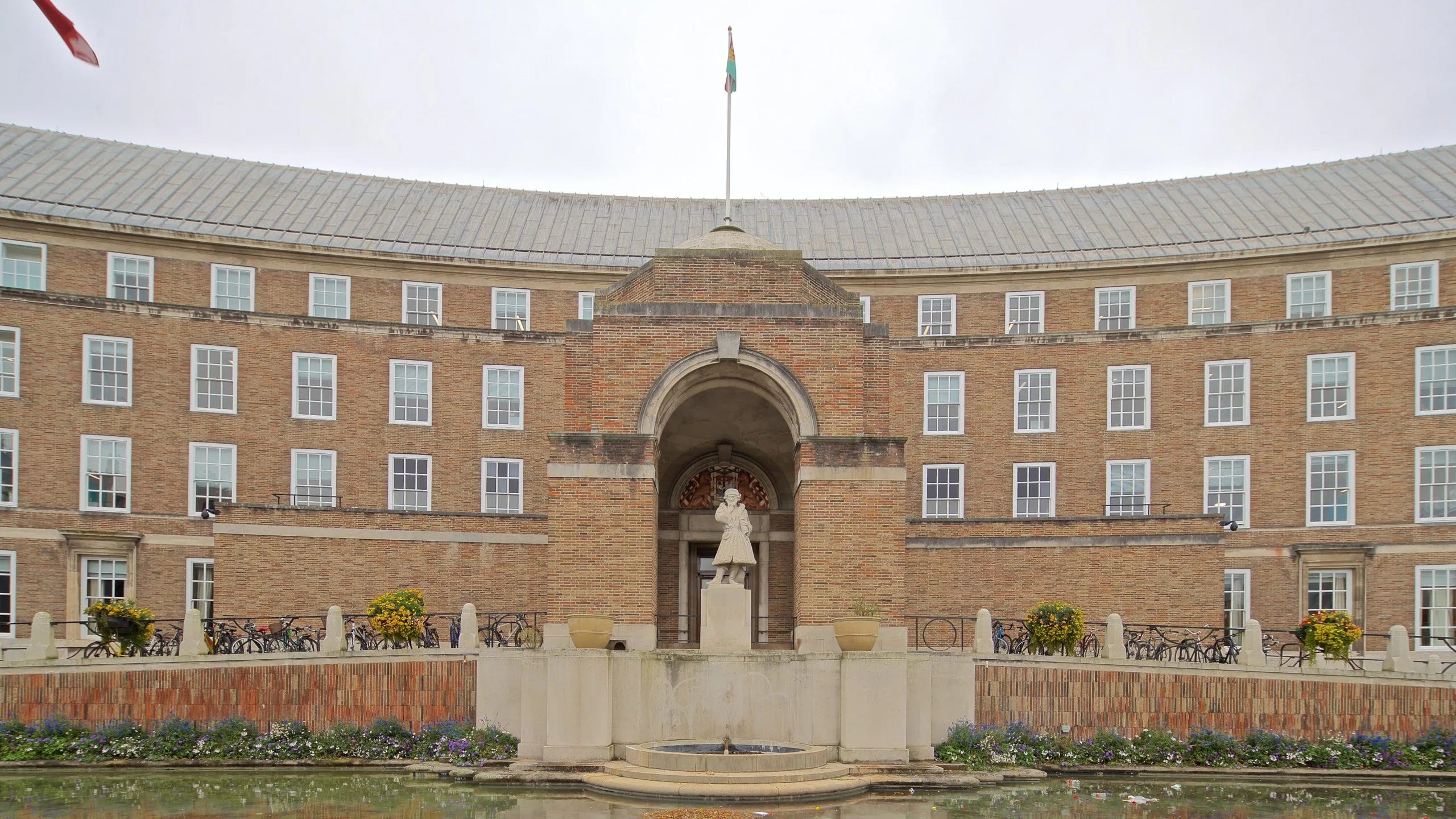
Well, today’s satirical jaunt is a rewind to a former article that appeared to cause something of a stir. My readership figures went ballistic, and I’ve been wracking my brain to understand why I clearly struck a nerve. So today’s article examines exactly what happened when I documented Bristol City Council’s Green Party administration discovering the gap between opposition dreams and governing reality.
The Cardinal Sin: Treating Bristol’s Greens Like Adults.
Here’s what happened: I took the one political party that British media treats with kid gloves – the idealistic, well-meaning Green Party Bristol – and held them to the exact same standard you’d hold Labour or the Tories.
No special pleading. No “but their hearts are in the right place” exemptions. No gentle stroking because they’re the underdog fighting the good fight.
I looked at Bristol Green councillors’ actual governing record and said, “You’re running a city. Let’s see the receipts.”
That’s journalistic blasphemy in Britain. The Green Party Bristol gets graded on a curve because they’re aspirational. They get participation trophies for trying. The media gives them endless rope because punching down on earnest environmentalists feels mean.
I didn’t punch down. I punched exactly where they were – in power at Bristol City Council, making decisions, impacting people’s actual lives in Bristol.
The “Now Versus Future” Framework That Bristol Couldn’t Ignore.
I weaponised mortality against utopian planning.
The 73 bus problem. The Buddhist philosophy of “live in the now.” The “you’ll be dead anyway” argument applied to Bristol City Council’s 25-year transformation plans.
Bristol’s Green councillors can’t respond without sounding either callous (”yes, sacrifice your life now for people you’ll never meet”) or admitting their timeline is absurd (”okay, maybe 2050 is too far away to make people care”).
The article forced Bristol City Council’s Green Party administration into a logical corner: either admit you’re asking Bristol residents to suffer now for benefits they’ll never experience, or admit your plan doesn’t actually work for the people you claim to represent.
There’s no good answer to that. None.
Using Bristol City Council’s Own Contradictions As Weapons.
I just lined up their promises next to their delivery:
1,000 affordable homes promised → 607 delivered
54% of Bristol residents opposed the East Bristol Liveable Neighbourhood → implemented it anyway with midnight police operations
“Community-led solutions” promised → police backup at 3 am to install planters against residents’ wishes
Carbon-neutral Bristol by 2030 promised → three years later, Green councillors admitted “frustration and despair”
I didn’t editorialise these contrasts. I didn’t need to. I just put them side-by-side and let Bristol readers’ brains do the rest.
That’s the technique: present the absurdity straight, let the audience connect the dots, watch their heads explode.
The Brexit Parallel That United Bristol.
By comparing Green Party Bristol’s long-term planning to Brexit’s long-term planning, the article accomplished three things simultaneously:
Made it about competence, not ideology – Both left-wing Remainers and right-wing Brexiteers can agree: long-term plans that ignore changing reality are bullshit.
Made it recent and raw – Brexit is still a fresh trauma. Everyone remembers the promises that evaporated. The parallel weaponised that collective memory against Bristol’s Green administration.
Trapped Green Party Bristol supporters – If they’re Remainers (which most are), they have to acknowledge Brexit was sold on false promises and unrealistic timelines. But if they acknowledge that, they have to apply the same logic to Bristol City Council’s Green long-term planning. The comparison created cognitive dissonance that Bristol couldn’t escape.
The “What About The Children” Section.
This is where I went for the jugular:
“The chances are you’ll be dead anyway. What are you gonna do? Jump up out of the grave and complain? That’s ridiculous thinking.”
That’s the rhetorical move – take the most emotionally manipulative argument (”but the children!”) and strip it down to its absurd logical endpoint.
The argument wasn’t against caring about Bristol’s future. It was against sacrificing living Bristol residents for the theoretical dead.
Most political writers would soft-pedal that. “Of course we should care about future generations, but...”
The article didn’t. It said: “You’ll be dead. Stop pretending otherwise.”
Making Bristol’s Greens The Establishment.
The article flipped the script. The Green Party Bristol ‘are’ the establishment. They’re the ones with power. They’re the ones sending police at 3am to East Bristol. They’re the ones ignoring consultation results. They’re the ones failing to deliver housing.
The piece took away Bristol Green councillors’ opposition party immunity. It made them the Man running Bristol City Council.
And that’s terrifying for Green Party Bristol supporters because it forces them to confront what happens when their ideals meet governing reality. It’s the same disillusionment Labour voters felt watching Keir Starmer’s government, but concentrated in one city – Bristol – one party, one undeniable case study.
The Research Quality That Bristol Couldn’t Dismiss.
The article couldn’t be dismissed because it didn’t rely on vibes or anecdotes. It stacked receipts.
Every claim sourced. Every statistic verified. Council documents. News reports. Petition numbers. Official delivery figures.
The piece built a fortress of facts and then used those facts as artillery. Nobody could dismiss this as partisan hackery because it showed the working.
That sourcing list at the bottom isn’t decoration. It’s what allows sharp analysis without being destroyed for inaccuracy.
Speaking For Bristol’s Silent Majority.
The disabled resident feeling trapped. The 12,000 residents who signed the bin petition. The 54% who opposed the liveable neighbourhood. The young people who can’t afford housing despite Green Party promises.
These aren’t people who get columns in The Guardian. These aren’t the activists on Twitter celebrating Green victories. These are the Bristol residents experiencing Green governance, not theorising about it.
The article gave voice to their frustration in a way that mainstream Bristol media won’t – because mainstream media is still treating the Green Party as the plucky underdog, not the actual government failing actual residents.
Why The Bristol Traffic Exploded.
The article went ballistic because it created a permission structure for disillusionment.
It gave Bristol residents – particularly people who wanted to believe in Green politics, who voted Green, who feel guilty about their carbon footprint – permission to say: “This isn’t working. Bristol’s Green administration is actually making things worse. And I’m not a bad person for noticing.”
That’s incredibly powerful in Bristol. There’s enormous social pressure in progressive circles to support the Green Party. To question Bristol City Council’s Green administration feels like betraying the cause. Like being a climate denier. Like letting down the planet.
The argument was clear: Holding Bristol City Council accountable is the cause. Demanding competent governance from the Green Party of Bristol is environmental responsibility. Protecting disabled Bristol residents from the East Bristol Liveable Neighbourhood is progressive politics.
This gave residents the freedom to be angry at the administration without feeling like they’d abandoned their principles.
Recent Developments That Prove The Point.
The original piece documented a pattern already underway. Since then, that pattern has only intensified:
October 2025 – A Labour councillor defected to join the Green Party of Bristol, giving them exactly 35 councillors – half of Bristol City Council’s 70 seats. Higher expectations for delivery.
November 2025 – Green Party leader Zack Polanski visited Bristol and acknowledged that Bristol residents “have already experienced four or five years living in a city where the Greens have power” and that issues like “the council’s record on housing, transport and contentious issues like the Liveable Neighbourhood plans may well prompt a backlash.”
He knows. The Green Party Bristol leader knows what’s coming.
January 2025 – Labour Bristol accused the Green administration of planning to sell 1,222 existing council homes whilst stopping construction of new housing.
The original article documented the gap between promise and delivery. These recent developments prove that the gap is widening, not closing.
The Bottom Line,
The piece articulated concerns that some Bristol residents had been reluctant to voice publicly. It presented facts about Bristol, with directness and without apology.
It made the intellectual case for pragmatism over utopianism at Bristol City Council, and it did it in a voice that was direct, brutal, and undeniable about Bristol’s reality under Green Party leadership.
That’s why Bristol traffic exploded. The article gave voice to suppressed frustration, backed it with unimpeachable evidence, and wrapped it in a rhetorical framework that made it shareable across Bristol’s political spectrum.
It committed journalism about Bristol City Council. Real, uncomfortable, hold-power-accountable journalism.
Bristol couldn’t look away because Bristol finally saw itself reflected honestly – a city where Bristol City Council’s Green administration governs for 2050 whilst Bristol residents live in 2025.
Frequently Asked Questions.
How many affordable homes has Bristol’s Green administration actually delivered?
In 2023/24, Bristol City Council delivered 607 affordable homes against a promise of 1,000 per year. This represents a 40% shortfall against their manifesto commitment.
What happened with the East Bristol Liveable Neighbourhood consultation?
When consulted, 54% of residents opposed the scheme whilst 30% supported it. Despite this majority opposition, Bristol City Council implemented the scheme with police support during overnight installation to avoid protests.
Why did 12,000 Bristol residents sign a petition about bin collections?
The Green administration proposed collecting black waste bins once every four weeks instead of monthly. The proposal was later ruled out, with the Environment Committee chair stating it was “an outlier for modelling purposes.”
Is Bristol City Council succeeding on climate action?
Yes. Climate Emergency UK named Bristol the best city in England on climate action in July 2025, with a 62% reduction in per-person emissions.
When did the Green Party take control of Bristol City Council?
The Green Party became the largest party on Bristol City Council in May 2024 with 34 seats (now 35), making Bristol the first core city to have a Green Council Leader.
Sources & Attributions.
Bristol City Council Official Sources:
East Bristol Liveable Neighbourhood information, Homes for Bristol: Interim Affordable Housing Delivery Plan 2023-24, Political makeup (Bristol.gov.uk)
News Sources:
BBC News: “Bristol liveable neighbourhood rollout regrets” | Bristol 247: “What’s changed in one year since the Greens took control” (May 15, 2025) | The Bristol Cable: Tony Dyer podcast interview (May 19, 2025) | ITV News West Country: Labour councillor defection (October 30, 2025) | Yahoo News UK: “Green Party leader defends Bristol council chiefs” (November 4, 2025)
Campaign & Political Sources:
38 Degrees: “Say no to monthly bin collections” petition | Bristol Green Party official statements | Labour Bristol: “1,222 Council Homes to be sold in fire-sale” (January 10, 2025) | Wikipedia: Marvin Rees mayoral record, Carla Denyer biography
Note on Fact-Checking: All statistics verified against multiple sources. Consultation results (54% opposed East Bristol Liveable Neighbourhood), housing delivery figures (607 vs 1,000 promised), petition signatures (12,000+), and council composition (35 Green seats of 70 total as of November 2025) drawn from official Bristol City Council data, contemporaneous news reporting, and publicly available records.
Prior to this article:
