
Why Your God Looks Like Your Postcode: How Institutions Capture Your Autonomy.
Your religious beliefs aren't truth - they're tribal programming. And the same mechanism that captured your faith is operating everywhere else in your life.

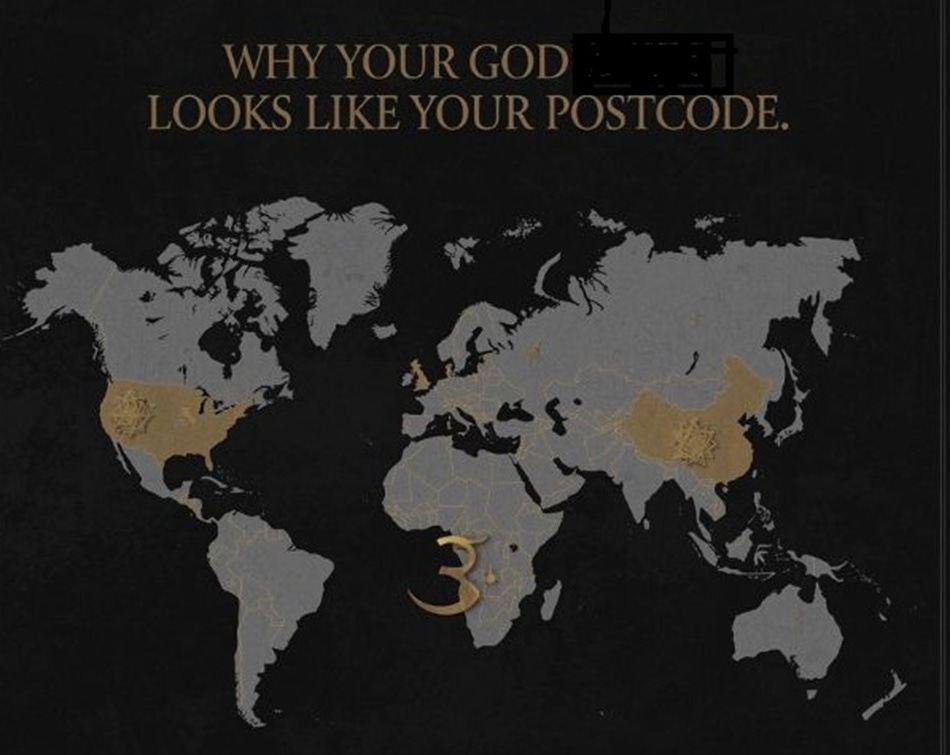
Here’s a question worth sitting with: How much of your personal autonomy have you simply handed over because you were told to - consciously or subconsciously - and following the crowd felt safer than thinking for yourself?
Not dramatically. Not at gunpoint. Just... gradually. A bit here for family approval. A bit there for social acceptance. Some more for professional survival. Piece by piece, trading sovereignty for belonging, until you can’t remember what you actually believe versus what your tribe programmed into you.
Most people never even realise they’ve made the trade. They think the crowd’s beliefs are their own authentic thoughts. They’ve practised submission to group consensus since childhood - family tribe, school tribe, national tribe, religious tribe, political tribe, consumer tribe - until surrender feels like identity.
And institutions know this. They’ve spent millennia perfecting techniques to get you to give away your personal autonomy voluntarily, to police yourself on their behalf, to defend their institutional authority against your own observations.
Religion is just the oldest and most honest version of this transaction. At least the church is upfront about it: “Submit your will to divine authority.” Can’t say they buried the lede there.
Your God Looks Suspiciously Like Your Postcode.
If you’re born in Saudi Arabia, you’re Muslim. Born in Mississippi, you’re Christian. Born in Mumbai, you’re likely Hindu. Born in Tel Aviv, you’re Jewish. The divine truth you hold as absolute, eternal, and universal just happens to match the dominant religion of your geographic location and your parents’ beliefs.
Funny coincidence, that. Almost like it’s not divine truth at all, just cultural inheritance with a god costume on.
If religious claims described objective reality the way gravity describes objective reality, they wouldn’t follow cultural and geographic boundaries like football team allegiances. You don’t believe in gravity because your parents did. You don’t become a Manchester United supporter and call it “cosmic truth.”
But that’s exactly how religious belief works. You’re born in Mississippi and somehow God speaks English, hates the same people your neighbours hate, supports your political party, and really gives a shit about your high school football team. Divine plan, my arse.
Which means we’re not talking about truth at all - we’re talking about which tribe claimed you first and how completely you surrendered the autonomy to question what they told you. Your religion is as arbitrary as your accent. You just don’t notice because everyone around you speaks the same language.
How Religious Institutions Capture Personal Autonomy Through Guilt and Fear.
Apply basic evidentiary standards to religious claims and they collapse immediately. That’s not controversial - it’s why religion demands “faith” rather than evidence. Faith is praised precisely because it resists reason, because it maintains belief despite contrary evidence, because it treats doubt as moral failure rather than intellectual honesty.
Translation: “Stop thinking and just believe what we tell you.”
But faith isn’t really about belief in God. It’s about surrender to the tribe. It’s about agreeing not to question, not to apply critical thinking, not to hold the institution accountable to the same standards you’d apply to any other truth claim. It’s about trading your autonomy for belonging.
And the mechanism works through two primary psychological levers that the church spent two millennia perfecting: guilt and fear.
Guilt tells you you’re inherently flawed - original sin, spiritual impurity, moral inadequacy. You’re born broken. You need the institution to absolve you, purify you, save you from yourself. This creates dependency. You become grateful to the institution for protecting you from consequences it fucking invented in the first place.
Fear tells you the consequences of non-compliance are catastrophic - eternal damnation, divine punishment, social ostracism, existential terror. This makes questioning too psychologically expensive. Easier to surrender than risk being cast out or spending eternity on fire because you ate shellfish or had impure thoughts about your neighbour’s wife.
Together, they’re devastatingly effective. Guilt makes you feel you deserve punishment. Fear makes punishment seem inevitable without institutional intervention. You don’t resist the surrender - you embrace it as salvation. You thank them for the cage.
The church perfected this combo like it’s some kind of psychological masterclass. And it worked so well that governments, corporations, and political parties all copied the homework. Same manipulation, different logo.
Tribal Psychology and Religious Authority: Why Humans Surrender to Group Consensus.
But there’s another element that makes this work: tribal superiority.
Our tribe has the truth. Your tribe - or your lack of tribe - leaves you vulnerable, damned, inferior, lost. Join us. Submit to our authority. Accept our version of reality. In exchange, you get belonging, purpose, protection from existential uncertainty, and relief from the anxiety of thinking for yourself.
It’s the same sales pitch whether it’s religion, politics, nationalism, corporate branding, or ideological movements:
“We’re on the right side of history. We have the truth. We understand what’s really going on. Everyone else is lost, evil, asleep, or too stupid to see it. Join us and you’ll be part of something greater than yourself.”
What they don’t mention is the price: your autonomy. Your capacity to question. Your willingness to hold the tribe accountable when its behaviour contradicts its principles. Your ability to say “hang on, this doesn’t make sense” without being treated like a heretic.
Humans are tribal animals. We’re wired to seek belonging and fear exclusion. Institutions don’t create this vulnerability - they exploit it. They take a natural human need and weaponise it for institutional benefit. Then they charge you admission and call it salvation.
“If religious claims described objective reality, they wouldn’t follow geographic boundaries like football team allegiances.”
The Cherry-Picking Game That Proves Morality Doesn’t Come From Scripture.
Here’s how you know the surrender is complete: everyone cherry-picks the bits they already agree with and ignores the rest.
Modern Christians eat shellfish, wear mixed fabrics, work on the Sabbath, ignore Levitical law about slavery and stoning disobedient children. They’ve decided these bits aren’t relevant while other bits are somehow divinely mandated. But that decision is based on pre-existing moral intuitions, not on the text itself. They’re selecting scriptures that align with modern ethics and pretending they derived their ethics from the scriptures.
It’s backwards. They’ve got the conclusion first, then they’re shopping through the holy book for supporting quotes like a politician cherry-picking statistics.
You ever notice how God’s opinion on literally everything just happens to match the opinion of whoever’s doing the talking? Conservative Christians discover God hates taxes and loves guns. Progressive Christians discover God loves social justice and hates inequality. Funny how the Almighty always agrees with you, innit?
This isn’t hypocrisy - it’s evidence that morality doesn’t come from scripture at all. It comes from cultural evolution and pre-existing ethical intuitions. The scripture just provides post-hoc justification for positions people already hold. It’s intellectual window dressing for decisions you’ve already made.
But admitting this would mean admitting you don’t actually need the institution. That your moral compass works fine without divine authority. That you’ve surrendered autonomy for belonging in a transaction that benefits the institution far more than it benefits you.
Twenty percent of causes produce eighty percent of effects. A small core of true believers provides enough validation energy to sustain an institution even when the majority can see the contradictions piling up. These are the people who’ve surrendered so completely they can’t afford to question - their entire identity is invested in tribal membership. They’re pot-committed to the con.
The Omniscience Problem Religion Can’t Solve Without Lying.
Religious theology contains logical contradictions it’s spent two millennia trying to rationalise away. Take omniscience and free will.
If God knows every choice you’ll make before you make it, you don’t have free will. Your “choices” are predetermined observations from God’s timeless perspective. You’re acting out a script he already read. But if you don’t have free will, divine judgement becomes monstrous tyranny - punishing people for actions they couldn’t avoid, like convicting someone for murder when you forced their hand to pull the trigger.
Theology has generated libraries of increasingly baroque explanations trying to square this circle. “God exists outside time.” “Free will operates on a different metaphysical plane.” “It’s a mystery that transcends human understanding.”
Translation: “Stop asking difficult questions because we don’t have a good answer and if you think about it too hard the whole thing falls apart.”
The simpler explanation is that it’s a contradiction because the claims are incoherent, not because humans lack the sophistication to understand divine mystery. The emperor has no clothes, but everyone’s been trained to compliment his invisible wardrobe.
Here’s why this matters: institutions train you not to notice contradictions. They train you to rationalise, to accept “it’s complicated,” to treat your inability to make their claims coherent as evidence of your own intellectual limitations rather than evidence that the claims are bullshit.
This is surrender training. And it doesn’t stop with religion.
The Pattern Appears in Every Institutional Power Structure.
Every organisation, no matter how democratic or egalitarian its founding principles, inevitably develops oligarchic leadership that serves organisational self-interest over stated mission. Churches become about preserving churches. Political parties become about preserving parties. Activist movements become about preserving the movement infrastructure and paying the organisers’ salaries. The stated purpose - salvation, justice, service, change - becomes secondary to institutional survival.
And they all use the same techniques religion perfected:
Make unfalsifiable claims. Demand trust over evidence. Dismiss contradictory data. Claim moral authority. Punish questioning. Reward surrender with tribal belonging. Rinse and repeat.
Political parties want you to trust their promises despite their track record showing they’ll say anything to get elected then govern like they never said it. Councils want you to believe their policies will work despite measurable outcomes showing they serve institutional interests over public benefit. Corporations want you to accept their brand values despite their actual behaviour showing they’ll do whatever increases shareholder value.
Organisations promote people to their level of incompetence - except that’s not quite right. Organisations promote people who excel at defending the organisation, not at achieving its stated mission. The bishop who’s brilliant at fundraising and doctrinal defence gets promoted over the priest who’s actually effective at pastoral care. The councillor loyal to party leadership gets advancement over the councillor with genuine community support. The corporate executive who protects brand reputation gets promoted over the manager who actually delivers results.
Because institutions select for people who demand faith in the institution, not evidence about the institution. They select for people who’ve surrendered their autonomy so completely they’ll demand others surrender theirs. The most captured prisoners become the guards.
When “Mistakes” Become Pattern, It’s Not Incompetence Anymore.
Never attribute to malice what can be explained by incompetence - solid rule, usually. But there’s a limit.
When the same “mistakes” keep happening and they consistently benefit the institution at your expense, that’s not incompetence. That’s pattern. When churches keep covering up abuse to protect institutional reputation, when councils keep making decisions that ignore public opposition, when political parties keep betraying their stated principles in ways that consolidate power, when corporations keep prioritising profit over everything they claim to value - you can’t keep calling it incompetence.
At some point you have to recognise the pattern serves institutional self-interest, not public benefit. Political prostitution masquerading as principle. Institutions selling out their stated values for self-preservation while demanding you maintain faith in their moral authority. They’re playing you for a mug while you defend them against people pointing out you’re being played.
And the institutions survive because people keep surrendering autonomy. Keep believing the rhetoric despite watching contradictions accumulate like dirty dishes. Keep granting evidence exemptions because questioning feels uncomfortable or disloyal. Keep choosing tribal belonging over critical thinking. Keep defending the institution that’s exploiting them because admitting they’ve been had is too psychologically expensive.
“Faith isn’t about belief in God. It’s about surrender to the tribe.”
What Sovereignty Actually Looks Like in Practice.
I know someone like this. Mike, from Greater Manchester - friend of a close mate of mine. Mike’s lived life in more ways than the vast majority will ever consider, not because he was lucky or privileged, but because he refused to surrender his autonomy to social programming about what he was “supposed” to do. When someone cast doubt or said he couldn’t do something, he did it anyway. Not as defiance, not to prove anyone wrong - just as natural expression of someone who never granted external voices authority over his internal reality.
He took ownership of his life by living it on his own terms rather than following rules and codes others had been manipulated into accepting. Just lived his life and told the world to fuck off when it tried to tell him he couldn’t. That’s not complicated philosophy - that’s just refusing to be someone else’s performing monkey.
That’s what sovereignty looks like in practice. It’s not comfortable, it’s not easy, and it doesn’t come with tribal validation. It means making choices knowing you’ll carry the consequences yourself. It means accepting that belonging often requires surrender, and choosing autonomy over acceptance when those two things conflict. It means people will call you difficult, contrarian, awkward, selfish - because you won’t play the game they’ve all agreed to pretend is mandatory.
Mike mirrors what I recognise in myself - that anarch quality of maintaining internal isolation while still genuinely enjoying other people’s company. You can engage, connect, even form close friendships without surrendering sovereignty. The isolation isn’t social withdrawal - it’s philosophical independence. You observe systems, participate when it serves you, maintain relationships on your own terms, but never hand over the internal sovereignty that lets you question whether what the crowd believes is actually true.
It’s not superiority. It’s not misanthropy. It’s not being “above it all.” It’s just refusing to give away something that was always yours to keep, while still living in the world and enjoying the people in it - on your terms, not theirs.
What You Traded for Belonging.
So what did you give away?
The right to question without guilt. The capacity to apply consistent evidentiary standards. The willingness to notice when an institution’s behaviour contradicts its principles. The autonomy to reach conclusions that differ from tribal consensus. The sovereignty to say “I don’t know” instead of accepting comforting certainties that don’t hold up under examination.
You traded these for belonging, for relief from decision anxiety, for social validation, for protection from existential uncertainty, for permission to stop thinking critically and just follow the script everyone else is following.
And here’s the brutal part: most people think they’re still autonomous. They think their beliefs are authentic personal conclusions rather than tribal programming downloaded during childhood and adolescence. They’ve surrendered so completely they can’t see the surrender. The cage feels like home because they’ve never been outside it.
The conditioning starts immediately. By the time you’re an adult, you’ve spent decades practising submission to group consensus. “Follow the crowd” isn’t external pressure anymore - it’s internalised operating system. The tribe’s voice becomes indistinguishable from your own thoughts. You police yourself more effectively than any external authority ever could, and you do it for free.
The Alternative to Trading One Church for Another.
So what do you do? Replace religious authority with political authority? Trade one tribe for another with a different logo and trendier slogans?
That’s what most people do. They leave organised religion and immediately join some secular equivalent - political movement, corporate brand loyalty, ideological tribe, self-help cult. Same submission, different costume. Same demand for faith over evidence, same punishment for questioning, same evidence exemptions for claims that don’t hold up under scrutiny, same tribal superiority pitch.
They haven’t escaped the pattern - they’ve just changed churches. Now instead of defending papal infallibility they’re defending party doctrine or corporate values or ideological purity. Different priest, same confession booth.
The alternative is recognising the pattern and refusing to surrender. You can interact with institutions, use their services, participate when it suits you, maintain tribal connections - but you don’t grant them authority over your internal reality. You don’t give them the evidence exemption. You don’t trade critical thinking for belonging. You don’t police yourself on their behalf.
This means applying the same standards to any claim any institution makes, regardless of whether they’re wearing religious or secular costume:
Is it practical? Does this belief system produce measurable benefits, or just psychological comfort and tribal identity?
Is it logical? Do the claims hold up under scrutiny, or do they require special pleading, thought-terminating clichés, and rationalisation of obvious contradictions?
What’s the likely outcome? If you adopt this worldview, if you surrender this autonomy, what happens? Does it serve you, or does it serve the institution promoting it?
Most religious and political claims fail all three questions but survive anyway - because people keep surrendering. Keep accepting that faith is a virtue rather than an admission that claims can’t survive rational examination. Keep choosing tribal belonging over sovereignty. Keep defending institutions that exploit them because admitting they’ve been had hurts worse than continuing to be exploited.
“The isolation isn’t social withdrawal - it’s philosophical independence.”
Why This Actually Matters.
Your religious beliefs correlate with your birthplace not because you discovered universal truth, but because you surrendered the autonomy to question what your tribe programmed into you from childhood. And that same surrender mechanism operates everywhere else in your life.
Your political beliefs, your consumer preferences, your ideological commitments, your career choices, your social performances, what you find offensive, what you find funny, what you think is important - how much of this is authentic autonomy versus internalised tribal programming? How much of “you” is actually you, and how much is just downloaded software you’ve never questioned?
The institutions need you to surrender. They need you to police yourself on their behalf, to defend their authority against your own observations, to choose tribal belonging over critical thinking, to grant them evidence exemptions, to rationalise their contradictions, to attack people who question them more aggressively than they’d ever attack you. They need your validation to survive.
The only question is whether you’re going to keep giving it to them.
Recognising this doesn’t make you superior or enlightened. It doesn’t mean you’ve escaped all conditioning or achieved perfect autonomy. It just means you’ve noticed that institutions demand surrender precisely because their claims can’t survive evidence-based examination. They need faith because they can’t provide evidence. They need your surrender because they can’t earn your genuine agreement.
You’ve noticed that following the crowd feels safe because you were trained from birth to equate belonging with survival. You’ve noticed that every institution uses the same playbook religion perfected over millennia: guilt, fear, tribal superiority, evidence exemptions, punishment for questioning, psychological manipulation dressed up as salvation.
And once you notice, you can choose. Not perfectly, not completely, not without cost - but you can choose to maintain some internal sovereignty even while participating in systems that demand surrender.
You can see the pattern without being captured by it. You can belong to tribes without surrendering your right to question them. You can participate in institutions without granting them authority over your internal reality. You can have friends, communities, connections - while maintaining the philosophical independence that lets you think for yourself.
That’s not rebellion. That’s not superiority. That’s not being difficult or contrarian or antisocial.
That’s just refusing to give away something that was always yours to keep.
“You can see the pattern without being captured by it. You can belong to tribes without surrendering your right to question them.”
If this analysis resonated with you, you might want to read:
Why hate crime legislation fails the same evidentiary standards religious claims fail.
The pattern recognition framework applied to UK political dysfunction.
Know someone who needs to read this? Share it.
Protest Tourism: How Your Annual Leave Became Performative Activism
The Performative Activism Rotation: Manufacturing Outrage on Schedule
The Islamophobia Transaction: What Britain Bought Without Reading the Contract
Analysis informed by Christopher Hitchens’ examination of religious epistemology and institutional authority structures.
Additional framework references:
Nabaz (Kurdish writer) - political prostitution and institutional self-interest
Vilfredo Pareto - 80/20 principle applied to institutional validation
Hanlon’s Razor - limits of incompetence explanation when patterns become systematic
Laurence J. Peter - Peter Principle and organisational promotion dynamics
Robert Michels - Iron Law of Oligarchy - organisational structures serve organisational interests