
WECA's Golden Goodbyes: £918,000 In Exit Fees And A Chief Executive On £270k.
WECA won't discuss it. Its own accounts do the talking.

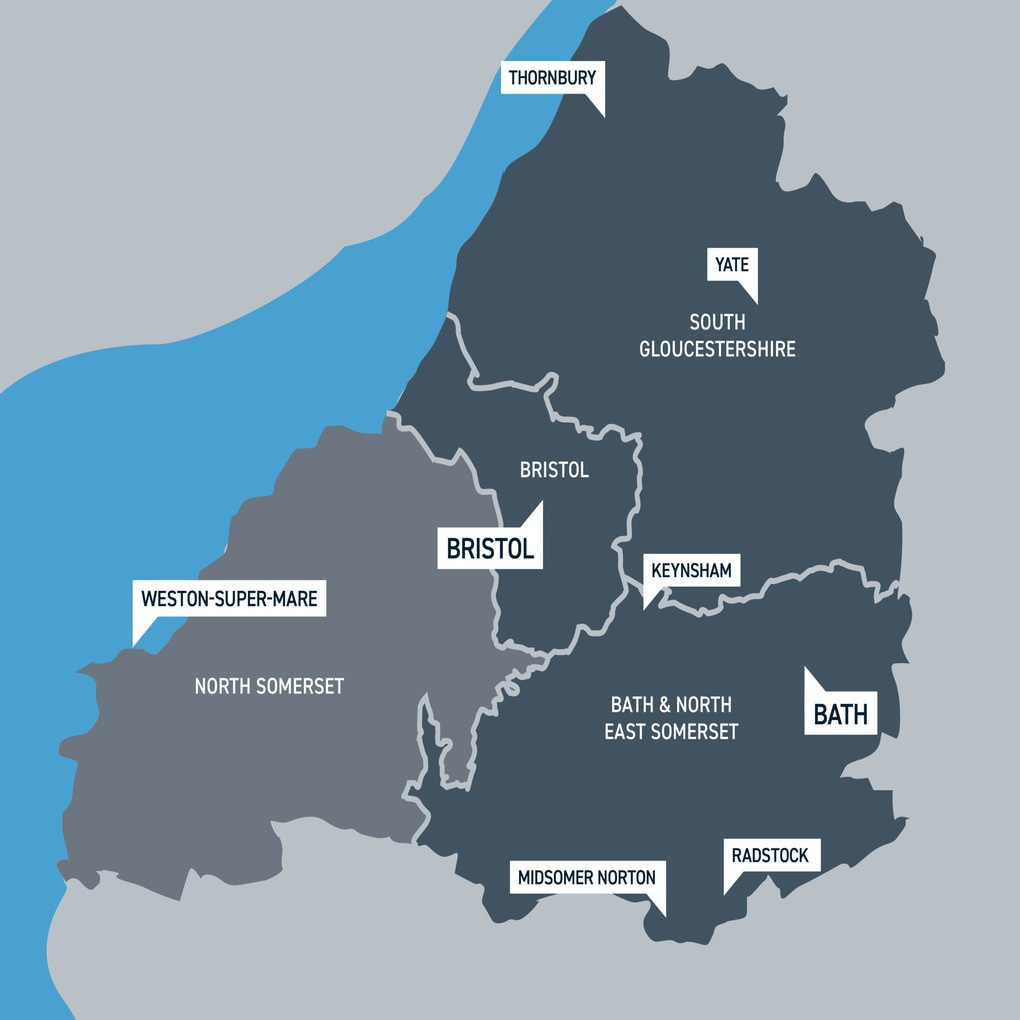
[One shade of grey is about to get a lot darker]
There’s a particular kind of quiet that settles over a public body’s accounts department in June. Not the quiet of nothing happening. The quiet of something being filed, correctly, on time, in a format designed so nobody outside the building reads past page one.
Seventy Redcliff Street doesn’t announce itself. Four floors of refurbished office space on an unremarkable Redcliffe corner, the kind of building you’d walk past without a second glance — which, for an organisation currently under central government scrutiny, might be rather the point. Notice how ordinary it looks. That’s not an accident either. Inside, somewhere past the narrative section, past the wildlife index, past the tree-planting totals and the awards from the Citti Awards ceremony, there’s a page that doesn’t photograph well at all. Note 11, Officers’ Remuneration.
Nobody reads Note 11 for pleasure. That’s rather the point of putting it there. You wouldn’t blame anyone for skipping it — I nearly did myself.
The Almighty Gob has been through it anyway. So has Bristol Live’s Adam Postans, who broke the numbers this week. Neither of us found anything that improves on a second read. So far. At least.
Sit down a minute. Let me show you what’s actually on it.
The Numbers, Stated Plainly.
Over the past three financial years, WECA has paid out £918,000 in staff exit packages. £219,000 in 2023/24. £457,000 in 2024/25. £242,000 in 2025/26.
That last figure includes a single £152,000 golden handshake and a £45,000 compulsory redundancy, plus two further “Other” category departures worth £45,000 between them. Filed under a heading polite enough to survive an audit.
To be fair to the ledger: that £45,000 compulsory redundancy was the law’s decision, not WECA’s, and no amount of column-inch outrage changes that. The other £197,000 of it wasn’t required by anything except somebody’s signature.
Meanwhile, the number of WECA staff earning £50,000 or more very nearly doubled in a single year — from 64 to 113. Those on £85,000 to £89,999 went from zero to seven. One employee now sits comfortably in the £165,000 to £169,999 band.
WECA would likely call this market alignment — pay catching up with sector norms, the same defence Bristol City Council used for its own social care roles. Fair enough, if it happened gradually. Nearly doubling in a single year, inside an organisation already under formal government sanction for its handling of pay and people, isn’t gradual. It’s a sprint, timed rather suspiciously well.
None of these numbers are typos. I checked. Twice. Some patterns look like accidents right up until you see the third year in a row.
Bristol city councillor and sitting member of WECA’s own Audit Committee, Jonathan Hucker — a qualified accountant, which matters, because it means he isn’t guessing — called the total a shocking and disgusting waste of taxpayers’ money. He worked out that £918,000 equates to the annual income tax paid by over 200 average earners.
He’s not wrong about the maths. He undersells the pattern.
The Man Signing Off On All Of It.
Chief executive Stephen Peacock took home £235,454 in salary this year, plus £34,593 in employer pension contributions — a package worth roughly £270,000. He’s been in post since June 2024, having arrived from the top job at Bristol City Council.
His entire Bristol career, from Executive Director to Chief Executive, sat under Marvin Rees’s mayoralty, through the whole rise and slow collapse of Rees’s underground mass transit dream — a mayor’s flagship policy rather than an officer’s. The exits and overspends there were, by pleasant coincidence, also somebody else’s department.
He is, by any reasonable reading of an organisation chart, the person ultimately accountable for the pay structure beneath him and the exit packages flowing out of it. That’s not an accusation. That’s the job description.
WECA’s response to Bristol Live’s questions, relayed through a spokesperson, was that the authority would not comment on HR matters.
Four words doing a great deal of work. Notice what they don’t say: not that the figures are wrong, not that there’s context missing, not that anyone’s looking into it. Just a door, closing, softly, from the inside. You and I both know what silence like that usually means.
That’s one option. Here’s another: WECA could comment on HR matters, and chooses not to. There’s a difference, and the difference is the whole story.
To be fair, there’s a legitimate version of that line. Public bodies are rightly barred from discussing an individual’s personnel file in public — that’s employment law, not evasion. But nobody asked WECA to name names or read out a disciplinary record. The £918,000, the golden handshake, the pay bands — all of it is already sitting in a document WECA itself published. Declining to discuss published, aggregate figures that are already public isn’t privacy. It’s just declining.
Best Value, Worst Practice.
None of this happens in a vacuum, however much the accounts would like you to think so.
WECA has already failed the trust test once. Government auditors found a poor state of relationships between the then-mayor and the three constituent councils, and flagged inconsistent governance around a senior severance payment. Whitehall responded in March 2024 with a formal Best Value Notice — a mechanism reserved for authorities judged to be failing their basic statutory duties.
This wasn’t vague institutional malaise. Grant Thornton’s own report tied a £219,000 severance payoff to WECA’s former chief executive directly to what it called “sub-optimal interaction” between officers and the mayor. A staff survey the year before had already flagged the need to “protect officers from the mayor.” Senior employees who quit gave the same reason on their way out: the quality of interaction with the mayor’s office.
However well WECA has since learned to write about itself, that’s not a personality clash. That’s a named, reported cause, with a price tag attached, sitting in someone else’s audit report rather than its own.
The notice was lifted a year later, in March 2025, Whitehall satisfied enough to let it lapse rather than escalate it. But receiving one in the first place carries its own sentence: devolution rules now keep WECA waiting until at least November 2026 before it can reach Established Strategic Authority status. The scar outlasts the notice.
The Draft Statement of Accounts admits as much, in language careful enough to have been drafted by committee, for a committee, about a committee. Governance arrangements are “no longer in the same position as the previous year.”
Meanwhile, in the same document, on a different page, staff costs keep climbing. Exit payments keep climbing. Six-figure salary bands keep filling up. Two stories, told simultaneously, by the same set of accounts, and only one of them was written to be read.
Two Documents, One Admission.
Here’s the part that should worry you more than the £918,000 does on its own.
Bristol City Council’s own Productivity Plan, published in July 2024, admits to “significant turnover and increased vacancy rates” in social care and occupational health roles. No number attached. No figure to hold anyone to. Just the phrase, sitting quietly in a workforce section, doing exactly enough to satisfy the requirement to mention it and no more.
That same Productivity Plan, a few pages on, names WECA directly — noting the Authority was “currently subject to a Best Value Notice,” and committing to help WECA “address the issues raised.” One council document, two organisations, one shared condition. Written down, by them, about each other.
What’s missing from both admissions is the same thing: a figure. Bristol won’t quantify its own turnover. WECA, a year later, hands you one anyway — £918,000 of it, itemised, dated, impossible to wave away as “significant” and move on. Sometimes the silence tells you more than the sentence around it.
Notice how neither document uses the word “pattern.” That’s rather the job title of this publication.
A Small Word About Small Causes.
Here’s the thing about institutional decline: it rarely arrives as one scandal. It arrives as forty small, defensible decisions, each one signed off in a room where everybody present had a perfectly reasonable reason for saying yes.
One exit here. A restructure there. A salary review that quietly reclassifies half the building. None of it looks like anything, filed on its own, on its own page, in its own financial year.
Add three years together, though, and the small stuff stops looking small.
Where £918,000 Actually Goes.
This isn’t an abstract sum sitting in a spreadsheet cell. It’s the same order of money The Almighty Gob has previously tracked through Bristol City Council’s own accounts — the sort of figure that, spent differently, reopens a youth centre, funds SEND caseworkers, or closes a gap Labour councillors have already costed at under half a percent of a council’s annual underspend.
WECA sits above Bristol City Council in the devolution chain, drawing in an ever-larger share of regional funding and an ever-larger staff bill to match. It wants Established Strategic Authority status. It wants the Integrated Settlement. It wants North Somerset folded into its remit, and more decisions taken further still from the people paying for them.
Ask who actually benefits from that expansion, and the honest answer is rarely you, checking your own council tax bill.
To give WECA its due: the same accounts point to real things residents can touch — cheaper multi-operator bus fares, a Child Poverty Action Plan, funding towards reopening the Portishead line. None of that is invented, and none of it is dismissed here. But delivering good programmes and running an accountable organisation are two separate tests, and passing one has never been proof of passing the other. A £918,000 accountability gap doesn’t shrink because the bus fares went down.
An organisation still under a Best Value Notice, still shedding staff at cost, still growing its own six-figure salary bands, is not the shape of body that should be trusted with more power before it has demonstrated it can handle the power it already has.
What Accountability Isn’t.
“We would not comment on HR matters” is not transparency. It’s the institutional equivalent of a shrug, delivered from behind a £270,000 salary and a very good pension.
Is that malice? Almost certainly not. Nobody at 70 Redcliff Street wakes up planning to squander taxpayers’ money on golden handshakes. It’s simpler than that, and somehow worse: a system where nobody is quite responsible enough, for quite long enough, for anyone to be properly accountable when it goes wrong.
That’s not a conspiracy. It’s just how organisations behave when nobody’s watching closely enough, often enough, for long enough to matter.
We’re watching now.
An Alternative Worth Naming.
Here’s the uncomfortable question underneath all of it: nobody outside 70 Redcliff Street chose Stephen Peacock. A panel did. The same kind of panel that, a year later, signed off on the pay bands and severance terms this piece has already catalogued.
Regular readers will recognise where this is going. The Almighty Gob has already made this case once, for Bristol City Council: council tax payers formally recognised as stakeholders, senior officer appointments decided the way a credit union or the John Lewis Partnership decides its leadership. Candidates state their case, in public, to the people funding them. Stakeholders choose.
That piece already named WECA directly, proposing a WECA CIC layered beneath its elected mayor rather than replacing her — the same stakeholder scrutiny sitting underneath Helen Godwin’s office, so a single mayoral veto isn’t the only check left on an organisation central government has already flagged as failing. This isn’t a new idea arriving here. It’s the same argument, and WECA’s own accounts have just handed it a second exhibit.
Here’s what’s changed since that piece went up: WECA already has half of the model running. Godwin was directly elected by the people of three council areas. What’s missing is the layer beneath her — the Chief Executive, the Executive Directors, the people actually spending the money and signing the severance cheques — appointed behind a door, accountable to nobody who pays for them.
However, the honest caveat still applies at this scale, and applies harder: WECA’s stakeholder pool is over a million people, not one city, and its statutory officer roles carry the same legal qualification requirements Adult Social Care directors do at Bristol City Council. A pitch-and-vote process risks charisma beating competence exactly where competence is what you’d actually need.
Under current law, no full combined authority converts into a Community Interest Company either — the statute doesn’t provide the route. This remains a reform blueprint, not a courtroom prediction.
Notice this much anyway: the model WECA currently runs on has just cost taxpayers £918,000 in three years, and the people who spent it were never asked to earn the job from the people footing the bill. Whatever replaces it can hardly do worse.
The Bottom Line.
The building will stay quiet, and ordinary, exactly the way it’s designed to. The accounts will get filed on time, in the right format, past page one, where almost nobody reads them. And the money will keep moving out the door, one handshake at a time, while you — the person actually footing the bill — get told, politely, that it’s none of your business.
It is entirely your business. It’s your money. And unlike WECA, The Almighty Gob has no HR department to hide behind.
© 2026 John Langley / The Almighty Gob. All rights reserved. Some lefts too, possibly.
Sources.
Adam Postans, “WECA ‘squandered’ £1m on staff exit payoffs in last three years,” Bristol Live, 16 July 2026. bristolpost.co.uk
West of England Combined Authority, Draft Statement of Accounts 2025/26, published June 2026 — see Note 11, Officers’ Remuneration, and the Annual Governance Statement. westofengland-ca.gov.uk
Bristol City Council, Productivity Plan, July 2024. bristol.gov.uk
Ministry of Housing, Communities & Local Government, “West of England Combined Authority: Best Value Notice,” March 2024. gov.uk
“WECA taken out of special measures,” Keynsham Voice, 31 March 2025. keynshamvoice.co.uk
“Weca mayor fuming at Integrated Settlement delay,” Local Government Chronicle, 30 September 2025. lgcplus.com
Report on Grant Thornton’s findings regarding former WECA chief executive Dr Patricia Greer’s severance and mayoral conduct allegations, syndicated via Yahoo News from The Telegraph. yahoo.com
“Bristol City Council chief exec jumps ship to WECA,” Bristol247. bristol247.com
Report on the state of Bristol’s underground mass transit scheme, BBC News. bbc.co.uk
John Langley, “Stitched Up in Barton Hill,” The Almighty Gob. thealmightygob.com